
Beyond the Factory Floor: Why Family Support is the "Secret Sauce" for Informal Sector Safety
Family support to improve knowledge, attitude, and practices of occupational health and safety (OHS) in the informal sector
This study investigates an intervention strategy to improve Occupational Health and Safety (OHS) among informal limestone workers in Indonesia. Using a quasi-experimental design, it evaluates how Family Support (FS) and Peer Support (PS) influence Knowledge, Attitude, and Practice (KAP) regarding workplace safety.
TL;DR
In the informal sector—where labor laws rarely reach—safety isn't just a matter of training; it's a matter of social influence. This study demonstrates that while a combination of family and peer support best boosts safety knowledge, it is the Family Support (FS) alone that drives the actual behavioral change in OHS attitudes and practices among limestone workers.
The "Invisible" Workforce Problem
Unlike formal factories with OHS officers and rigorous audits, the informal sector (comprising over 50% of the workforce in regions like Indonesia) operates on kinship, unwritten rules, and minimal expertise. When there is no "boss" to enforce safety, who ensures the worker wears their PPE or minimizes hazards?
Previous efforts focusing on institutional cadres (Pos UKK) often stagnated. The researchers hypothesized that the "human factor"—specifically the immediate social environment—could be the missing link.
Methodology: A Multi-Front Social Intervention
The study utilized a quasi-experimental design with 90 limestone workers divided into four clusters:
- FS&PS: Support from both family (primarily wives) and peers (business owners).
- FS only: Guidance solely from the home environment.
- PS only: Guidance solely from workplace owners.
- Control: No intervention.
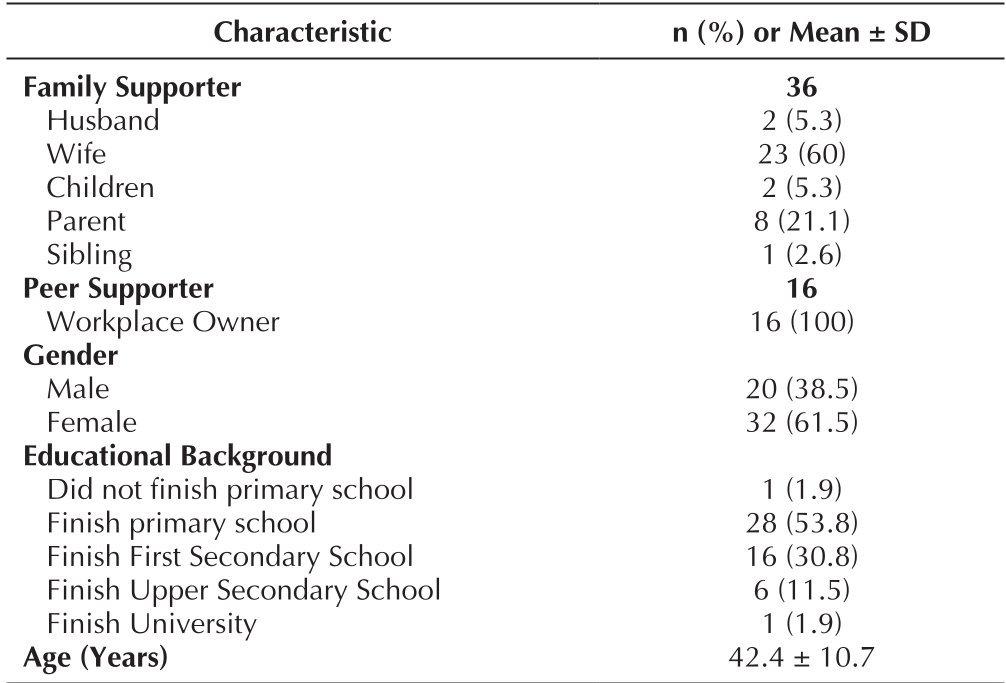
The intervention lasted one month, using Job Safety Analysis (JSA) as the foundation for the Knowledge, Attitude, and Practice (KAP) questionnaires.
Key Findings: The Power of the Wives
The results revealed a fascinating disconnect between "knowing" and "doing":
- Knowledge Gains: The combination of Family & Peer Support was the winner here. Receiving safety info both at home and at work creates a "reinforcement loop" that helps workers memorize technical details.
- Attitude & Practice Mastery: Surprisingly, Family Support was significantly more influential than Peer Support. While peer supporters (workplace owners) tended to focus on production targets, family supporters focused on the worker's well-being.
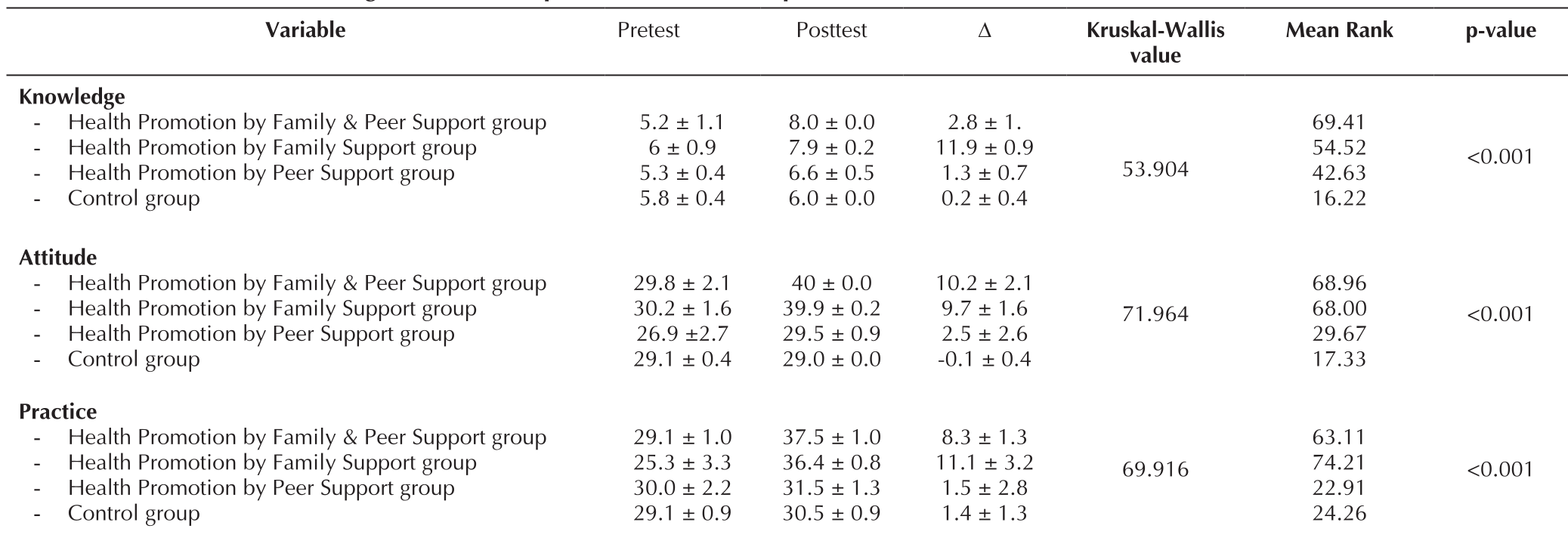
As shown in the data, the FS group achieved the highest score change in OHS practice (11.1 points). In contrast, the Peer Support group showed no significant difference from the control group in terms of practice (p=0.696), likely because owners prioritized limestone output over safety compliance.
Why Does Family Support Work Better?
The study aligns with the Theory of Planned Behavior. Families provide:
- Emotional Support: Deep care for the worker’s long-term health.
- Consistent Monitoring: Feedback occurs in a high-trust environment (the home) rather than a high-pressure one (the quarry).
- Subjective Norm Shifts: When a spouse emphasizes safety, it becomes a moral/relational obligation rather than just a work rule.
Critical Insight & Future Outlook
The biggest takeaway is that owners in the informal sector are often poor safety advocates. Because they are incentivized by production results, their "support" lacks the monitoring rigor required to change habits.
Future Directions: To scale OHS in rural areas, public health programs should pivot from training workers alone to training "Family Safety Cadres." By empowering the household, we create a sustainable, 24/7 safety culture that survives even when the formal program ends.
Limitations: The study only measured results once after the intervention. Long-term sustainability remains to be seen—future research should investigate whether these new habits stick after six months or a year.