
Fashion Ecosystem 4.0: Leveraging Big Data for a Sustainable Paradigm Shift
Fashion Within the Big Data Society: How can data enable fashion transition towards a more meaningful and sustainable paradigm?
This paper explores the digital transformation of the fashion industry, proposing a "data-driven model for sustainable fashion" presented at CHItaly '21. It introduces a systemic framework integrating "Smart Networks," "Smart Products," and "Smart Factories" to transition from traditional mass production to a synchronous, circular, and on-demand paradigm.
TL;DR
The fashion industry is at a breaking point, caught between being a cultural icon and an environmental pollutant. This paper proposes a radical transition using Big Data and AI to synchronize the entire value chain—from "Smart Factories" to "Smart Networks"—turning design into a strategic, data-empowered engine for sustainability and mass customization.
Problem & Motivation: The Friction Between Image and Impact
Fashion occupies a unique, often contradictory position in society. It acts as a "cultural mediator" that defines our collective identities, yet it remains a traditional manufacturing behemoth responsible for massive water consumption and chemical waste.
The author identifies a critical friction: while brands are experts at using social media for communication, their linear production models are outdated. Digital interaction has created a new type of "altruistic and cooperative" consumer who demands transparency. If brands cannot align their physical operations with their digital narratives, they face a loss of trust—a "boomerang effect."
Methodology: The Data-Driven Synchronous Model
The core contribution of this work is a systemic model that shifts fashion from parallel, asynchronous processes to a circular, synchronous ecosystem.
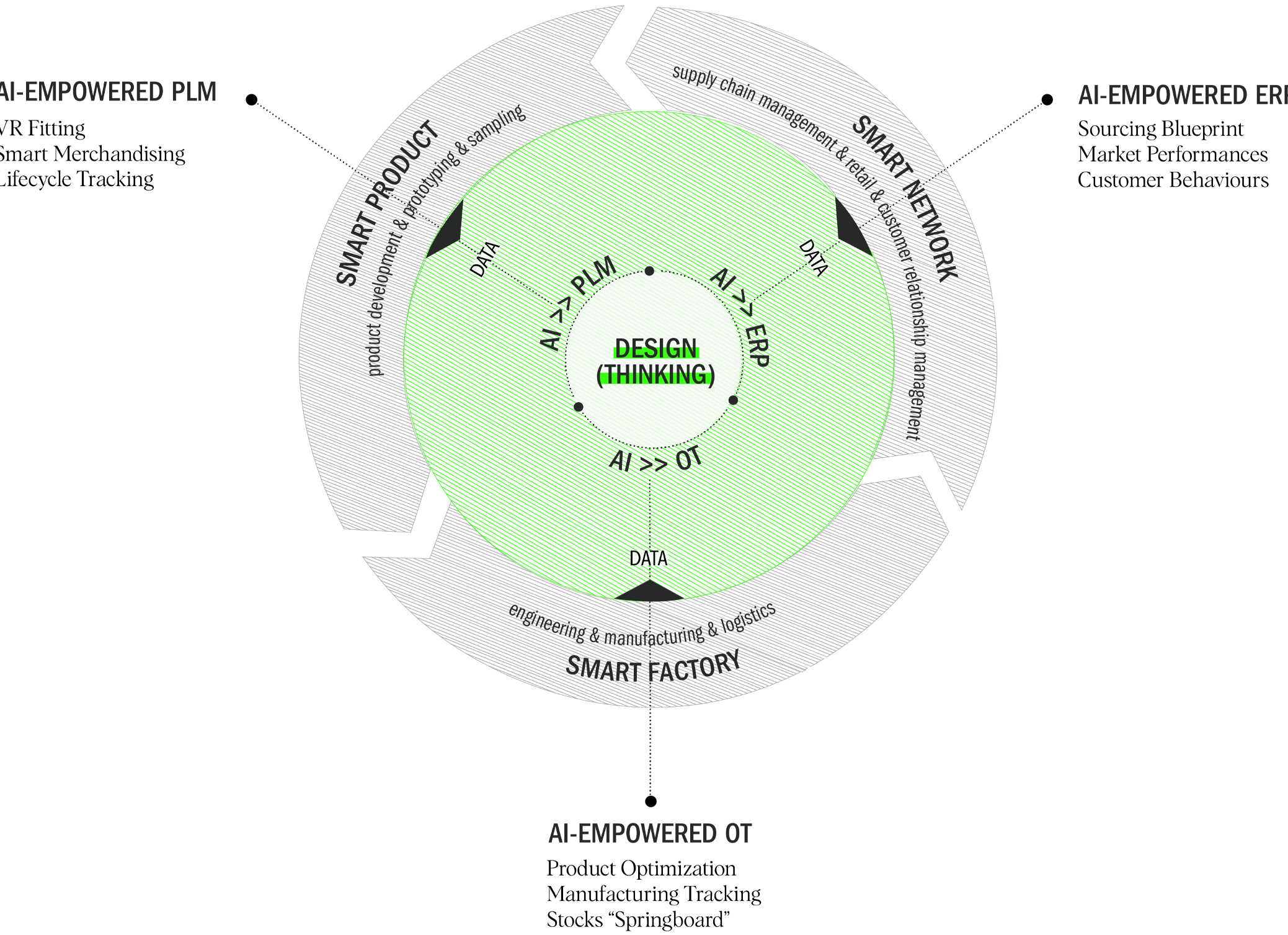
The model highlights three integration zones:
- Smart Networks: Moving beyond simple CRM to include "customer co-creation." By analyzing real-time demand across geographical areas, brands can reduce unsold stock and move toward proximity-based sourcing.
- Smart Products: Virtualizing the prototyping and "sampling" phase. By using gaming-industry-level rendering, brands can eliminate the need for thousands of physical samples sent to global showrooms.
- Smart Factories: Implementing "Digital Twins" of manufacturing. This allows for distributed production that moves away from rigid "seasonal cycles" to flexible, on-demand outputs.
Real-World Validation: The FaST and #imsustainablefashion Experiments
To test these theories, the author presents two experimental frameworks:
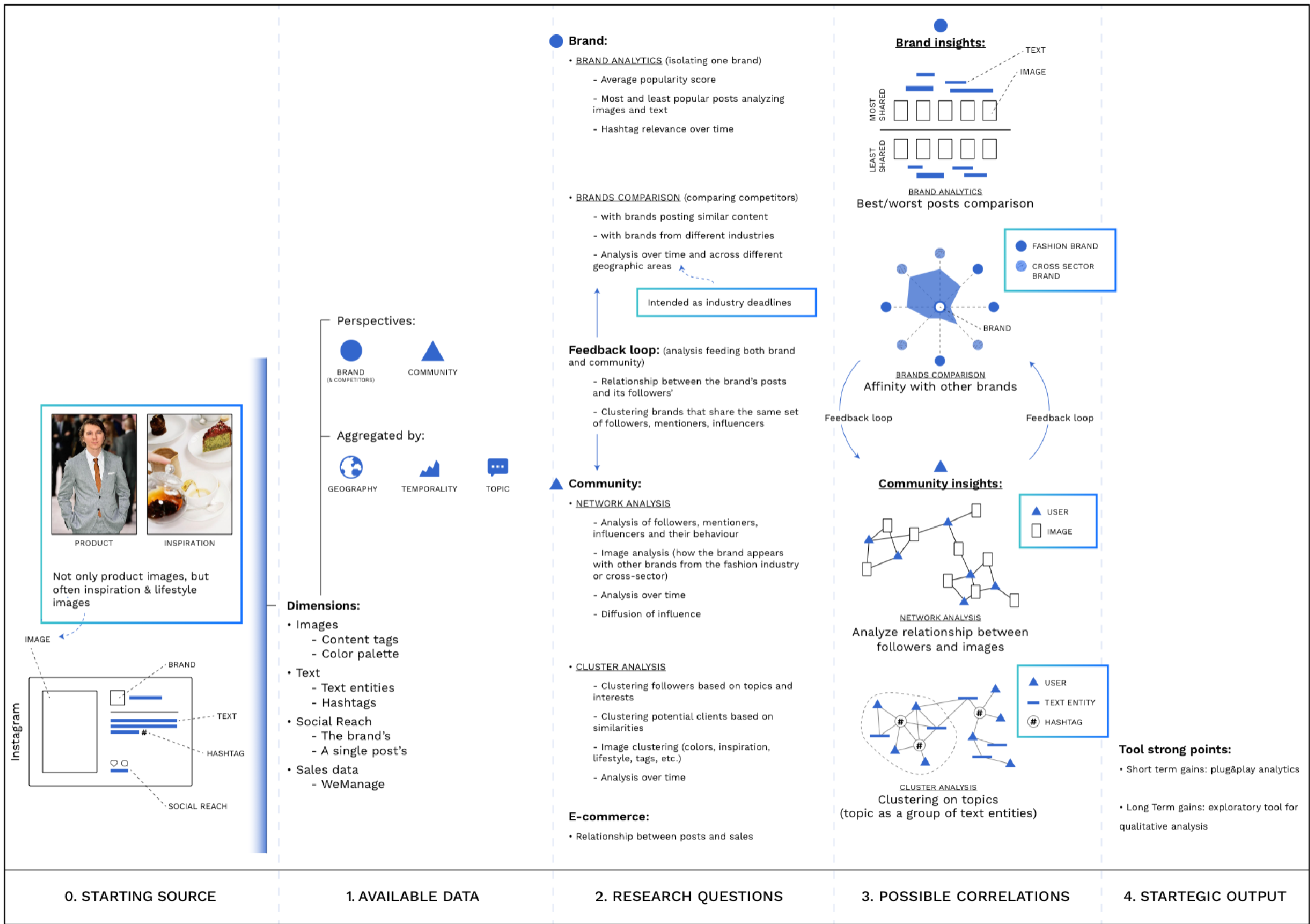
1. FaST (Fashion Sensing Technologies)
This project developed a data-driven ICT tool for SMEs. Using a multidisciplinary approach (Design + Computer Science), the team built a dashboard to analyze Instagram interactions.
- Competitive Intelligence: Mapping the visual "texture" and textual sentiments of competitors.
- Community Intelligence: Clustering users not just by demographics, but by shared digital "lifestyles."
2. #imsustainablefashion
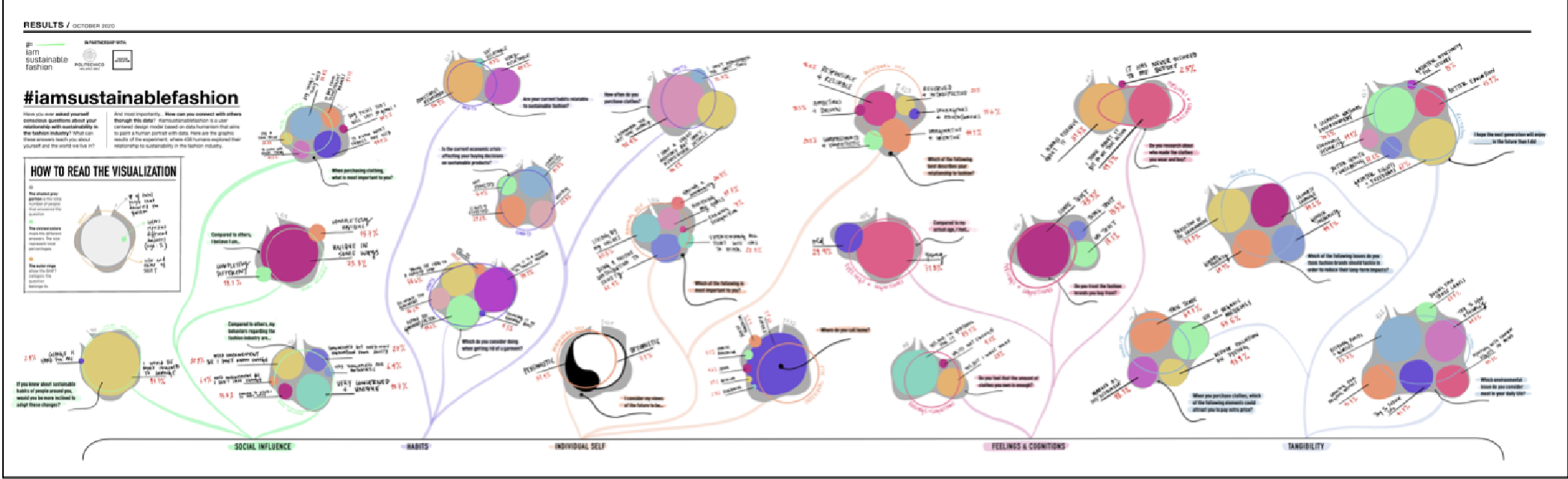
Focused on the consumer side, this experiment utilized the SHIFT methodology (Social influences, Habits, Individual self, Feelings, Tangibility) to measure and motivate sustainable behaviors through gamification.
Deep Insights: Redefining the Designer’s Role
The most profound takeaway is the evolution of the Design Process. In the Big Data era, the designer's role shifts from "object-shaper" to "system-thinker." Design becomes the strategic bridge between the platform (data) and the physical product (sustainability).
Limitations and Future Outlook
While the technological "readiness" for virtual prototyping is high, the industry suffers from a lack of R&D culture, particularly among the SMEs that form the backbone of European fashion. The paper suggests that for a truly radical change, we must integrate social media intelligence with physical and digital retail data to completely disintermediate the market and reach a state of true "Mass Customization."
Conclusion
Data is not just an efficiency tool; it is the "lever" that can finally align the fashion industry's cultural aspirations with its environmental responsibilities. By embracing a data-driven "virtual twin" of the physical supply chain, fashion can transition from a wasteful linear model to a meaningful, sustainable paradigm.