
Decoding the Global Runway: 76 Million Images to Map World Fashion Culture
Fashion Culture Database: Construction of Database for World-wide Fashion Analysis
The paper introduces the Fashion Culture Database (FCDB), a massive dataset of 76 million geo-tagged images across 16 cosmopolitan cities, designed for large-scale fashion analysis. Using a combination of StyleNet descriptors and temporal codeword subtraction, the authors successfully visualize worldwide fashion trends and quantify city similarities based on clothing styles.
TL;DR
Researchers have unveiled the Fashion Culture Database (FCDB), the largest of its kind, containing over 76 million images. By bridging computer vision with social geography, the study uses geo-tagged Flickr data to identify how fashion defines a city’s identity and how "vogue" styles shift across time and space.
The Problem: Why Traditional Fashion AI is "Out of Style"
Most fashion datasets, like Fashionista or DeepFashion, are designed for person-level tasks: "Is this a red skirt?" or "Find this shirt on Amazon." However, fashion is more than just object detection; it is a dynamic cultural pulse.
Prior research often relied on scene recognition (architecture, trees) to identify cities. But buildings don't change every season—clothes do. There was a critical lack of a dataset that was:
- Large-scale enough to represent global diversity.
- Temporal enough to track how trends age.
- Geo-tagged to link styles to specific cultural hubs.
Methodology: From Raw Pixels to "Fashion Codewords"
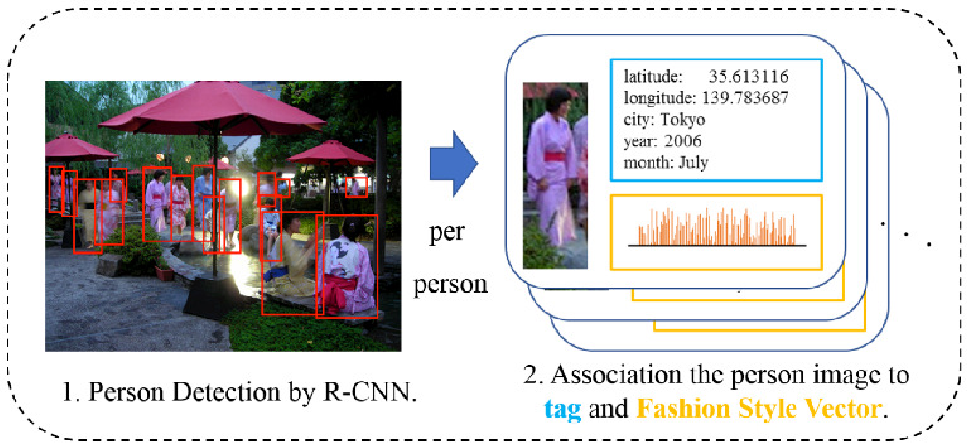
The researchers didn't just look at images; they looked at people. Using Faster R-CNN, they processed 76 million images to extract person-centered patches, effectively removing background noise like buildings or cars.
The Tech Stack:
- Descriptor: They utilized StyleNet, which maps clothing images into a feature space where "similar styles" are physically close to each other.
- Representation: To describe a whole city (e.g., Tokyo), they used a Bag of Words (BoW) approach, creating a "codeword vector" that acts like a statistical fingerprint of that city's collective wardrobe.
- Trend Detection: By subtracting last year's codeword vector from this year's, the model highlights which styles are "increasing" (becoming viral) and which are "fading."
Experiments & Results: Fashion as a Geographic Signature
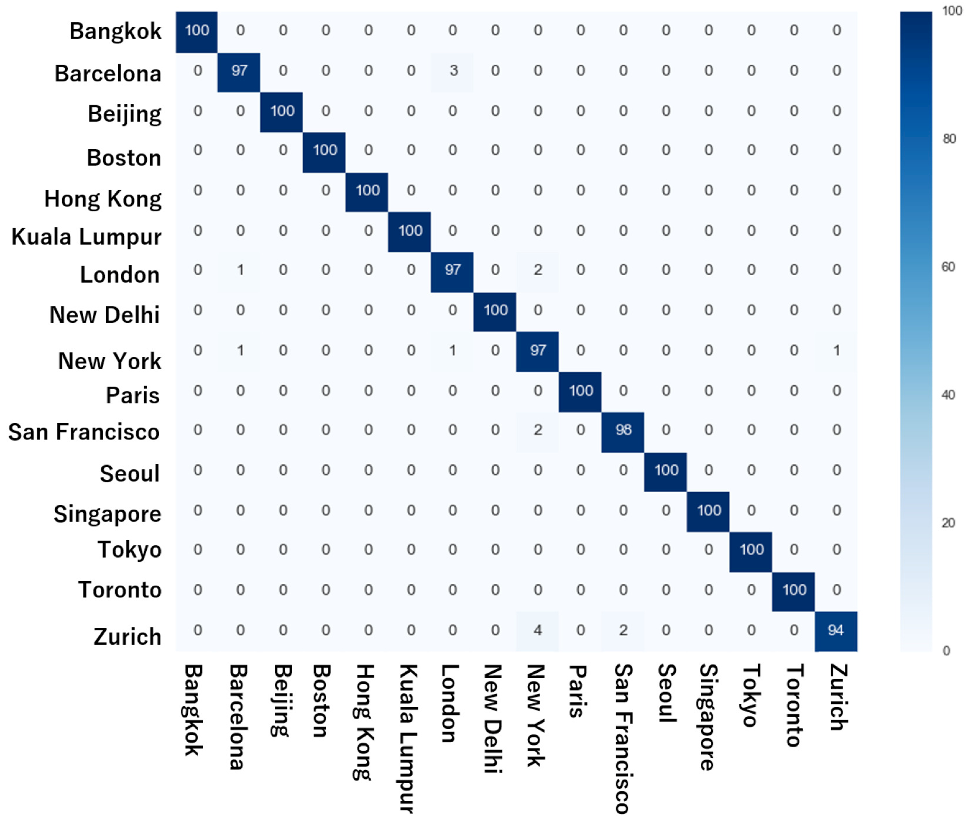
The most striking result was the 98.9% accuracy in city recognition. By looking only at the clothes people wore, the AI could distinguish between 16 different global cities with near-perfect precision.
City Identity & Similarity
The study revealed fascinating clusters:
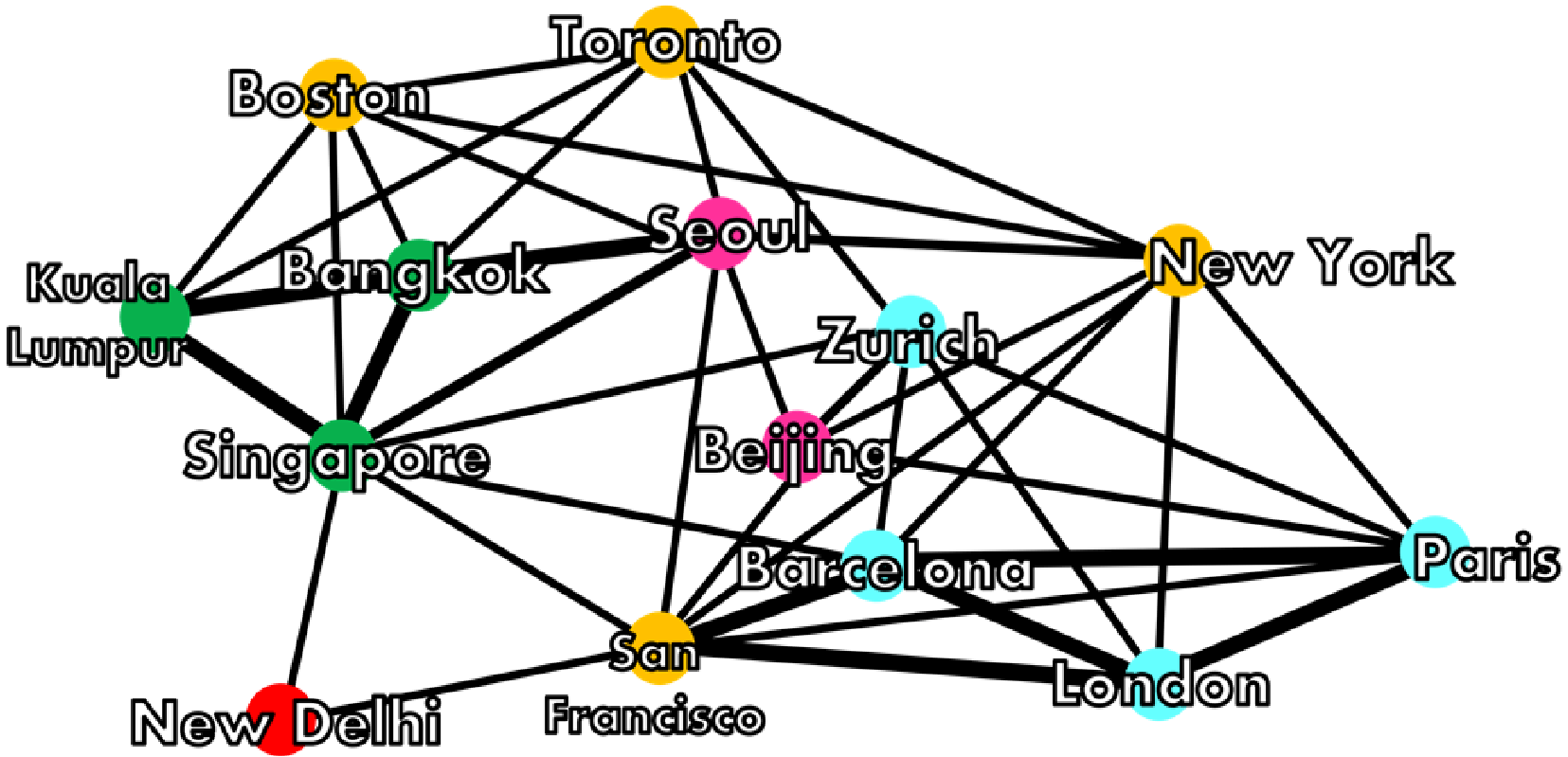
- The Fashion Capitals: Paris, London, and New York showed high similarity, likely due to shared Western media influence and high tourism.
- The Unique Hubs: Tokyo and Hong Kong demonstrated very distinct, localized fashion fingerprints that set them apart from Western counterparts.
- Geographic Proximity: Cities connected by land (like London, Paris, and Zurich) naturally shared more style traits than those separated by oceans.
Visualizing the Confusion Matrix
As seen below, the "Confusion Matrix" is nearly diagonal, indicating that each city has a remarkably unique "Fashion DNA" that the BoW model can successfully isolate.
Deep Insights: The Future of Trend Forecasting
This paper proves that we don't need complex, "black-box" generative models to understand global culture. Simple temporal subtraction on top of robust deep descriptors (StyleNet) is enough to visualize how fashion evolves.
Takeaways for the Future:
- Social Media as a Sensor: Platforms like Flickr/Instagram are real-time sensors for human culture.
- Quantifiably Viral: We can now mathematically define what a "viral trend" looks like by observing shifts in codeword density.
- Limitations: The study relies on social media users, who tend to be younger and more "fashion-conscious" than the general population, potentially biasing the results toward certain demographics.
The authors hope to expand this to a 30-year timeframe, potentially revealing the periodic nature of fashion—where styles from the past inevitably return to the runway of the future.