
FPMQA: Bridging Semantics and Scalability in Social Community Detection
9256_A fast parallel modularity optimization algorithm (FPMQA) for community detection in online social network.
The paper introduces the Similar-View Network (SVN) model and a Fast Parallel Modularity Optimization Algorithm (FPMQA) for community detection in large-scale online social networks. By integrating sentiment analysis with topological structures, it achieves high-fidelity community discovery, outperforming traditional link-only methods in both accuracy and speed.
Executive Summary
TL;DR: The paper tackles the inefficiency and semantic inaccuracy of traditional community detection by proposing a Similar-View Network (SVN) model that filters links based on sentiment alignment and a Fast Parallel Modularity Optimization Algorithm (FPMQA). FPMQA significantly accelerates the discovery process, managing massive datasets like Friendster in minutes rather than days, while ensuring that community members share both interests and viewpoints.
Context: This work sits at the intersection of Content Analysis and Graph Theory, evolving the classic modularity optimization (Newman-Girvan) into a parallelized, semantically-aware framework.
The "Viewpoint" Gap in Social Networks
Most algorithms define a community as a set of nodes more densely linked to each other than to the rest of the network. However, the authors point out a crucial flaw: Interraction Agreement. In online forums (like Tianya), two users might interact frequently only because they are arguing. Traditional link analysis would mistakenly group these "antagonists" into the same community.
As shown in the motivating example, participants in a community should not only talk to the same people (Interest Network) but also hold consistent perspectives (Similar-View Network).
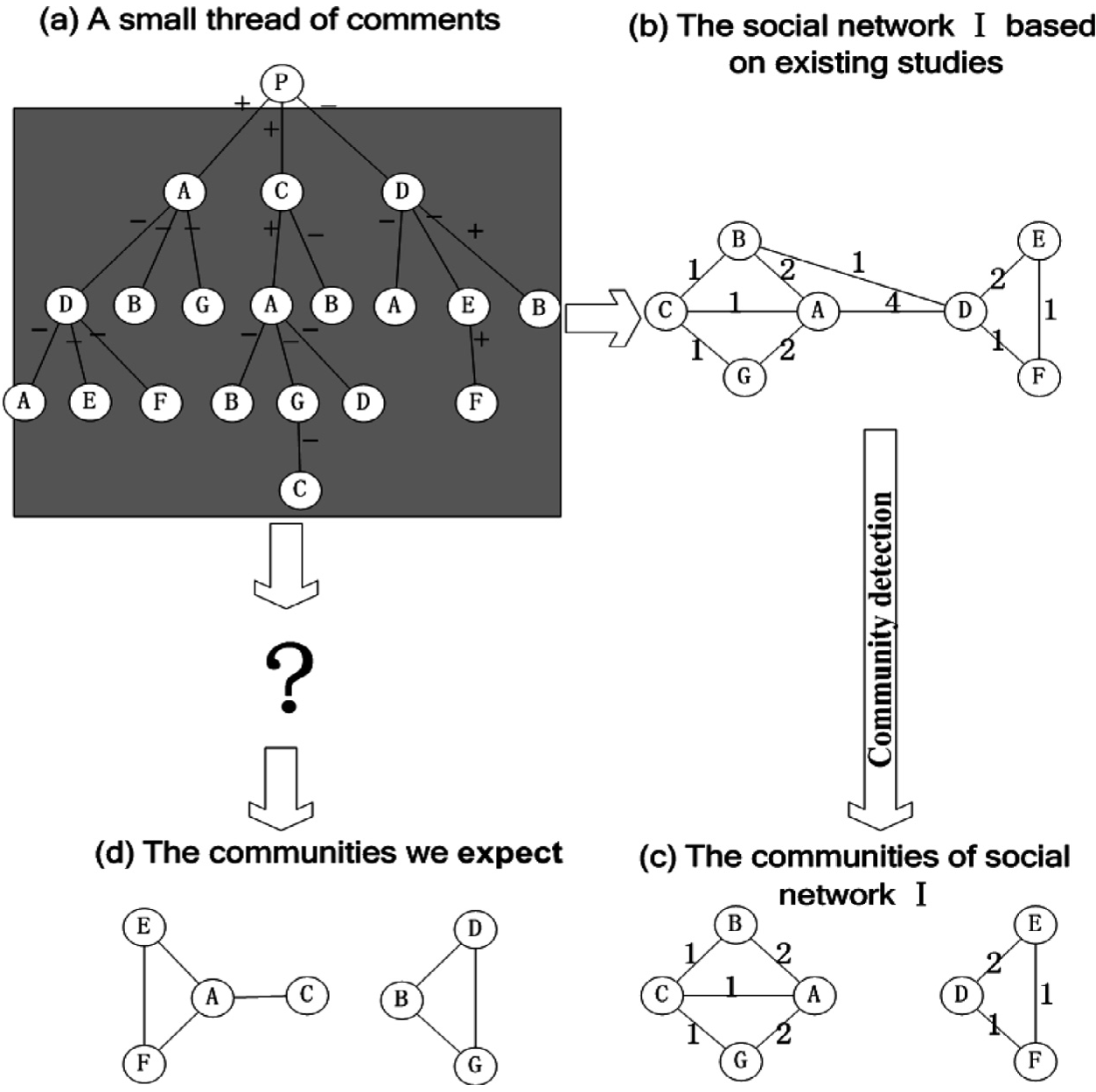 Fig 1: Links (c) vs. Semantic Consistency (d) - illustrating why attitudes matter.
Methodology: The SVN + FPMQA Framework
1. Semantic Filtering (SVN)
The authors assign a "trust" value to comments based on 50 supportive and 50 opposing keywords. They define Attitude Consistency (AC) for a pair of IDs as the ratio of topics where they share the same orientation. Links with zero consistency are pruned, transforming a noisy raw interaction graph into a refined Similar-View Network.
2. Parallelizing Modularity (FPMQA)
The computational bottleneck of the classic CNM algorithm is the global search for the maximum modularity gain (). FPMQA introduces three innovations:
- Local Areas: Instead of a global search, it looks at within a node's immediate neighborhood.
- Parallel Merges: By using a
state vector arrayto mark nodes asbusyorfree, multiple community pairs can merge simultaneously without race conditions. - Balanced Binary Trees: Each community maintains a tree of its potential merges, reducing search time to .
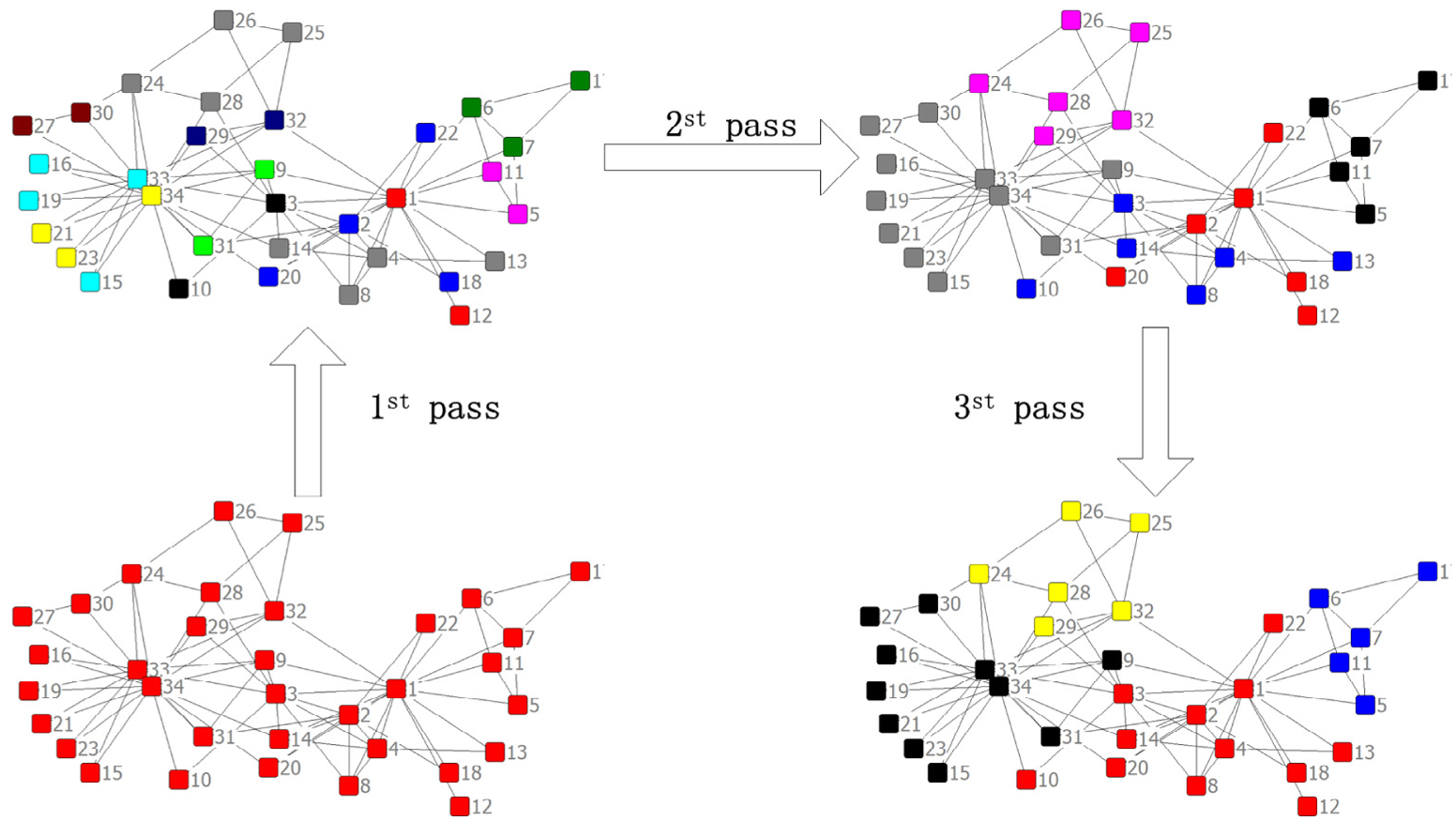 Fig 2: The parallel merge strategy on a sample network.
Performance and Experimental Breakthroughs
The authors tested FPMQA against SOTA methods like Louvain (FUC) and Label Propagation (LPA).
- Scalability: On the Friendster dataset (2.6 Billion edges), FPMQA outperformed all serial implementations, completing in 923.3 seconds.
- Precision: By utilizing the new ACC (Average Attitude Consistency) metric, the SVN model showed a significant leap in identifying ground-truth communities (0.68 vs. 0.25 for dense networks).
| Dataset | CNM Time | FUC Time | FPMQA Time |
|---|---|---|---|
| 22 s | 3.1 s | 0 s | |
| LiveJournal | Out of Memory | 152.4 s | 22.3 s |
| Friendster | > 24 h | N/A | 923.3 s |
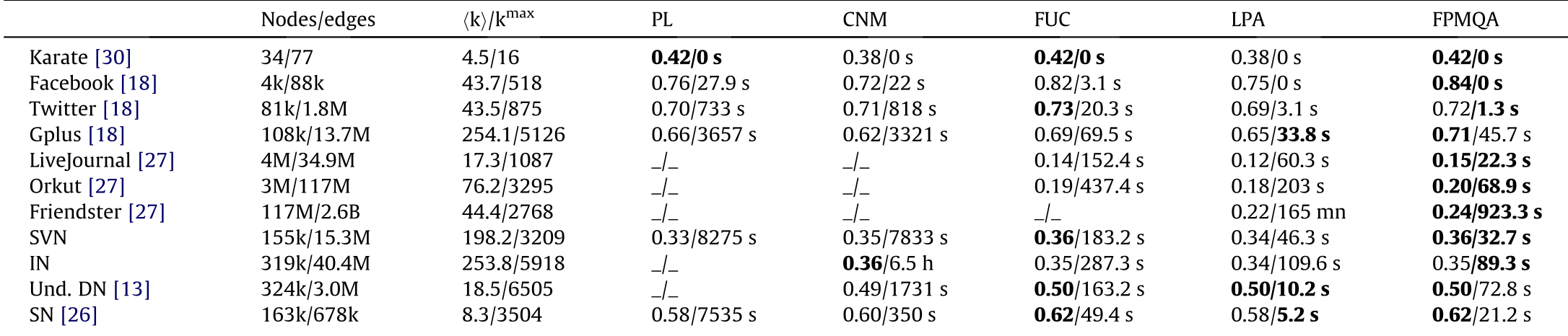 Fig 3: Comparative performance across multiple real-world networks.
Critical Insight & Conclusion
The genius of this paper lies in the Inductive Bias that community detection shouldn't just be a structural problem but a behavioral one. By pruning the graph using semantic similarity before clustering, the algorithm effectively reduces the search space (improving speed) while enhancing social relevance (improving accuracy).
Limitations: The parallel speedup is highly dependent on graph sparsity. In ultra-dense "star-shaped" networks (like celebrity-follower graphs), the algorithm may degenerate towards serial performance due to resource contention.
Future Outlook: The methodology provides a robust template for applying parallel modularity optimization to other domains, such as e-commerce recommendation systems and cyber-security "sock-puppet" detection.