
Beyond Theory: A Systematic Battle of EEG Features for Emotion Recognition
Feature Extraction and Selection for Emotion Recognition from EEG
This paper presents a systematic review and experimental comparison of EEG feature extraction and selection methods for emotion recognition. By evaluating 33 studies and testing various algorithms on a 16-subject dataset, the authors identify that advanced features like Higher Order Crossings (HOC) and multivariate selection methods (e.g., mRMR) achieve superior performance.
TL;DR
While many researchers default to "Frontal Alpha Asymmetry" for emotion detection, this seminal study conducts a massive "shoot-out" between feature types. The verdict? Higher Order Crossings (HOC) and Beta/Gamma bands located over the parietal lobe are far more effective markers than traditional spectral power. Using multivariate selection like mRMR, the authors prove that quality of features beats quantity, reaching significantly higher accuracies with less than 100 optimized inputs.
Background: The Wild West of Affective BCI
For decades, the field of Affective Brain-Computer Interface (aBCI) has been fragmented. Different labs use different "gold standards"—some swear by Wavelets, others by Fractal Dimensions. Most studies comprise tiny cohorts (5-10 people) and test only a handful of features. This paper addresses the fundamental question: If we put every major feature extraction method on a level playing field, which one actually wins?
The "Why": Why Multivariate Selection Matters
The authors highlight a critical flaw in many prior works: the use of univariate feature selection. Univariate methods look at each feature in isolation. However, brain activity is inherently networked.
The study utilizes mRMR (Min-Redundancy-Max-Relevance) and Wilk's Lambda (Effect-Size). These methods don't just ask "Is this feature good?" but "Does this feature provide new information that I don't already have?" This approach prevents the model from being overwhelmed by redundant spectral data.
Methodology: The Feature Extraction Arsenal
The authors categorize the features into three primary domains:
- Time Domain: Including Hjorth parameters, Non-Stationary Index (NSI), and the highly successful Higher Order Crossings (HOC).
- Frequency Domain: Moving beyond simple FFT to include Higher Order Spectra (HOS) like Bispectra and Bicoherence.
- Time-Frequency Domain: Using Hilbert-Huang Spectrum (HHS) and Discrete Wavelet Transform (DWT).
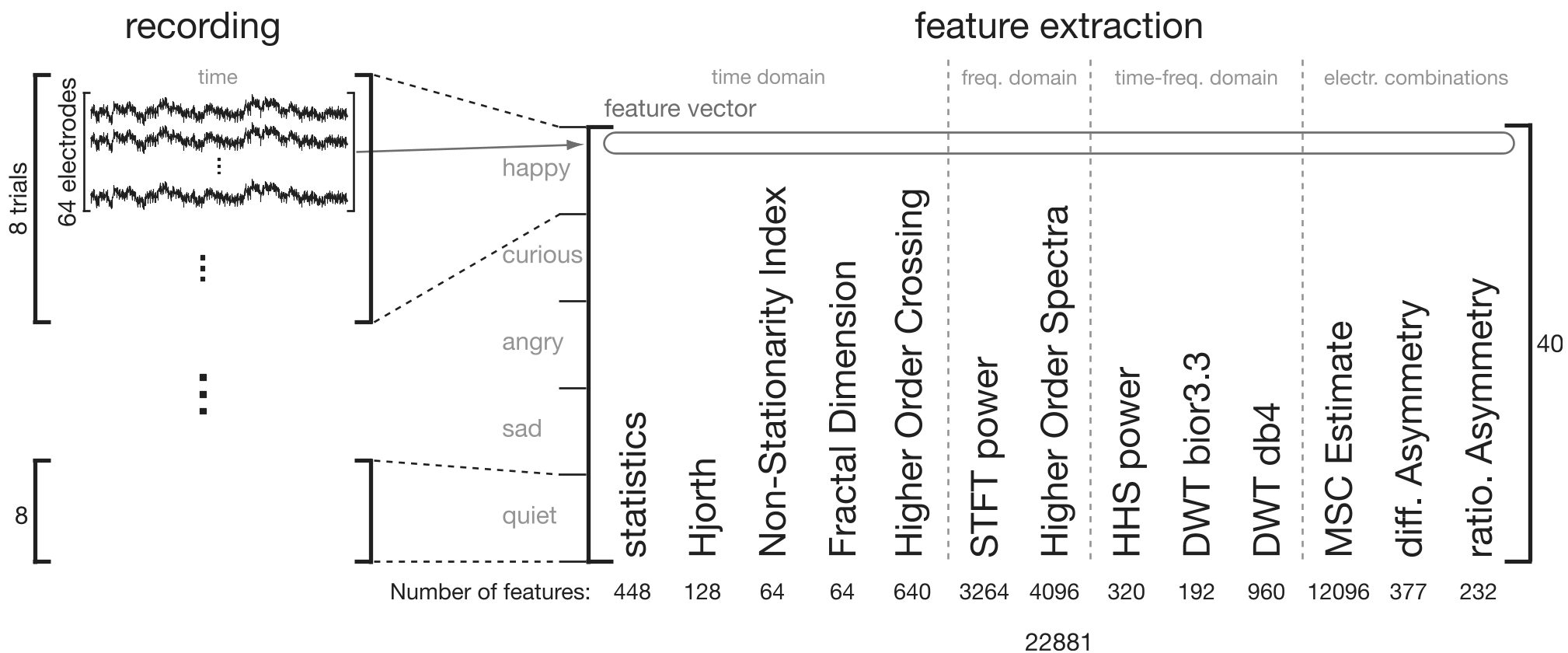 Fig 1: The signal processing workflow—from raw EEG trials to a massive 22,881-feature matrix.
Key Results: HOC and High-Frequency Dominance
The most striking finding is the performance of HOC. By iteratively applying difference operators and counting zero-crossings, HOC captures the oscillatory "texture" of the EEG in a way that power bands cannot.
Another "sacred cow" challenged here is the location of sensors. While many researchers focus on the frontal lobe (due to motivation/approach theories), this study found that for discrete emotions (Happy, Sad, Angry, etc.), the parietal and centro-parietal lobes provided much cleaner signals, specifically in the Beta (12-30Hz) and Gamma (30-64Hz) ranges.
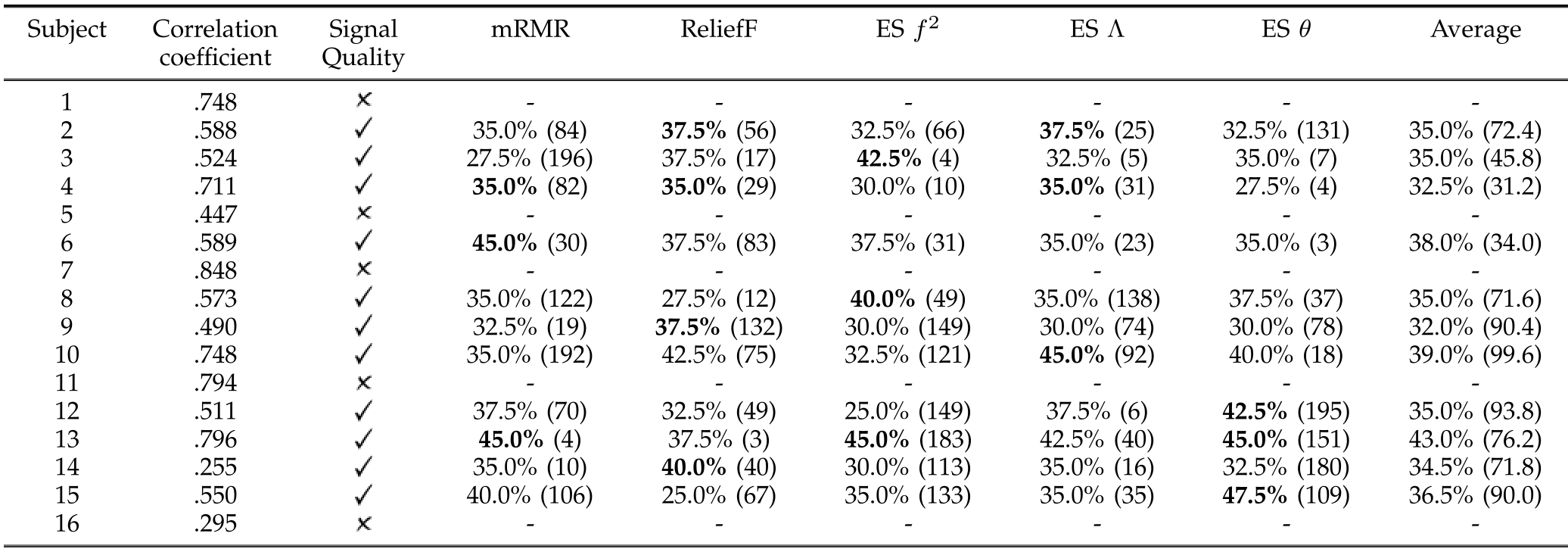 Table 1: Subject-wise classification performance. Note that multivariate methods like ES Lambda and mRMR consistently yield the highest accuracy.
Critical Analysis: The Challenge of Ground Truth
The study achieves up to 47.5% accuracy in a 5-class problem (where chance is 20%). While this is statistically significant, it highlights the "Induction Gap." The correlation between what the pictures were supposed to make subjects feel and what they actually felt (via SAM self-reports) was only r = 0.545. This variance suggests that the bottleneck in aBCI might not be the signal processing, but the psychological consistency of human emotion induction itself.
Conclusion & Future Outlook
This paper serves as a vital "clearing of the air." It suggests that researchers should:
- Stop relying solely on Power Spectral Density (PSD).
- Adopt HOC and Complexity measures as baseline features.
- Favor Multivariate selection to reduce dimensionality for real-time applications.
Takeaway: The brain encodes emotion not just in "how loud" a frequency is, but in the "complexity and rhythm" of its oscillations across the parietal landscape.
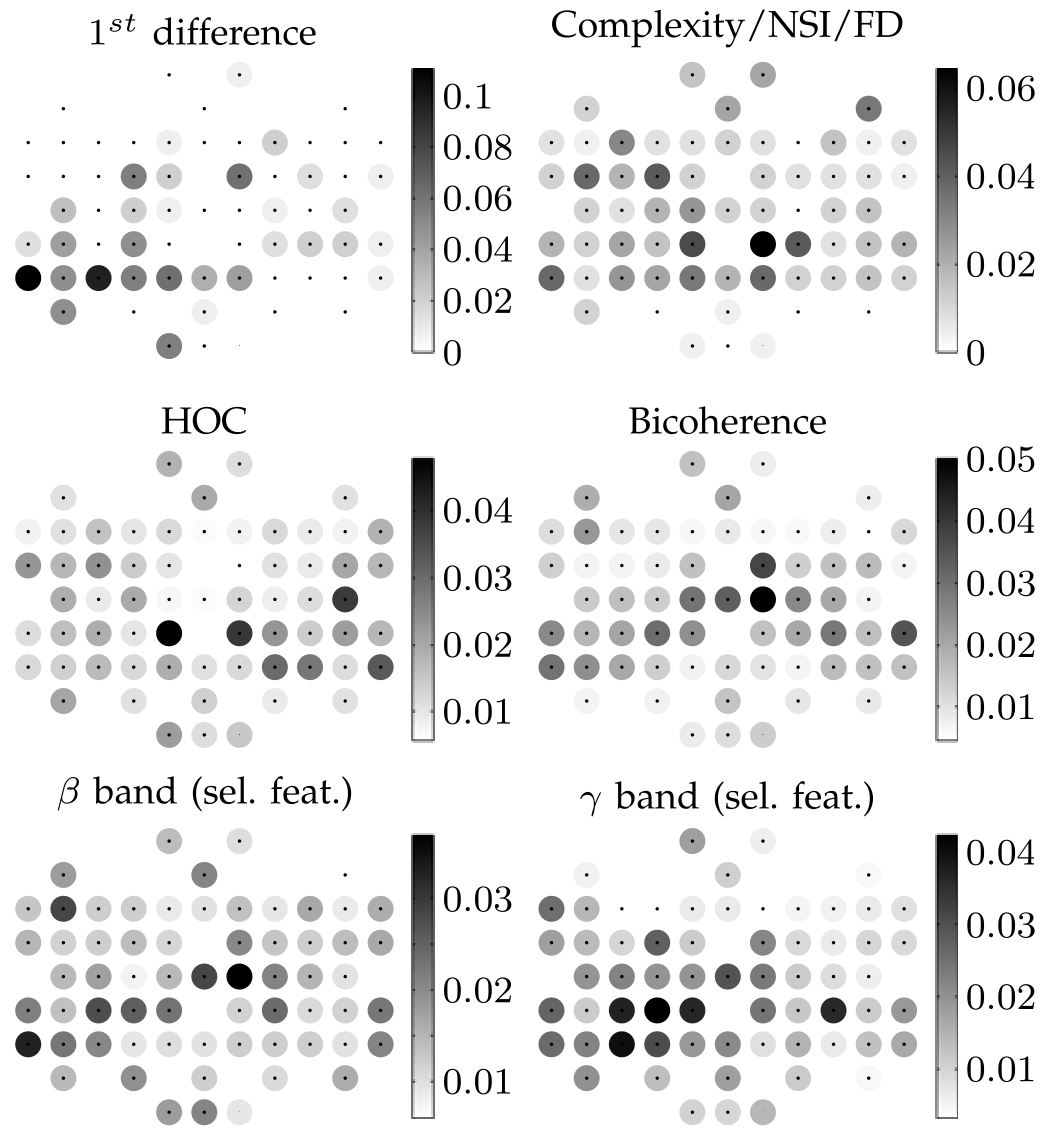 Fig 2: Individual confusion matrices showing that 'Happy' and 'Quiet' are generally easier to distinguish than 'Sad' or 'Angry'.