
F3: Bridging the Information Gap in Disaster Recovery Through Federated Queries
Finding family and friends in the aftermath of a disaster using federated queries on social networks and websites
The paper introduces Family and Friends Finder (F3), a federated search system designed to locate missing persons in the aftermath of major disasters. By utilizing federated queries, F3 simultaneously aggregates data from structured official sources (NGOs, government) and unstructured social media platforms (Twitter, Facebook) into a single user interface.
TL;DR
In the chaos following a disaster, finding loved ones is hampered by fragmented data across various social networks and official sites. The Family and Friends Finder (F3) system solves this by using federated search to query structured and unstructured data simultaneously, allowing novice users to find specific "Safe and Well" updates without needing to understand complex hashtags or navigate hundreds of disjointed websites.
Background: The Communication Black Hole
When disaster strikes—be it 9/11, Hurricane Katrina, or the Haiti earthquake—traditional communication infrastructure (cell towers, landlines) often fails. Survivors and families turn to the Internet, but the information is scattered. You might find a name on a Red Cross "Safe and Well" registry, a specific tweet with a #CycloneYasi hashtag, or a post on a local church's Facebook page. For a stressed individual, the friction of checking 20 different sources is a significant barrier.
The Problem: The Technology Barrier
The authors identify a primary pain point: Accessibility.
- Google's Irrelevance: A search for "John Smith" during a crisis yields historical founders, not the local student missing in a rubble pile.
- Technical "Hurdles": Social media relies on hashtags for organization. A novice user (e.g., an elderly relative) shouldn't have to learn Twitter syntax to find a relative.
- Data Silos: Information exists, but it is trapped in structured NGO databases or unstructured volunteer blogs.
Methodology: How F3 Works
The core innovation of F3 is its Federated Query Engine. Instead of indexing the web (like Google), it sends a user's query to multiple specific "plugins" in real-time.
The Architecture
- Input Layer: A simple search box for the person's name or location.
- Transformation: The query is converted into Boolean Query Syntax (BQS), a standard that supports future geospatial and imagery enhancements.
- Plugin Execution:
- Social Media Plugin: Uses tools like Yahoo! Pipes to automatically append known disaster hashtags (e.g., #TCYasi) to the search term.
- Structured Data Plugin: Queries official NGO/Government lists.
- Custom Search Plugin: Utilizes Google Custom Search to target a curated "white-list" of volunteer blogs and Facebook groups.
- Aggregation: Results are merged into a single RSS feed and displayed in a multi-frame interface.
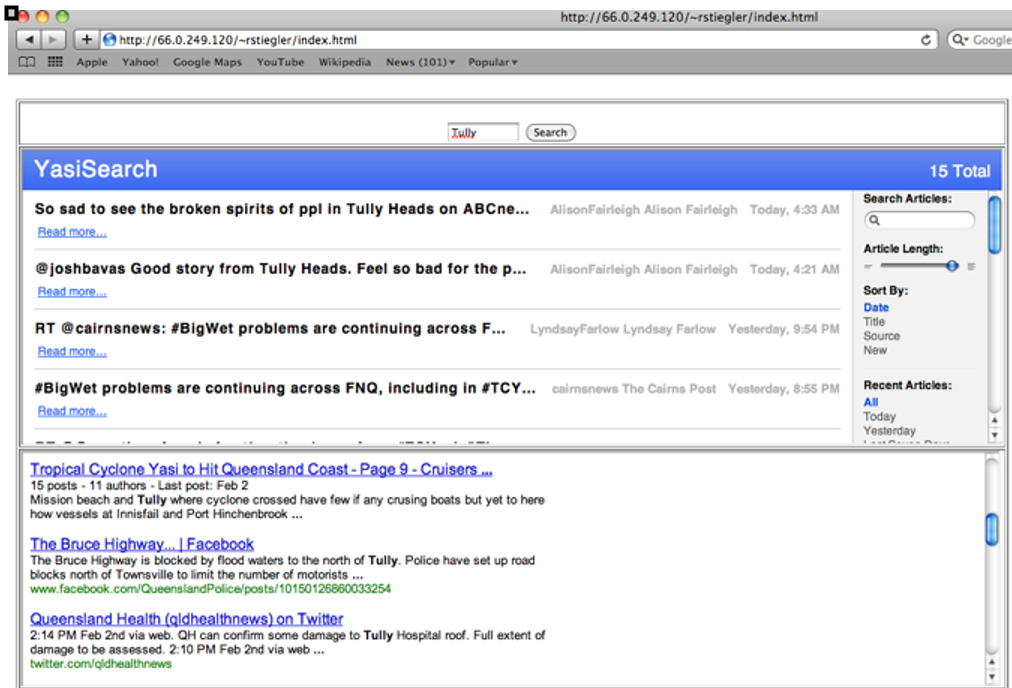 Figure 1: High-level design showing the Federated Search Engine and Plugin architecture.
Case Study: Tropical Cyclone Yasi
To prove the concept, the authors deployed a prototype during Cyclone Yasi in Australia. They targeted specific unstructured data from Twitter and Facebook using the hashtag #TCYasi.
The Result: When searching for information regarding "Cairns North" (a devastated area), F3 successfully pulled specific status updates from citizens on the first page. In contrast, a baseline Google search provided generic news reports which, while informative, did not answer the "Are you OK?" question for specific individuals.
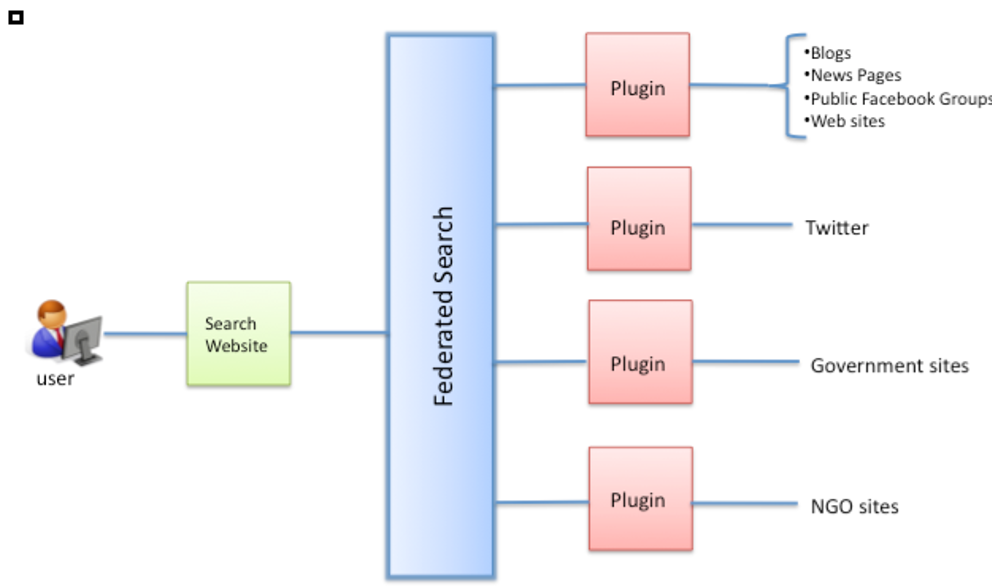 Figure 2: The F3 interface during the Cyclone Yasi case study, aggregating Twitter feeds and custom web results.
Critical Insight & Future Outlook
The F3 project demonstrates that in a crisis, relevance and speed trump breadth. By narrowing the "search universe" to disaster-specific silos, F3 overcomes the noise of the general web.
Limitations:
- Data Trust: The system relies on "citizen volunteers," which introduces a risk of misinformation or "data pollution," as seen during 9/11.
- Infrastructure Reliance: It still requires some form of internet connectivity (though low bandwidth via BQS helps).
The Future: The authors suggest that the next evolution of F3 should be a mobile app for first responders, potentially integrating geospatial data to show exactly where "Safe" reports are coming from on a map. As AI and NLP (Natural Language Processing) evolve, the ability for federated systems to "reason" over these unstructured posts will only increase, making the search for "family and friends" faster and more accurate.
Conclusion
F3 is a vital reminder that technical sophistication should serve human simplicity. By federating disparate data sources, we can turn the "chaos of information" into a lifeline for those searching for their loved ones in the dark.