
The Psychology of the Like: Decoding Feedback Expectations on Social Media
Understanding Feedback Expectations on Facebook
This study investigates feedback expectations on Facebook using a large-scale mixed-methods approach (surveys + log data). It introduces a framework inspired by Expectancy Violation Theory to quantify how post properties, individual characteristics, and relationship ties shape expectations for Likes and Comments, ultimately reaching 81% AUC in predicting friend-level expectations.
TL;DR
Why do we feel "ghosted" when a post doesn't get the traction we expected? This paper reveals that our sense of social connectedness is not determined by the amount of feedback we get, but by the gap between what we expected and what we received. By analyzing thousands of Facebook posts, researchers found that expectations are highly predictable based on how important the post is to us and how recently we’ve talked to specific friends.
Background: Beyond the "Raw" Feedback Count
For years, social media research focused on "What" and "How much": How many Likes did you get? How many Comments? However, this paper argues that the "Why"—the internal benchmark we set the moment we hit "Post"—is the true driver of our emotional state. Drawing on Expectancy Violation Theory (EVT), the authors position expectations as a "framing device" that shapes how we process social information.
The Core Insight: Why Do We Expect Feedback?
The researchers identified three primary pillars that drive our internal "feedback calculator":
- Context (The Post): Posts rated as "Important" or "Personal" have significantly higher expectations. Interestingly, word count and sentiment (positive/negative) have almost no impact on expectations.
- The Communicator (You): Younger users and those with more friends expect more feedback. Conversely, the longer you have been on Facebook (Tenure), the lower your expectations become—perhaps a sign of "social media calibration."
- The Relationship (The Audience): This is the most surgical part of the study. You don't expect feedback from "everyone"; you expect it from specific people.
Methodology: Mapping the Social Grid
The study used a "Friends Grid" (as seen below) to capture real-time expectations from specific ties right after a user posted.
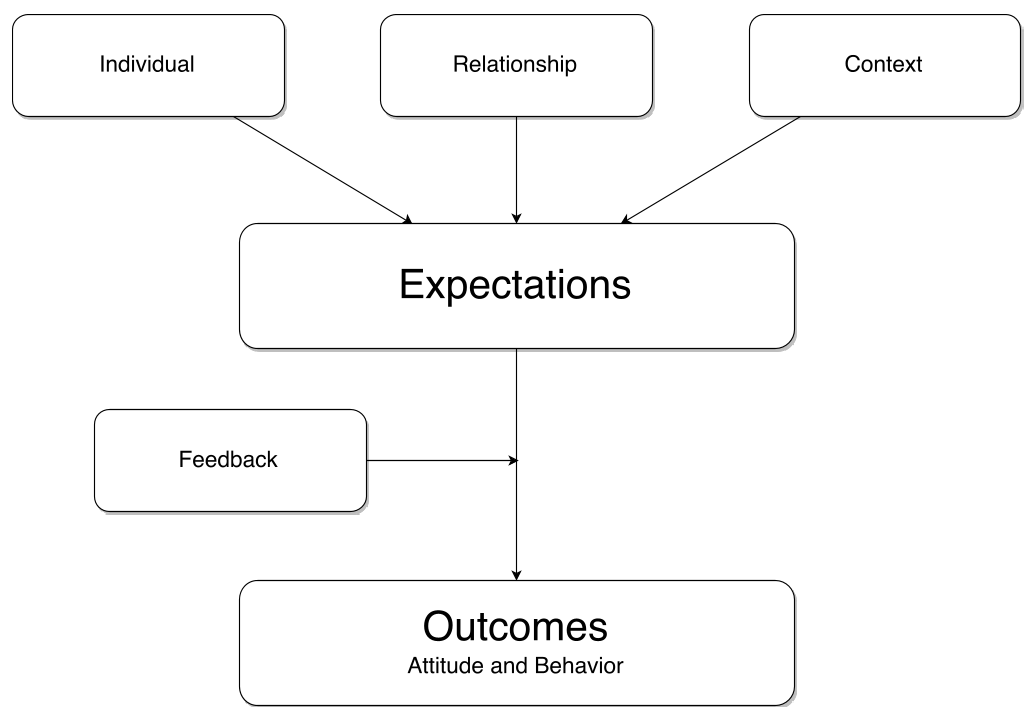 Figure 1: The conceptual framework adapting Expectancy Violation Theory to the digital social context.
The Power of Recency
One of the most striking findings is that Recency trumps Relationship Type. You are more likely to expect a Like from the person you messaged 10 minutes ago than from a sibling you haven't spoken to in a month.
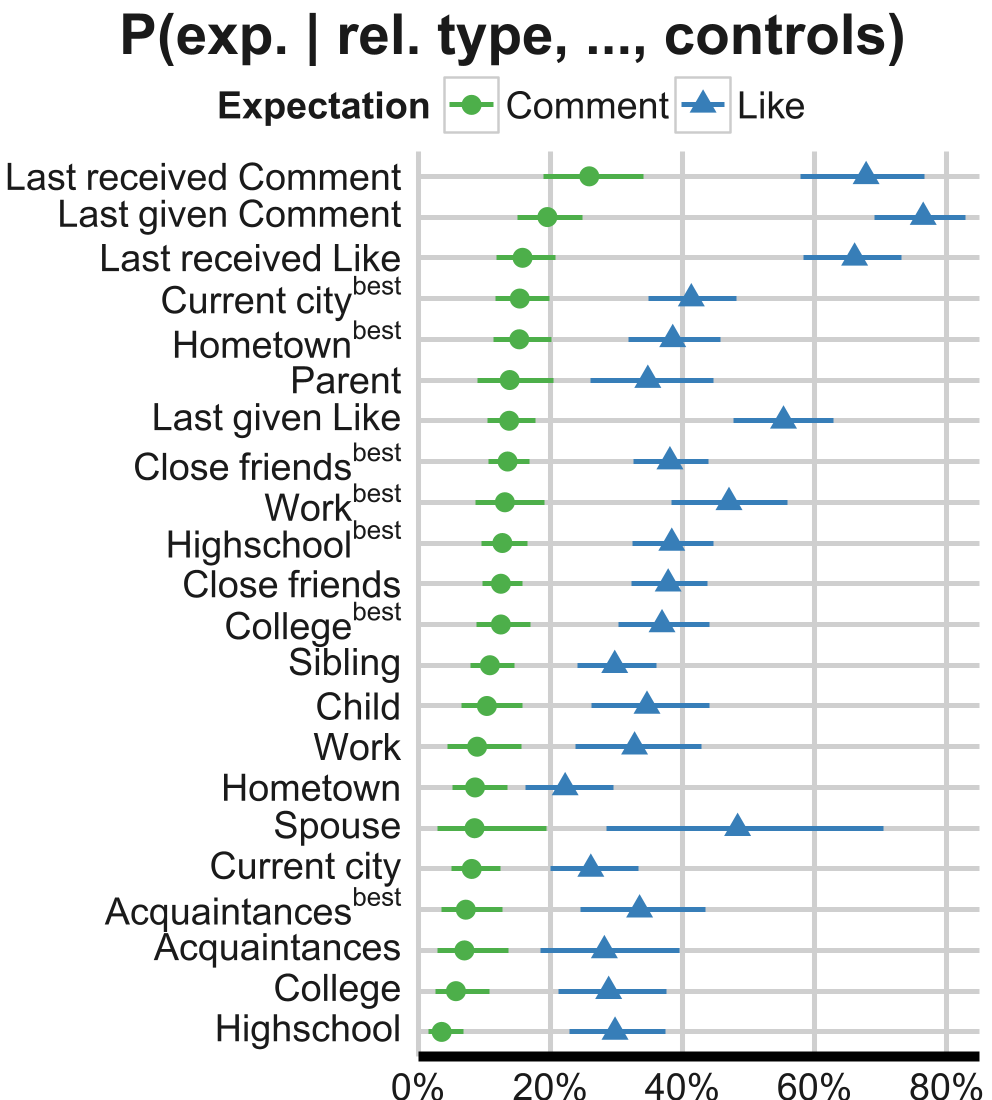 Figure 2: Probability of expectations across different social ties. Note how "Recently gave/received" sits at the very top.
Quantitative Results: Predicting the Human Mind
The authors built a predictive model using Gradient Boosted Models (GBM). By combining log data (how often you talk to someone) with post properties, they achieved an 80.7% AUC in predicting whether you expect a specific friend to interact with your post.
| Model Components | AUC (Predictive Power) |
|---|---|
| Baseline (Grid Position) | 60.9% |
| + Demographics & Activity | 64.0% |
| + Tie Strength | 75.8% |
| + Social Structure & Self-Reports | 81.3% |
Fulfillment vs. Connectedness: The Ultimate Payoff
Does meeting these expectations actually matter? Yes. The study found that "Fulfillment of Expectations" was a significantly better predictor of social connectedness than the actual number of likes.
If you expect 10 Likes and get 15, you feel highly connected. If you expect 100 and get 50, you feel disconnected—even though 50 is objectively more than 15.
Critical Insight & Future Outlook
This work challenges the "more is better" philosophy of social media design. If platforms want to improve user well-being, they shouldn't just chase "engagement" at any cost. Instead, they should aim for Expectation Congruency.
Limitations: The study relies on Facebook data from 2017. In the age of TikTok's "Interest Graph" (where we see content from strangers), the role of "Tie Strength" in expectations might be shifting toward "Content Relevance." However, the core psychological finding remains: the "imagined audience" is the judge of our social success.
Conclusion
Social media is an emotional feedback loop. This paper provides the mathematical evidence that our satisfaction is relative. By understanding the factors—from geographical proximity to the "best friend" indicator in social circles—we can begin to design systems that feel more human and less like a slot machine.