
Feeling the Community: Why We Can’t Quit Social Media
10356_Feeling the Sense of Community in Social Networking Usage.
This paper proposes a theoretical model exploring the impact of Sense of Community (SOC) on the continued usage of social networking systems. It integrates the psychological SOC framework with the Information Systems (IS) success model and validates it through a survey of 181 active social media users.
TL;DR
Why do we keep logging into Facebook or MySpace (at the time of the study)? It isn't just because the site works well. This research proves that a psychological Sense of Community (SOC) is a critical, multi-dimensional driver of continued usage. By bridging community psychology with IT success models, the study reveals that while user satisfaction is king, the "feeling" of being in a community is what sustains long-term digital relationships.
Background: Beyond the Interface
In the mid-2000s transition to Web 2.0, social networking systems (SNS) shifted from mere data retrieval to social interaction hubs. However, the academic world was stuck: was SNS usage driven by the same factors as a corporate database? The author argues "No." Unlike traditional systems, SNS usage is deeply rooted in human feelings of belonging and mutual influence.
The Problem: The Missing Piece in IS Success
Standard Information Systems (IS) models focus on System Quality (SQ) and Information Quality (IQ) leading to User Satisfaction. While robust, these models treat users as isolated actors. They fail to account for the "webs of personal relationship" that keep users from switching to competitors. The pain point was clear: we didn't know how the social in social networking actually measured up against technical satisfaction.
Methodology: Mapping the Digital Soul
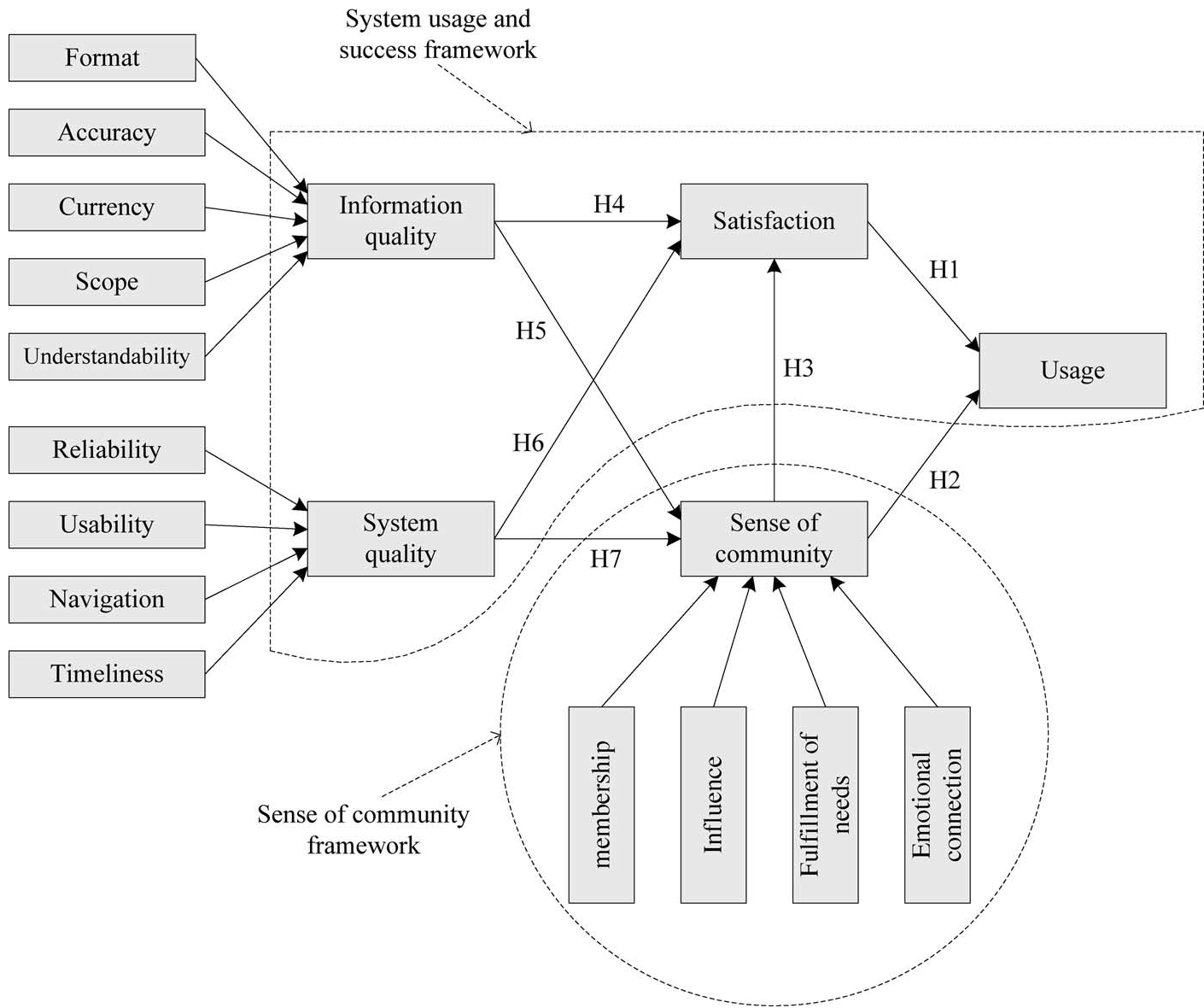
The author integrated a 4-dimensional SOC framework into a structural model:
- Membership: The feeling of belonging.
- Influence: The sensation that your opinion matters to the group.
- Fulfillment of Needs: The site’s ability to meet social or recreational goals.
- Shared Emotional Connection: The bond formed through positive interactions.
These were modeled alongside IQ and SQ to see which factors actually drove 181 surveyed students to keep using their favorite platforms.
Key Insights: Results that Matter
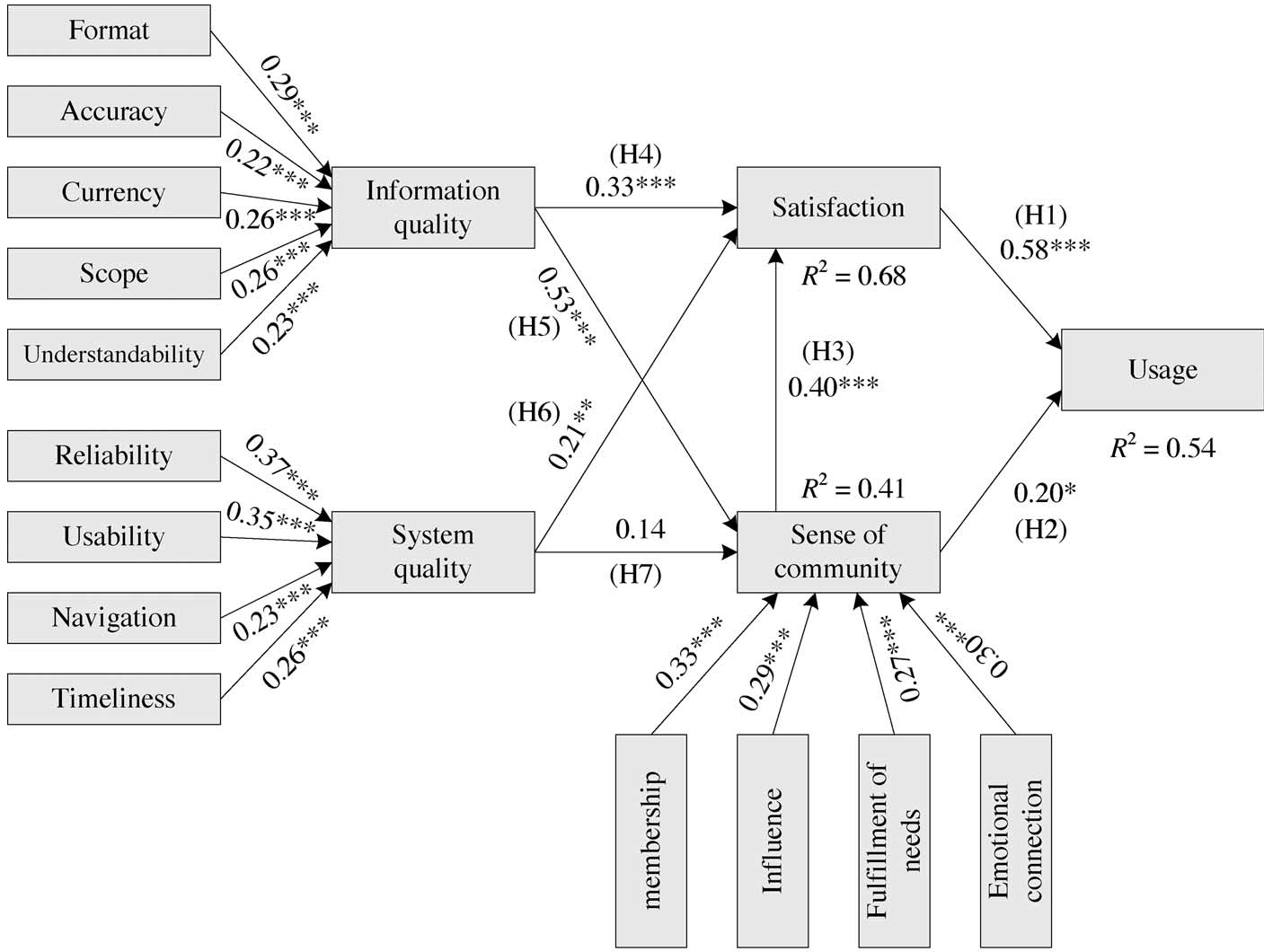
The study used Partial Least Squares (PLS) to analyze the data, yielding several "Aha!" moments:
- Satisfaction is Necessary, but SOC is the Glue: Satisfaction is the strongest predictor of usage (H1), but SOC provides a significant direct boost (H2) and also feeds into satisfaction (H3).
- Content Over Code: Information Quality (accuracy, currency, scope) significantly impacts SOC (H5). If the content is bad, the community feeling dies.
- The "System Quality" Paradox: Interestingly, while a buggy site makes you dissatisfied, System Quality (ease of navigation, speed) had no significant impact on the Sense of Community (H7). People will endure a clunky interface if the community is vibrant.
Depth Analysis: The "Friendster Effect"
The paper cites Friendster as a cautionary tale. It had the users (membership size), but lost the "spirit." When MySpace offered better Information Quality (music/video), users migrated. The takeaway for today's product managers is that Membership Size ≠ Community Health. Successful platforms must foster localized, high-engagement groups rather than just amassing a "global" directory.
Critical Perspective & Limitations
While groundbreaking for its time, the study has gaps:
- Self-Reporting Bias: Usage was measured by user perception, not server logs.
- Homogeneous Sample: Using U.S. college students limits generalizability to workplace professionals or different cultures.
- Static View: SOC evolves over time; a longitudinal study would tell a richer story of how community feelings wax and wane.
Conclusion: The New Metric for Success
This research moves the needle from "User Experience" to "Community Experience." It highlights that for social platforms, the technology is just a vessel; the real value lies in the multidimensional psychological bonds—the influence, the needs met, and the shared history. To build the next great social network, don't just optimize the UI; optimize the sense of "we."