
Beyond the Password: Why Users Love Smartcards (But Forget Them in the Reader)
A Field Study of User Behavior and Perceptions in Smartcard Authentication
The paper presents a longitudinal field study (10 weeks, 24 participants) evaluating user behavior and perceptions of the Personal Identity Verification (PIV) smartcard system. Using ethnographic methods, the study finds that smartcards effectively reduce password fatigue and that overall user acceptance is high, successfully transitioning multi-factor authentication from a lab concept to a real-world work process.
TL;DR
A 10-week field study by NIST and Maryland researchers reveals that users embrace smartcards not because they feel more secure, but because PINs are easier to remember than 12-character passwords. Despite early friction—like forgetting cards in readers—88% of users would recommend the system, proving that user convenience is the ultimate driver of security adoption.
Problem & Motivation: The Tension Between Work and Security
In the high-stakes world of government and corporate security, the "Weakest Link" theory has often led to the imposition of increasingly complex password policies. Users are forced to create 12+ character strings that expire every 90 days, leading to a "cognitive tax" that actually decreases security as people resort to writing passwords on sticky notes.
The researchers sought to understand if Personal Identity Verification (PIV) smartcards—a form of Multi-Factor Authentication (MFA)—could alleviate this burden while maintaining a secure perimeter. The question wasn't just "Does it work?" but "How does it change the way people actually work?"
Methodology: Ethnography in the Wild
Unlike a controlled lab experiment, this study followed 24 participants in their natural office environments.

The researchers used a triad of data collection:
- Direct Observation: Seeing how USB readers cluttered desks or how laptop docking affected card access.
- Daily Diaries & Emails: Capturing "Critical Incidents" (e.g., "I forgot my card and had to drive back to campus").
- Periodic Surveys: Measuring the shift in confidence and satisfaction over 10 weeks.
Methodology Detail: The Hardware Factor
One of the most interesting "physical" insights was the impact of the reader form factor.
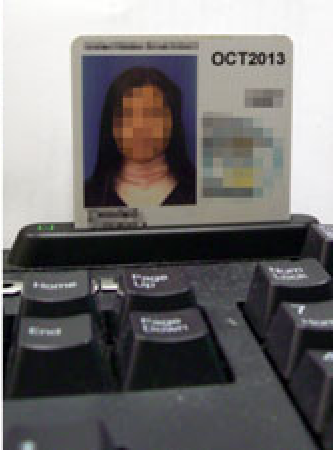 Fig 1: USB readers (left), laptop slots (middle), and integrated keyboards (right).
The study found that physical visibility matters. Users with external USB readers often "buried" them under papers, leading them to forget the card when leaving their desk. Conversely, integrated keyboard readers provided a more seamless experience but sometimes clashed with ergonomic keyboard trays.
Key Results: Habit Formation vs. Cognitive Load
The data suggests a 4-to-6-week window for "habituation."
- The Password-to-PIN Shift: This was the "Killer Feature." Participants rated the PIN significantly higher than passwords (4.32/5.00 at exit). The numeric PIN never expired, which solved the "Password Fatigue" problem.
- Forgetfulness: 54% of participants left their card in the reader at least once. However, as habits formed, many developed personal "hacks," such as placing their badge holder in front of their keyboard to serve as a visual cue.
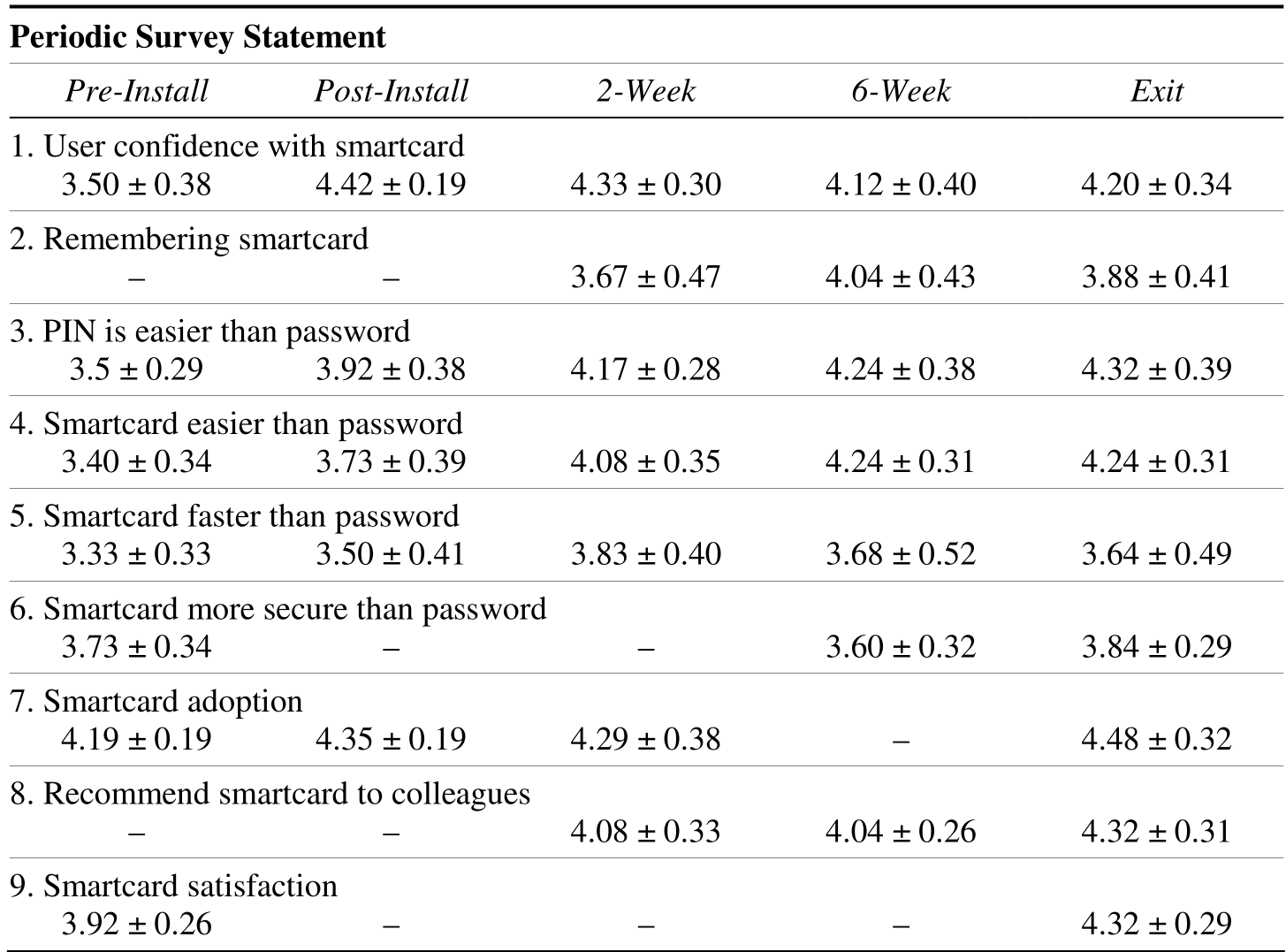 Table 2: Longitudinal trends showing a steady increase in user confidence and perceived ease of use.
Critical Insight: The "Why" Matters
The most profound finding for technical leads is this: Perceptions were influenced by personal benefits, not increased security.
Users didn't care about "Multi-Factor entropy" or "PKI certificates." They cared that they no longer had to remember a bizarre 12-character password. When security tools provide a "quality of life" improvement, users become the strongest link. When they only provide friction (like the under-utilized digital signatures which 0% of users found useful), they ignore them.
Conclusion & Future Outlook
This study proves that smartcard-based MFA is a viable, user-friendly replacement for passwords, provided that the physical environment (readers) is optimized.
Future Research Directions:
- Integration: Improving SSO (Single Sign-On) so the smartcard unlocks everything, not just the OS.
- Physical UX: Designing readers that "nudge" users to take their cards.
- Education: Bridging the gap between "knowing how to encrypt" and "knowing why to encrypt."