
Identifying the Keystones: Breaking Social Network Engagement via k-Core and k-Truss Collapse
Finding Critical Users in Social Communities: The Collapsed Core and Truss Problems
This paper introduces the Collapsed k-Core Problem (CCP) and Collapsed k-Truss Problem (CTP) to identify critical users whose removal maximizes network engagement loss. The authors propose greedy heuristic algorithms (CKC and CKT) with advanced pruning techniques to solve these NP-hard problems across massive social networks.
TL;DR
In social networks, some users are more "critical" than others—their departure doesn't just reduce the node count by one; it triggers a domino effect of dropouts. This paper formalizes this via the Collapsed k-Core (CCP) and Collapsed k-Truss (CTP) problems. The authors prove these problems are NP-hard and propose highly efficient pruning algorithms (CKC and CKT) that can identify these "keystone" users in massive networks like Orkut and DBLP in seconds.
Background: The Contagion of Leaving
Why do social communities dissolve? A popular model for engagement is the k-core: a subgraph where every member has at least neighbors. If a user leaves and their remaining friends now have fewer than friends, they leave too. This creates a cascade of departure.
While prior work like Anchored k-core focused on how to save a network by adding users, this paper asks the inverse: Which users, if removed, cause the largest possible collapse?
The Problem & Motivation
The authors identify a critical gap: traditional metrics like "highest degree" (most popular users) or "highest core number" are often misleading. A user might have many friends, but if all those friends have deep connections elsewhere, that user's departure might trigger zero followers. Conversely, a "bridge" user in a fragile core might trigger a massive exodus.
Key Challenges:
- Complexity: CCP and CTP are proven to be NP-hard and inapproximate within a factor of .
- Scalability: Exhaustively checking all combinations of users is impossible for large graphs.
- Core vs. Truss: k-core only looks at degrees (quantity), while k-truss looks at triangles (quality/tie strength). Handling triangles is computationally much heavier.
Methodology: Pruning the Search Space
The core contribution lies in reducing the "Candidate Collapsers." Instead of checking every node, the authors use several mathematical "filters":
- Theorem 4 (CCP Pruning): Only neighbors of nodes that have exactly degrees in the -core can be collapsers. If everyone has friends, removing one friend won't make anyone drop below the threshold.
- Theorem 10 (Follower Pruning): If user A is a follower of user B (meaning if B leaves, A is guaranteed to leave), then user A cannot be a better collapser than B. We can skip checking A entirely.
Model Architecture & Workflow
The algorithms CKC (Collapsed k-Core) and CKT (Collapsed k-Truss) follow a greedy iterative approach:
- Identify legal candidates using pruning rules.
- Estimate collapsing power based on "Effective Degree" (neighbors sitting exactly at the threshold).
- Pick the best, update the graph, and repeat for budget .
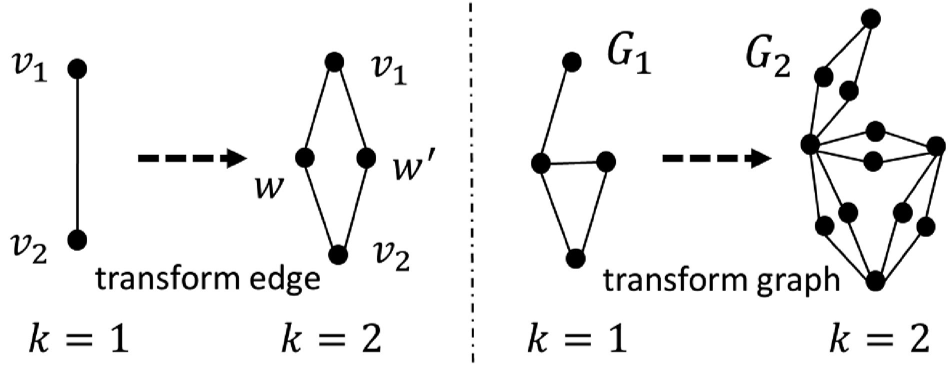 Figure 2: The construction used to prove NP-hardness for k-core and k-truss.
Experiments & Results
The authors tested their methods on 9 massive datasets. Key findings include:
- Superior Efficiency: CKC is significantly faster than Baseline approaches, scaling linearly with the budget and handling networks with millions of edges (like Pokec and Orkut) with ease.
- Truss vs. Core: The k-truss model (CKT) is more effective at finding tight-knit communities. As shown in the DBLP case study, the collapser found by CKT broke a much more cohesive group than k-core.
- Engagement Loss: In Orkut, removing just 20 "critical" nodes identified by CKT resulted in over 4,500 total nodes dropping out—a massive leverage effect.
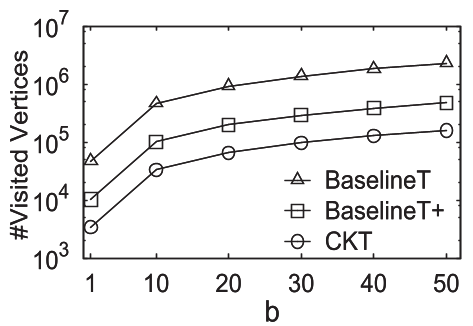 Figure 14: Performance comparison showing CKC's scalability across various social networks.
Critical Analysis & Conclusion
The value of this work lies in its structural insight. It moves beyond local centrality (who is popular?) to global impact (who holds the structure together?).
Takeaways:
- Tie Strength Matters: k-truss is a superior model for social "glue" because it requires mutual friends (triangles), not just connections.
- Pruning is Power: By using graph theory to eliminate 90%+ of candidates, the authors made an NP-hard problem practically solvable at the scale of the modern web.
Limitations: The model assumes a binary state (engaged or not). In reality, user engagement is a gradient. Future work could integrate "partial engagement" or weighted edges representing varying interaction frequencies.
Future Outlook: This methodology is highly applicable to Network Robustness (protecting infrastructure) and Biological functional groups (identifying critical proteins in cellular networks).