
Fine-Grained SIoT: Bridging Security Gaps in Cross-Domain Social IoT
A Fine-Grained Cross-Domain Access Control Mechanism for Social Internet of Things
This paper proposes a comprehensive fine-grained cross-domain access control mechanism for the Social Internet of Things (SIoT). It integrates trust models for Certificate Authorities (CA), user login protocols, and a cross-domain secure authentication protocol using both Public Key (PKC) and Symmetric Key Cryptography (SKC).
TL;DR
As the Internet of Things (IoT) evolves into the Social Internet of Things (SIoT), the complexity of data sharing across different administrative domains has skyrocketed. This paper introduces a sophisticated security framework that combines Usage Control (UCON) and Role-Based Access Control (RBAC) to enable fine-grained, cross-domain data access. By using a hybrid cryptography approach and a mesh-based trust model, the authors provide a scalable solution for mission-critical scenarios where data sensitivity varies significantly.
Problem & Motivation: The "Single Authority" Fallacy
Most traditional Wireless Sensor Network (WSN) security models operate under a flawed assumption: that all nodes and base stations are governed by a single entity. In a real-world SIoT—where smart cities, emergency services, and private social networks intersect—this is rarely the case.
The authors identify two primary pain points:
- Administrative Boundaries: Data often needs to flow between different domains (e.g., a city transport sensor sharing data with a social media user's app).
- Uniformity vs. Granularity: Current systems often treat all data the same. In a battlefield or disaster relief effort, a general should see everything, while a soldier needs only mission-specific data. Providing "uniform security" is either too restrictive for the general or too permissive for the soldier.
Methodology: The Mesh of Trust
The core of the paper lies in its Cross-Domain Secure Authentication Protocol and its Role-Mapping Mechanism.
1. Hybrid Trust Model
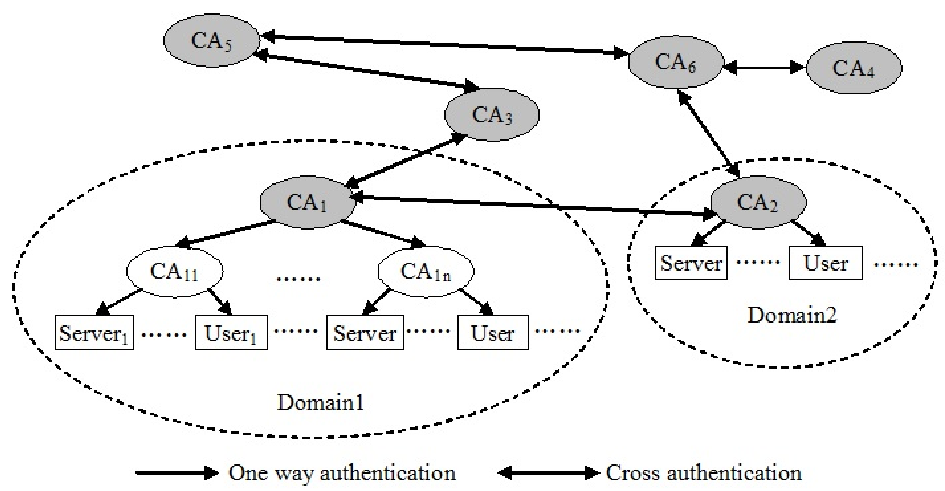
Instead of a single bottleneck, the paper proposes a multilayer tree structure for intra-domain trust and a mesh structure for inter-domain (cross-domain) trust. This allows different domains to verify each other's Certificate Authorities (CAs) without losing local control.
2. Fine-Grained Role Mapping
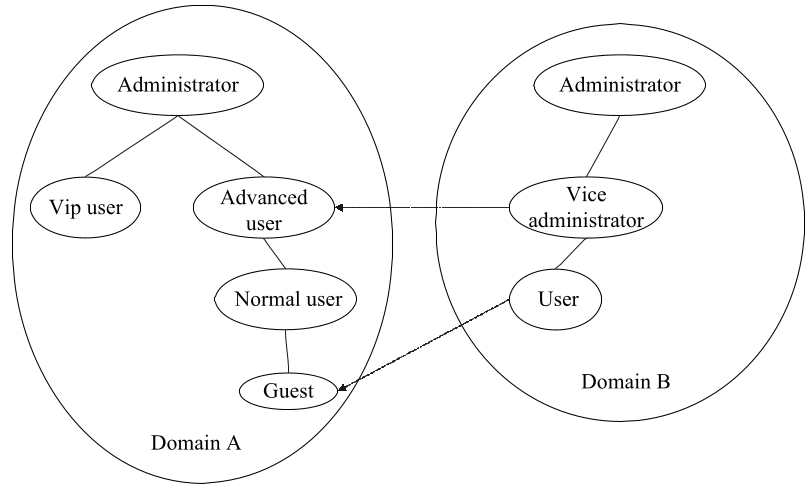
To solve the "who gets to see what" problem across domains, the authors implement Role Mapping (RM). If a user is a "Vice Administrator" in Domain B, they might be mapped to an "Advanced User" status when accessing Domain A. This ensures that permissions are not lost but are appropriately throttled according to the destination domain's policies.
3. Usage Control (UCON)
Unlike traditional access control that only checks credentials at the start (pre-authorization), the UCON model allows for ongoing decisions. This means access can be revoked mid-session if environmental conditions or subject attributes change, providing a far more dynamic security posture.
Experiments & Results: Feasibility at Scale
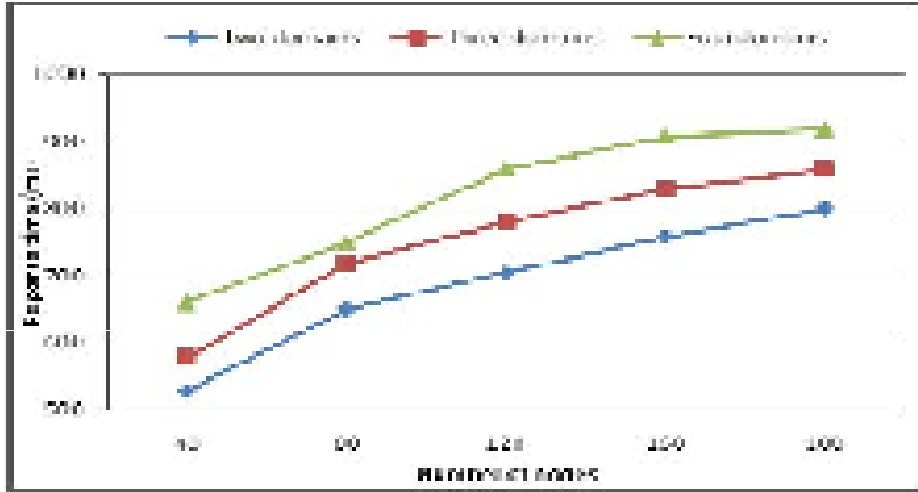
The authors validated their mechanism using NetLogo for network simulation. They focused on two key metrics: Time Overhead and Control Precision.
- Latency: The results indicate that as the number of security services and domains grows, the time overhead increases linearly rather than exponentially, suggesting the protocol is viable for real-time applications.
- Precision (Pr): The "Precision Rate" formula was used to measure how many access attempts were correctly governed by the security policy. High precision rates in the simulations confirmed that the fine-grained policies were being enforced accurately without significant "leakage."
Critical Insight & Conclusion
The true value of this work is its recognition that Social IoT is inherently a trust-negotiation problem. By moving away from static, single-domain keys to a dynamic, role-mapped environment, the authors provide a blueprint for how heterogeneous networks can collaborate securely.
Takeaway: Future IoT products shouldn't just focus on connectivity; they must incorporate "administrative awareness"—the ability to recognize and translate user roles across different corporate or social boundaries.
Limitations: While the simulation is promising, the paper does not extensively cover the energy overhead on resource-constrained sensor nodes when performing Public Key operations, which remains a traditional bottleneck in WSN deployments.