
Beyond Discrete Labels: Fine-Grained Facial Analysis via Dimensional Regression
Fine-grained facial expression analysis using dimensional emotion model
This paper introduces a dimensional emotion model for fine-grained facial expression analysis, shifting the task from discrete classification to continuous regression (Valence-Arousal-Dominance). The authors leverage Bilinear CNNs (B-CNN) to capture second-order statistics, achieving SOTA performance in recognizing subtle and mixed emotional intensities in naturalistic datasets like FER-2013.
TL;DR
Facial expression recognition is evolving. This paper moves past the "Six Basic Emotions" dogma by mapping faces into a continuous Valence-Arousal-Dominance (VAD) space. By utilizing Bilinear CNNs to capture subtle second-order features, the authors transform expression analysis into a high-precision regression task, achieving nearly 90% accuracy in mapping the nuance of human affect.
The "Categorical" Fallacy in Affective Computing
For decades, the field of Facial Expression Recognition (FER) has been dominated by Ekman’s six basic emotions (Happy, Sad, Angry, Fear, Disgust, Surprise). While useful, this discrete approach creates "hard boundaries" that don't exist in reality.
In the wild, expressions are:
- Mixed: You can be "happily surprised" or "angrily disgusted."
- Varying in Intensity: Irritation is a different coordinate than fury, yet both are "Angry."
- Spontaneous: Natural expressions are subtle and fleeting, unlike the exaggerated poses in legacy datasets like CK+.
The authors argue that to truly understand humans, AI must stop "classifying" and start "measuring."
Methodology: Mapping Faces to a 3D Coordinate System
The core innovation lies in the transition from Classification to Regression.
1. The Mapping Mechanism
The authors converted categorical labels from the FER-2013 dataset into continuous values using the Affective Norms for English Words (ANEW). Each emotion was translated into a vector in the VAD space:
- Valence: Pleasantness vs. Unpleasantness.
- Arousal: Intensity/Excitement vs. Calmness.
- Dominance: Control/Influence vs. Submissiveness.
2. Bilinear Pooling for Fine-Grained Clues
To detect the subtle "micro-expressions" or tiny wrinkles that distinguish complex emotions, the authors employed Bilinear CNNs (B-CNN). Instead of standard Global Average Pooling, B-CNN computes the outer product of feature maps.
 Fig 1: The model architecture showing the transition from image input to 3D coordinate output.
Why does this work? The outer product allows the network to model pairwise correlations between different facial parts (e.g., how the corner of the mouth interacts with the narrowing of the eyes) at every spatial location, creating a holistic representation of the face.
Experimental Results: Precision Matters
The researchers tested their approach on the FER-2013 dataset, comparing standard VGG16/ResNet50 with their Bilinear counterparts.
Performance Gains
The results were conclusive: Bilinear pooling consistently beat global pooling.
| Architecture | Pooling | Valence RMSE (Lower is better) | Valence Corr (Higher is better) |
|---|---|---|---|
| ResNet50 | Global | 0.840 | 0.914 |
| ResNet50 | Bilinear | 0.741 | 0.934 |
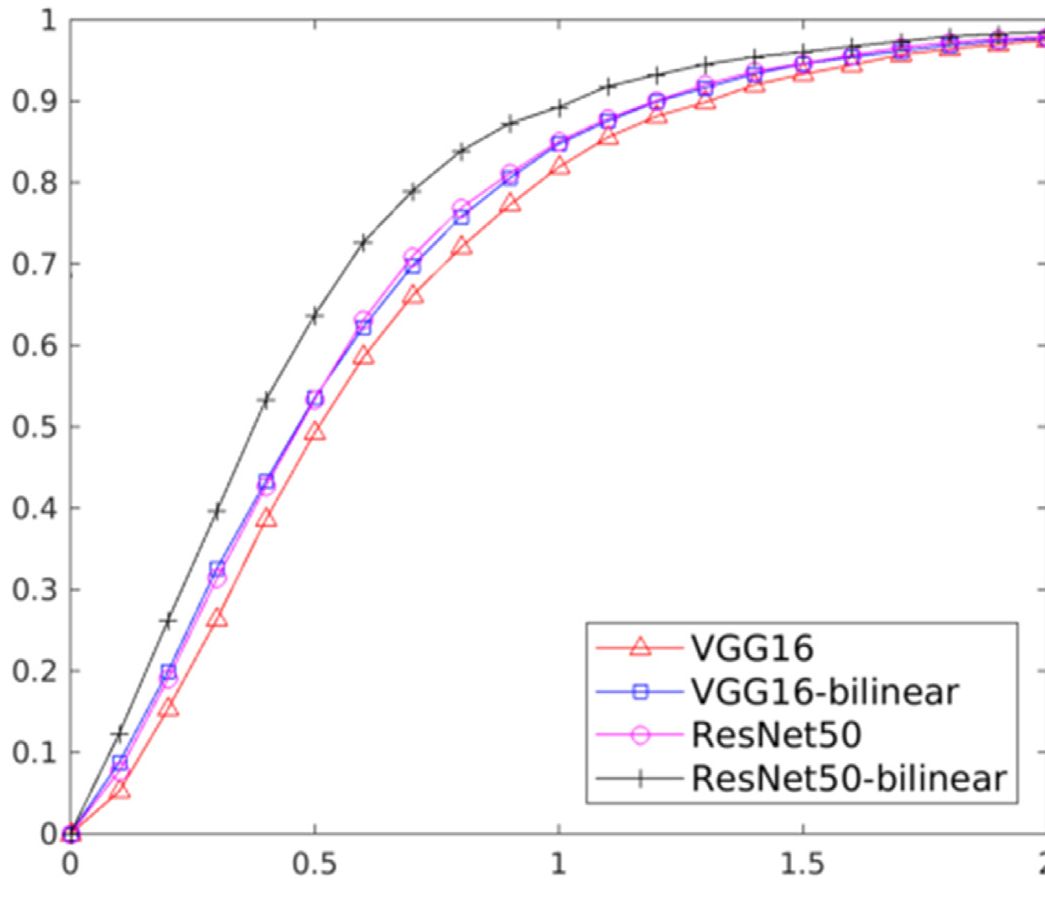 Fig 2: Occlusion Sensitivity Maps. Notice how the model focuses specifically on the mouth and eye regions to determine coordinates in the VAD space.
Deep Insight: Why Bilinear?
The paper reveals that while standard CNNs are good at identifying if a feature (like a smile) is present, Bilinear CNNs are superior at identifying the relationship and intensity of those features. By encoding second-order statistics, the model can tell the difference between a polite social smile and a genuine expression of joy—a capability vital for real-world HCI applications.
Critical Analysis & Future Directions
While the results are promising, the authors acknowledge a critical bottleneck: the lack of high-quality "Dimensional" ground truth. Most labels are still converted from discrete tags, which might introduce bias.
The Takeaway for the Industry: To reach the next level of "Human-Centric AI," we must move away from simple labels. Products in health-tech, automotive safety, and gaming should look toward continuous affect monitoring. Imagine a game that adjusts its difficulty not just because you lost, but because it senses your frustration level rising in the VAD space.
Conclusion
This work provides a robust framework for fine-grained facial analysis. By treating emotion as a landscape rather than a set of boxes, and using second-order statistics to navigate that landscape, we bring machines one step closer to understanding the true complexity of human feeling.