
Decoding the Digital Touch: Identifying ASD Through Haptic VR and Machine Learning
Understanding Fine Motor Patterns in Children with Autism Using a Haptic-Gripper Virtual Reality System
This study introduces a novel Haptic-Gripper Virtual Reality (VR) system designed to capture objective fine motor data from children with Autism Spectrum Disorders (ASD). By employing machine learning classifiers like k-NN and ANN on metrics such as grip force and movement speed, the researchers achieved up to 80% accuracy in distinguishing ASD profiles from typically developing peers.
TL;DR
While social communication is the hallmark of Autism Spectrum Disorder (ASD) diagnosis, motor signatures offer a "hidden" quantitative window into the neurobiology of the condition. This paper presents a Haptic-Gripper VR system that records fine motor data (grip force, speed, location) during virtual tasks. Using these digital footprints, machine learning models successfully classified children with ASD with 80% accuracy, highlighting grip force as a critical, underutilized diagnostic metric.
Background: Beyond Social Interaction
Historically, ASD diagnosis has been a qualitative "waiting game," relying on behavioral observations that are often resource-intensive. However, motor delays—ranging from atypical gait to poor hand-eye coordination—affect a vast majority of the ASD population. The researchers at Vanderbilt University hypothesize that if we can quantify these subtle "fine motor patterns," we can create a more objective, computer-aided diagnostic pipeline.
The Haptic-Gripper System: Quantifying the "Feel"
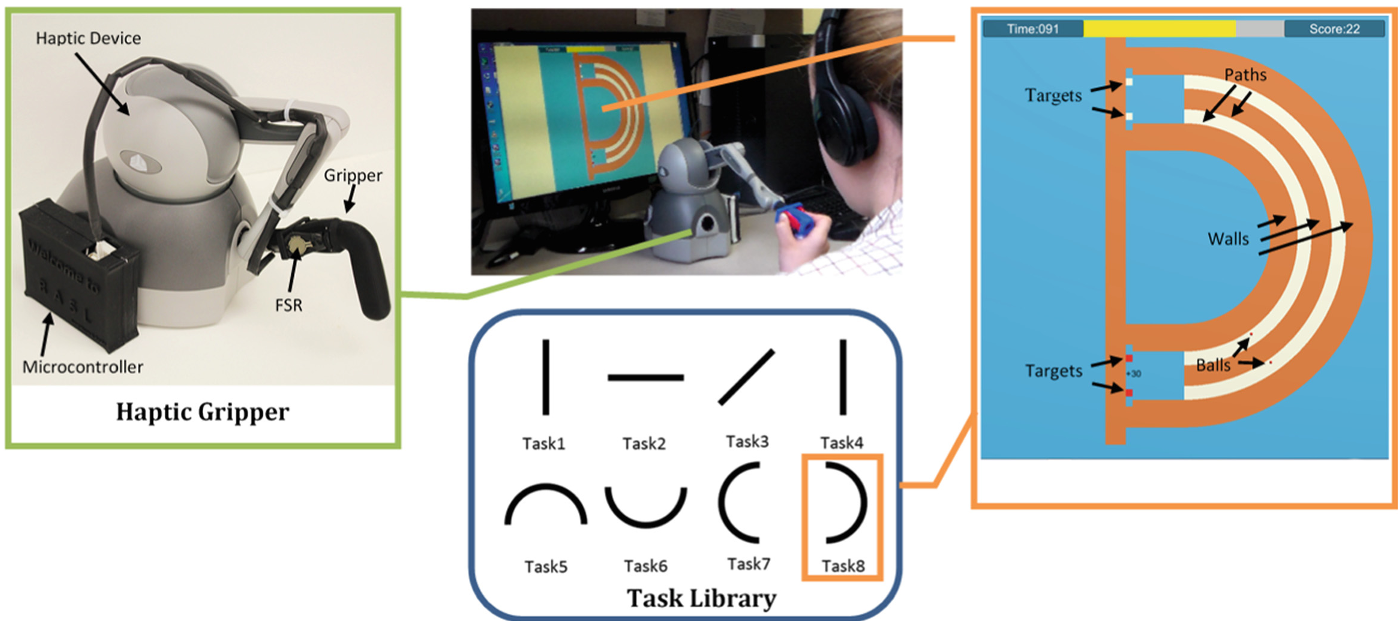
The core of the methodology is a customized hardware-software loop. The authors modified a Geomagic Touch haptic device with a 3D-printed gripper outfitted with Force Sensing Resistors (FSRs).
How it Works:
- Virtual Task: Children manipulate a pair of grouped balls through white paths in a VR environment.
- Multimodal Sensing: The system records hand location at 50 Hz while simultaneously measuring the pinch force (Grip Force) required to adjust the distance between the virtual balls.
- Haptic Feedback: Unlike a standard tablet, this system provides physical resistance if the child hits a virtual wall, ensuring a high sense of immersion and "natural" motor response.
Feature Engineering and Machine Learning
The study extracted 59 features categorized into duration, hit counts, grip force, speed, and RMSE (Root-Mean-Square Error)—an indicator of motion stability.
A critical technical insight was dividing the task into GO (forward) and BACK (return) processes. The authors found that the way a child adapts their motor control when returning through a known path (the "BACK" process) was highly indicative of their developmental profile.
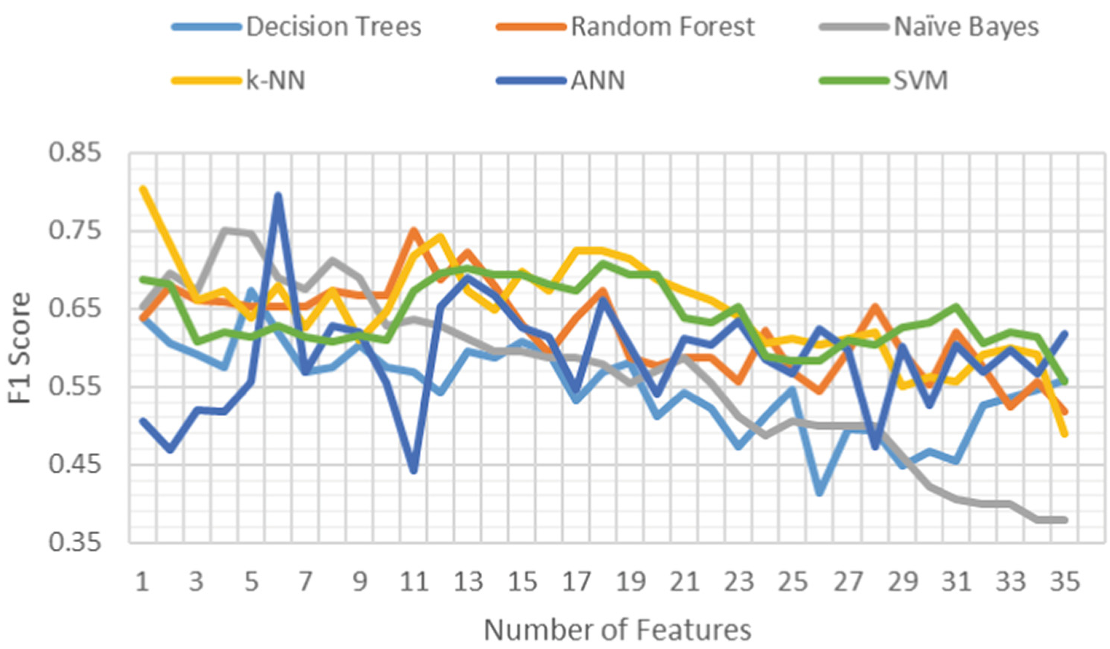
Classifiers Performance:
- k-Nearest Neighbor (k-NN): 80% (Highest, achieved with just the Mean Grip Force feature).
- Artificial Neural Network (ANN): 80% (Achieved using a 6-feature subset).
- Random Forest: 75%.
Critical Insight: The "Force" is Telling
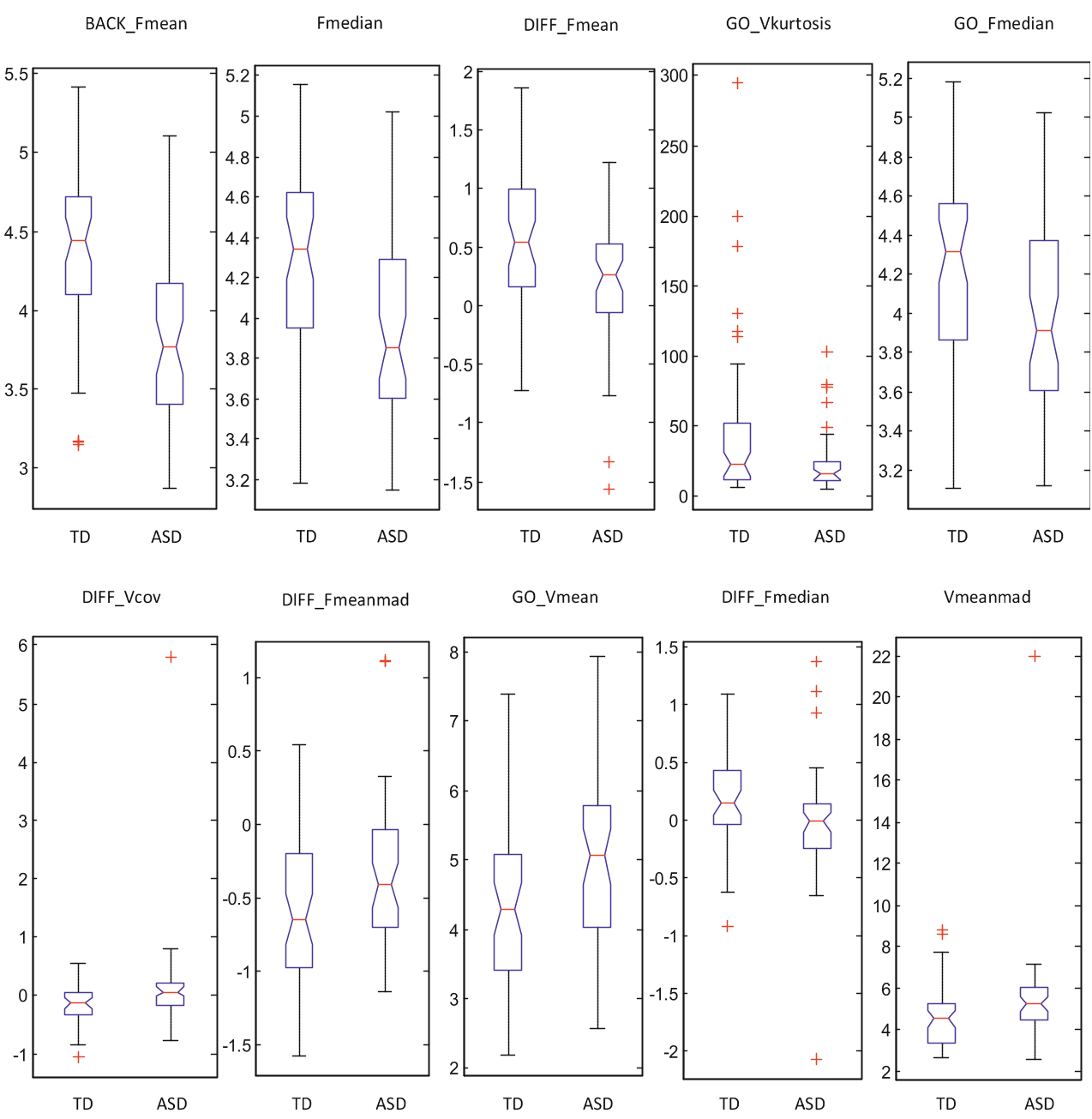
The most striking result from the ANOVA tests was the dominance of Grip Force features. Children in the ASD group applied significantly smaller grip forces and showed less adjustment (variability reduction) when moving from the GO to the BACK phase compared to the TD group.
- ASD Profile: Smaller grip force, greater speed variability, lower motor stability (higher RMSE).
- TD Profile: Controlled force application, efficient speed adjustment, and smoother trajectories.
Conclusions and Future Outlook
This work proves that fine motor patterns are not just a side effect but a core signature of ASD. By moving diagnostic metrics from "observations" to "forces and milliseconds," the Haptic-Gripper system paves the way for:
- Low-cost screenings: Deployable in schools or smaller clinics.
- Objective Monitoring: Tracking progress in motor intervention therapies over time.
Limitations: The study's sample size (n=12) is small, and the age range (8-12) is relatively narrow. Future work should focus on younger toddlers to test if these motor signatures appear before social deficits become fully manifest, potentially enabling even earlier intervention.
Author Perspective: This paper is a significant "proof-of-concept" that moves ASD diagnosis into the realm of signal processing. The high performance of the k-NN classifier using a single force feature suggests that we've only scratched the surface of what "physical intelligence" can tell us about neurodiversity.