
Finger Extension & Flexion: The Hidden Impact of Trackpad Logic on Product Evaluation
Finger Extension and Flexion: How Does the Trackpad Orientation Influence Product Evaluation in Social Media?
This research investigates how trackpad scrolling orientation (Natural vs. Reversed) affects product evaluation and memory through the lens of Embodied Cognition. Using three laboratory experiments, the authors propose a theoretical framework where Natural orientation enhances "processing fluency," leading to more positive product attitudes but poorer information recall.
TL;DR
Ever wondered if the way you scroll on your laptop changes how much you like a product? This study reveals that "Natural" trackpad orientation (where content follows your fingers) increases processing fluency, making you like products more but remember them less. If you are a brand seeking "likability," natural is better; if you want "recall," a bit of friction (reversed orientation) might actually help.
Context: When the Body Speaks to the Mind
In the world of social media and e-commerce, we spend millions optimizing pixels, yet we ignore the fingers touching the hardware. Traditional research views the body as a mere vessel, but Embodied Cognition (EC) suggests that our physical movements—like stretching a finger (extension) or curling it (flexion)—directly prime our psychological state.
The authors of this study argue that the physical act of scrolling isn't just a utility; it's a cognitive cue.
The Core Conflict: Natural vs. Reversed
The paper focuses on the two standard scrolling behaviors:
- Natural Orientation: Scrolling down causes finger extension. The content moves in the same direction as the fingers.
- Reversed Orientation: Scrolling down causes finger flexion. The content moves inversely.
The researchers hypothesized that Natural orientation creates a "fit" between our visual perception and motor activity. This leads to Processing Fluency—that feeling of "ease" when interacting with an interface.
Methodology: The Three-Step Proof
The researchers designed three experiments to validate their claims:
- Main Effect: Testing if orientation actually changes attitude and memory.
- The "Why" (The Mediator): Checking if "Fluency" is the bridge between the finger movement and the result.
- The "When" (The Moderator): Seeing if shopping motivation (Browsing vs. Goal-seeking) changes the outcome.
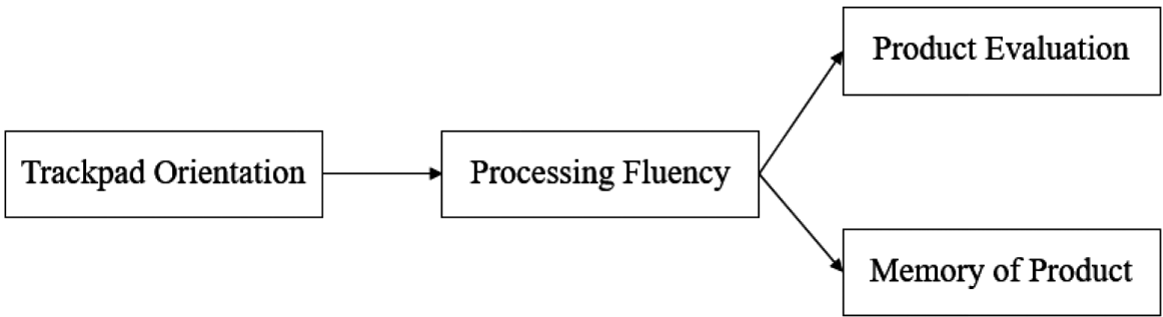 Figure 1: The proposed research model linking trackpad orientation to evaluation via processing fluency.
Key Insights: The Fluency Paradox
The most fascinating finding is the divergence between Attitude and Memory:
- The Positivity Bias: Natural orientation leads to higher fluency. When things feel easy, we attribute that "good feeling" to the product itself. Thus, product evaluations go up.
- The Memory Trap: However, high fluency triggers System 1 (Intuitive) thinking. We glide through the content effortlessly and, as a result, don't encode details.
- The Disfluency Advantage: Reversed orientation is slightly "clunky." This disfluency triggers System 2 (Analytical) thinking. Because users have to work harder, they actually remember product specs better.
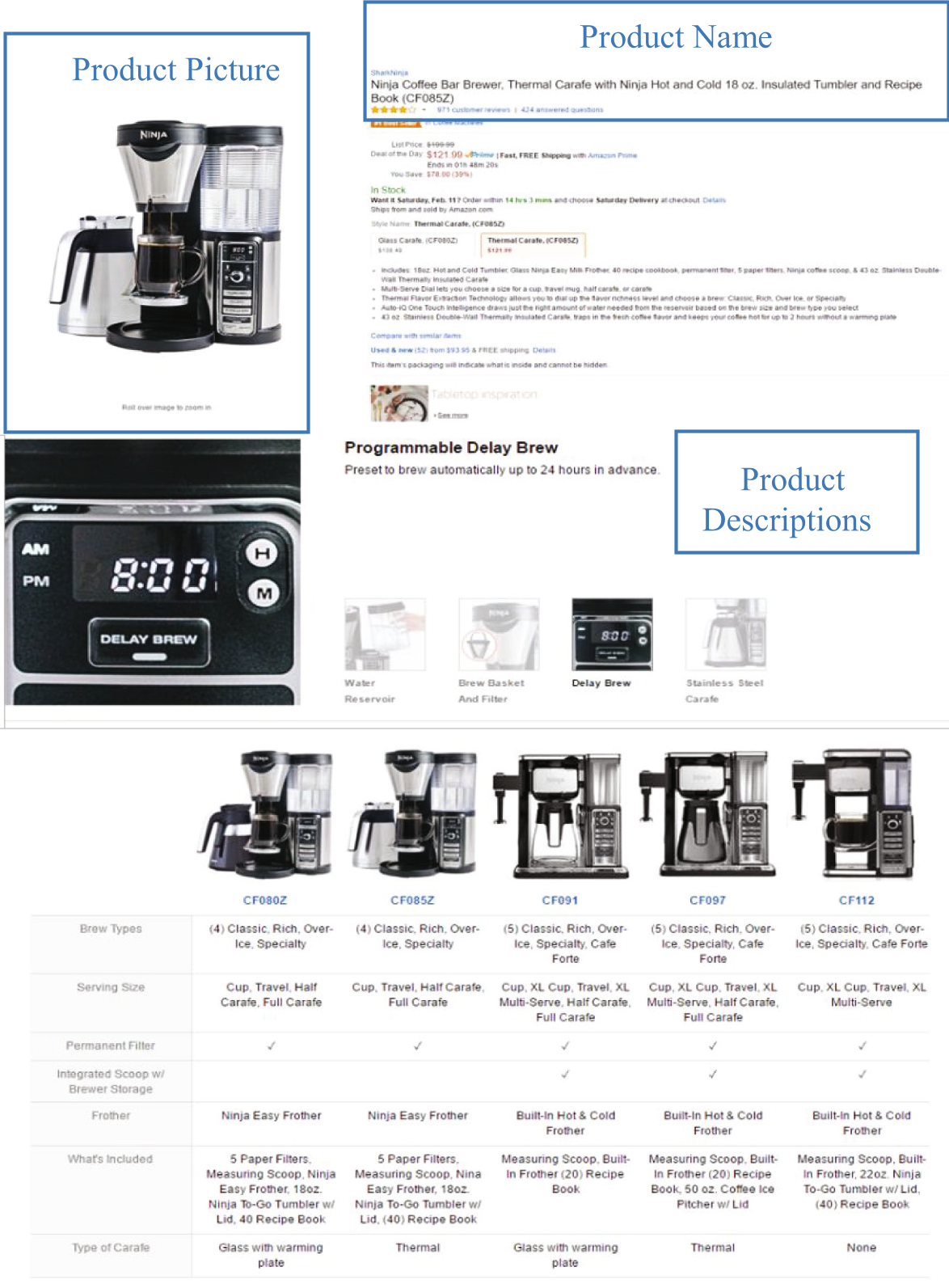 Figure 2: Sample product layout used to test scrolling duration and recall.
The Decoder: Shopping Motivation
Does this happen every time? Not if you’re a "Goal-Oriented" shopper. If you are specifically looking for a birthday gift with fixed requirements, your brain is already in System 2 mode. The study found that for these users, the trackpad orientation mattered much less. The "Systematic Processing" required by the task overrode the "Heuristic Processing" triggered by the trackpad.
Critical Analysis & Conclusion
This paper provides a wake-up call for UX designers. We usually crave "frictionless" experiences, but this research suggests that friction is a tool.
Takeaways for the Future:
- For Marketers: If you want to build "brand vibe" and positive associations, keep the interaction as fluent (Natural) as possible.
- For Educators/Technical Specs: If you need a user to memorize complex data or safety instructions, a slightly "disfluent" or unique interaction might increase cognitive engagement.
- Limitations: The study primarily focused on Apple laptops (trackpads). Future research needs to bridge this into the world of haptic feedback and Mobile Touchscreens, where the gestures are even more intimate.
Ultimately, this work proves that in the digital age, the "Mind-Body" connection isn't just philosophy—it's a conversion metric.