
Decoding the Corporate Web: How Communication Habits Shape Company Social Networks
A Firm-Growing Model and the Study of Communication Patterns’ Effect on the Structure of Firm’s Social Network
The paper proposes a "Firm-Growing Model" to simulate the evolution of social networks within companies, specifically examining how intra-group and inter-group communication patterns shape organizational structure. Validated against empirical data from two R&D departments, the model accurately reproduces complex network features like small-world effects and shifted Poisson degree distributions.
TL;DR
Why do some companies feel like agile, interconnected communities while others feel like isolated silos? This paper introduces a Firm-Growing Model that uses physics-inspired complex network theory to simulate how a company's social fabric evolves. By adjusting two parameters—apathy toward internal peers (β) and formalism in cross-group projects (P)—the researchers successfully predicted the real-world social structures of two large R&D departments.
The Missing Link in Management Science
Management scholars have long known that "who you know" in a company dictates how knowledge flows. However, most studies are just "snapshots" (surveys at a single point in time). They can't tell you how the network got that way.
The authors argue that a firm's social network is a living organism shaped by the tension between:
- Group Boundaries: Physical and hierarchical "silos" that separate departments.
- Interaction Gravity: The tendency to talk to leaders (formal) versus the chance encounters at the coffee machine (informal).
Methodology: The Mechanics of Growth
The model grows by adding a new employee at each time step and assigning them to a group. Their connections are then determined by two distinct mechanisms:
1. Internal Dynamics (The β Parameter)
Not everyone wants to make new friends. The model uses a probability function: Where β represents "apathy." If β is high, employees who already have a few "friends" (high degree k) become very reluctant to interact further. This creates a bottleneck in internal knowledge sharing.
2. Cross-Departmental Dynamics (The P Parameter)
Projects are launched involving multiple groups.
- Formal (Probability P): Only the most experienced "tenured" employees are chosen.
- Informal (Probability 1-P): Any random employee can participate.
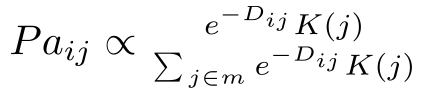 The probability for a new recruit to connect to an existing employee j depends on the physical distance and the existing social degree of j.
Real-World Validation
The authors tested their math against two real firms: a Sino-German joint venture (Firm A) and a Chinese state-owned company (Firm B).
| Metric | Firm A (Real) | Simulation | Firm B (Real) | Simulation |
|---|---|---|---|---|
| Avg Degree | 4.81 | 5.02 | 4.13 | 4.28 |
| Clustering (C) | 0.4430 | 0.4786 | 0.4221 | 0.5465 |
| Scalar Assortativity | -0.2125 | -0.1953 | -0.2032 | -0.2201 |
Key Insight: Unlike many general social networks (like friend groups or scientific collaborations) which show positive assortativity (popular people hang out with popular people), firms show negative assortativity. This means "low-status" newcomers primarily connect with "high-status" leaders due to formal reporting lines, creating a hub-and-spoke rather than a peer-to-peer structure.
Visualizing the Network Behavior
The model reveals that when β and P are high (typical of bureaucratic, siloed firms), the network efficiency drops.
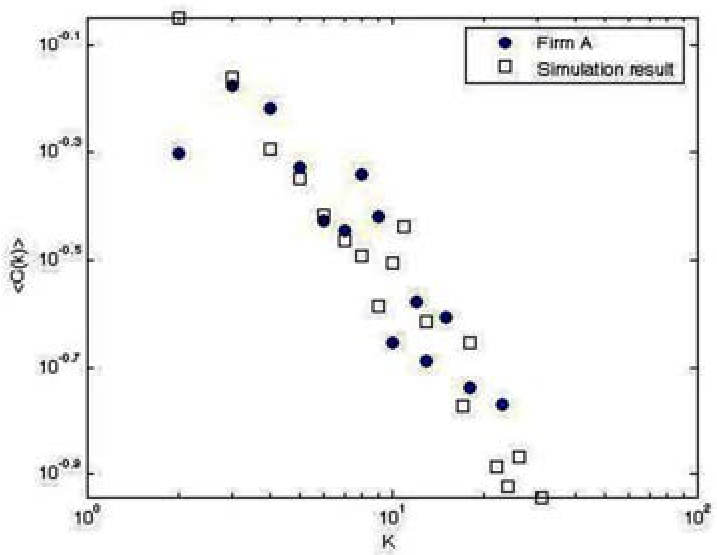 Fig 2: The local clustering coefficient vs node degree. Low-degree nodes (newcomers) often belong to highly clustered groups, while high-degree nodes (leaders) act as bridges.
Critical Insight & Strategy
The most profound takeaway is that human apathy and formal procedure are the architects of your company's silos.
- High β: If employees feel they don't have the "energy" to maintain more than a few ties, the network becomes fragmented.
- High P: If only leaders are allowed to represent departments in cross-functional projects, the "middle" of the company never connects, leading to a brittle structure.
Future Work: The authors admit they haven't yet modeled "employee churn" (resignation). In the modern "Great Resignation" era, understanding how a network survives when a central "hub" (leader) leaves is the next frontier for organizational physics.
Conclusion
This study bridges the gap between physics and HR. By treating a company as a growing complex network, we can finally quantify the structural cost of bureaucracy. If you want a more collaborative company, don't just "encourage" communication—lower the β (apathy) by reducing social friction and lower P (formalism) by letting subordinates lead cross-functional initiatives.