
Population Protocols in the Wild: Bridging Distributed Theory and Physical Reality
First Experiences with the Implementation and Evaluation of Population Protocols on Physical Devices
This paper presents the first real-world implementation and evaluation of "Population Protocols" (PP) using physical wireless sensing devices (OpenBeacon smart-tags). The authors successfully deploy decentralized computational tasks like threshold, modulo, and comparison predicates on a small-scale human social network, bridging the gap between theoretical distributed computing models and practical hardware constraints.
TL;DR
For years, Population Protocols (PP) remained a beautiful mathematical abstraction—a model for how "senseless" agents might compute complex predicates through random encounters. This paper marks the first time these protocols have been taken out of the simulator and placed onto real physical hardware (OpenBeacon tags). The transition reveals a fascinating reality: physical interference and "hidden terminals" break standard theoretical assumptions, yet the inherent parallelism of the real world can actually make these protocols converge faster than sequential models predict.
The Gap Between Blackboard and Badge
In the theoretical realm of Population Protocols, an omniscient "adversary" picks two agents, lets them exchange states, and repeats. This ensures stability and eventual convergence. However, when you give 10 volunteers wireless badges and tell them to walk around a room, the "adversary" is replaced by the laws of physics.
The authors identify two fatal flaws in the prior literature's approach:
- Oversimplification: Most "real-world" studies only collect traces for offline analysis rather than running live, decentralized logic.
- Concurrency Chaos: In reality, nodes A and C might both try to talk to node B simultaneously (the Hidden Terminal problem), leading to state corruption or packet collisions that theoretical models simply ignore.
Methodology: Engineering Stability
To make PP work on hardware with only 4MB of flash and tiny radio transceivers, the authors introduced a structured three-phase execution loop:
- Phase 1 (Setup): Local IDs and time-based seeds generate unique random numbers.
- Phase 2 (Discovery & Election): A local "leader election" occurs. Instead of a global adversary, the node with the highest random number in a neighborhood becomes the Initiator.
- Phase 3 (Interaction): The Initiator selects a responder and executes the state transition logic (e.g., Thresholding or Modulo math).
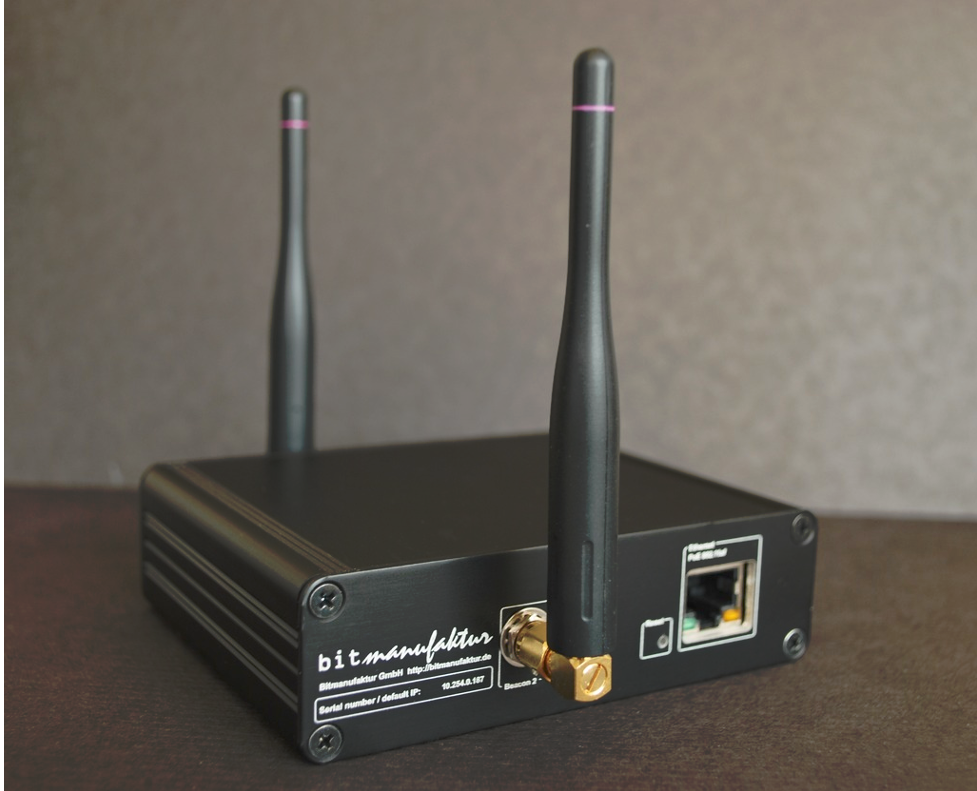 Fig 1: The challenge of concurrent interactions where node B might be interrupted mid-transaction.
Experimental Insights: The Parallelism Paradox
The team tested three fundamental predicates: Threshold (Is the count of 'a' ≥ T?), Modulo (Is the sum ≡ j mod k?), and Comparison (Are there more 'a's than 'b's?).
1. Robustness vs. Fragility
The Threshold Predicate proved remarkably resilient. Even if a link failed, the "counter" values weren't lost; they were simply delayed until nodes met again. Conversely, the Modulo and Comparison protocols often collapsed. If an "active" node (holding a critical state) failed to complete a transfer due to interference, the entire system could enter a permanent passive state, effectively "killing" the computation.
2. Time vs. Connectivity
The authors discovered a trade-off in the Neighbor Discovery (ND) phase. Longer discovery leads to better connectivity (fewer hidden terminals), but it slows down the clock speed of the protocol.
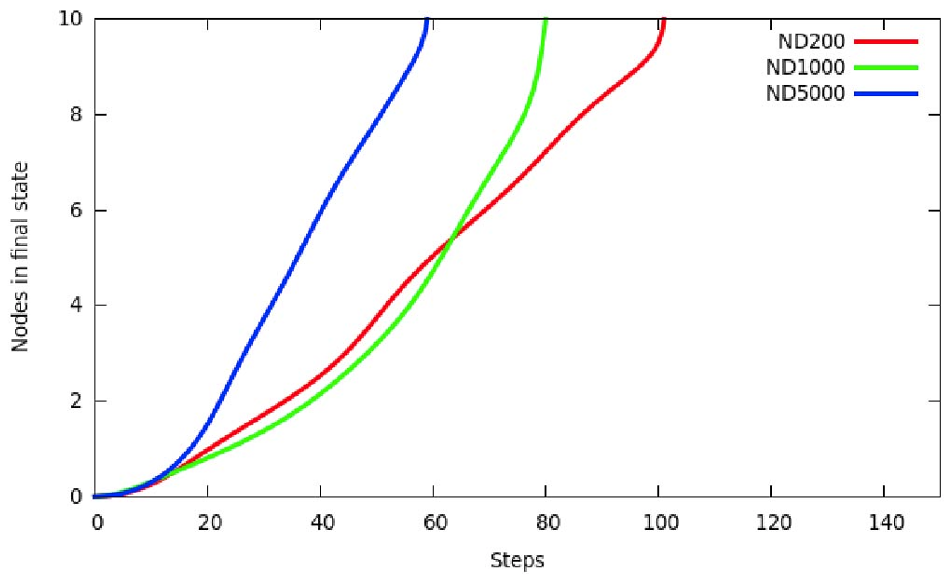 Fig 2: Real-world results showing that while more discovery steps (ND=5000) help convergence in terms of steps, shorter phases (ND=200) often converge faster in real-time.
Critical Analysis: Why Real Beats Simulation
One of the most striking findings is that the physical tags converged faster than the NetLogo simulator. In a simulator, interactions are strictly sequential—one pair at a time. In the real world, multiple pairs of agents can talk simultaneously in different corners of the room. This natural parallelism offsets the costs of radio collisions, a phenomenon that has long been underestimated in theoretical distributed computing.
Conclusion & Future Work
This paper serves as a reality check for the distributed computing community. While Population Protocols are theoretically sound, their survival in the wild depends on Fault Tolerance. The authors conclude that future research must move away from the "single-pair interaction" dogma and embrace models that handle concurrent, unreliable, and parallel communication channels. This is the only way to pave the project toward "Collaborative Computing" in massive, uncoordinated social or sensor networks.