
Unmasking the "Flaming" Phenomenon: Why Asymmetric Social Links Lead to Explosive Dynamics
Generation mechanism of flaming phenomena in on-line social networks described by perturbation of asymmetric link effects
This paper introduces a perturbation-based oscillation model to describe the "flaming" phenomena—explosive user dynamics in online social networks. By treating asymmetric directed links as perturbations to a symmetrizable network, the authors demonstrate how coupling between oscillation modes leads to complex eigenvalues and the eventual divergence of social energy.
TL;DR
Online "flaming"—the rapid, viral, and often toxic explosion of social interaction—isn't just a psychological trend; it's a structural instability in the network's "oscillation." This paper presents a mathematical framework using perturbation theory (akin to quantum mechanics) to show how one-way directed links cause social energy to diverge, turning a stable community into a viral firestorm.
Background: Networks as Oscillating Systems
Most of us view social networks as static maps of "who follows whom." However, in technical terms, these are dynamic systems where user states (opinions, activity levels) oscillate. When interactions are balanced (symmetrizable), the "energy" of the network stays contained. But when interactions become heavily one-sided—common in the era of viral retweets and influencer culture—the network's Laplacian matrix becomes asymmetric, leading to complex eigenvalues that mathematically represent uncontrolled growth, or flaming.
The Problem: The Mystery of Directed Influence
While previous work identified that asymmetric links cause instability, we lacked a way to calculate which links matter most. Prior models were "black boxes" that showed the result but not the causal mechanism of how a few directed links disturb the equilibrium of the entire system.
Methodology: The Quantum Analogy
The authors solve this by treating the asymmetric part of the network as a small perturbation () to an otherwise stable, symmetric system.
1. Matrix Decomposition
The network's Laplacian is split into:
- : The stable, symmetrizable core.
- : The "one-way" links that introduce asymmetry.
2. The Fundamental Equation
Drawing a striking parallel to the Dirac equation in relativistic quantum theory, the authors define a matrix such that . This allows them to describe the transformation of user states over time as a product of stable oscillation and a "perturbation factor."
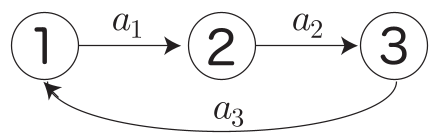 Fig 1: A simple cyclic one-way link graph used to test the perturbation theory.
3. Expansion and Coupling
By expanding the solution into a power series (), the authors can track how energy "leaks" from one oscillation mode to another. In a stable network, these modes are independent. In a flaming network, they couple together, reinforcing each other until the energy reaches infinity.
Experimental Validation
The authors tested their math on a three-node "cyclic" network.
- The Goal: Predict when the system becomes unstable.
- The Result: When the perturbation strength increased, the eigenvalues shifted. The perturbation expansion, even just at the second order, tracked the actual complex eigenvalue growth with high accuracy until the system hit a "critical" point of divergence at .
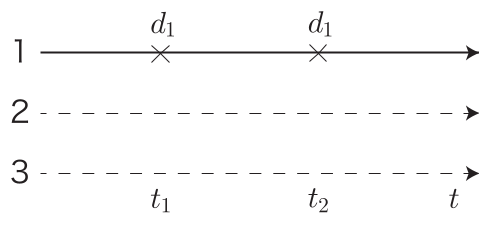 Fig 2: Comparison of estimated vs. actual eigenvalue shifts. Note how the perturbation model closely follows the actual values as asymmetry increases.
Critical Insight: When the Math Breaks, the Internet Burns
The most profound takeaway is that flaming corresponds to the divergence of the perturbation series. When the series no longer converges, it means the network can no longer absorb the "energy" of the asymmetric interactions.
Limitations: While elegant, this is a linearized model. Real-world social networks are non-linear; users get tired, or moderators intervene. However, as a "minimal model," it provides a rigorous spectral explanation for why certain network architectures (like highly polarized "follower" graphs) are inherently prone to explosivity.
Conclusion
By mapping social dynamics to the language of perturbation theory, this research offers a new toolkit for network engineers. Instead of just "watching" a flame war happen, we can potentially calculate the stability margin of a network and identify the specific directed connections that are pushing the system toward the edge of chaos.