
Enhancing Flickr Recommendations: Bridging Community Ratings and Item Importance
Recommendation on Flickr by combining community user ratings and item importance
This paper introduces an enhanced photo recommendation system for Flickr that integrates "item importance" into the Probabilistic Matrix Factorization (PMF) framework. By modeling photo importance through a dynamic analysis of public 'favor' clicks over time, the authors effectively weight the recommendation objective function to prioritize representative content.
TL;DR
Researchers have developed a new recommendation framework that doesn't just look at what you liked, but also at how "important" an image is to the broader public. By modeling the dynamic growth of 'favor' clicks on Flickr using a 5th-order polynomial, they've improved recommendation accuracy (RMSE) by nearly 10% over traditional Probabilistic Matrix Factorization (PMF).
Background & Motivation: Why "Importance" Matters
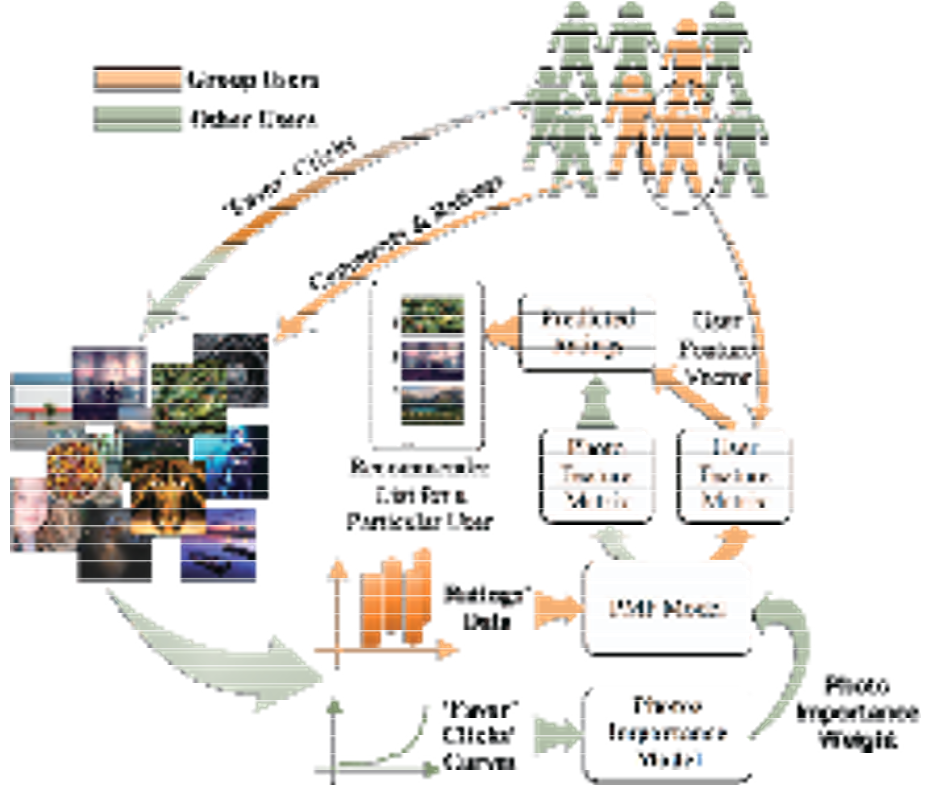
In the world of social photo sharing (Flickr, Panoramio), data is notoriously sparse. A user might only rate 5 out of 40,000 photos. Standard Collaborative Filtering (CF) assumes that every item is a blank slate. However, in reality, some photos are "cultural landmarks" or high-quality representatives of a category.
The authors argue that a photo’s "Importance" can be inferred from the general public's reaction—specifically the "favor" button—even if those people aren't in your specific community.
Methodology: From Click Patterns to Mathematical Weights
1. The Dynamic Importance Model
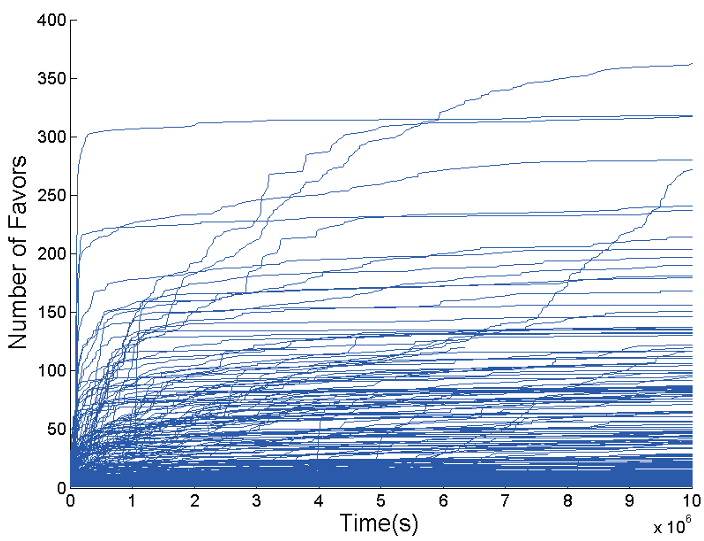
A photo uploaded three years ago naturally has more "favors" than one uploaded yesterday. To find out which photos are truly over-performing, the authors used Least Squares Regression to fit the available time () against the favor count ().
After testing various models (Exponential vs. Polynomials of orders 2-7), they discovered that a 5th-order polynomial best captured the non-linear growth of photo popularity.
2. The Weighted PMF Framework
Once the expected "favor" count for a given time is known, the importance weight is calculated. This weight is then injected into the PMF objective function:
By placing in front of the deviation term, the model is "punished" more heavily for making wrong predictions on high-importance photos, forcing the latent features () to better represent high-value data points.
Experimental Showdown
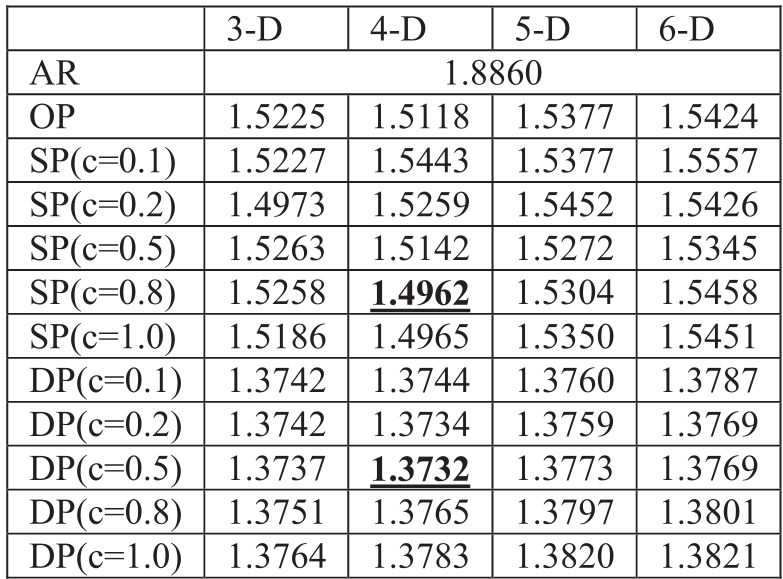
The authors tested four models on a dataset of 174,191 ratings:
- AR: Average Recommendation (Baseline)
- OP: Original PMF
- SP: Static Importance (Simple ratio of favors/time)
- DP: Dynamic Importance (The proposed polynomial method)
Key Results:
- Accuracy Boost: The DP model achieved an RMSE of 1.3732, a significant drop from the Original PMF's 1.5118.
- The Power of Dynamics: The Static model (SP) struggled, sometimes performing worse than the original PMF, proving that popularity must be viewed through a temporal lens to be useful.
Critical Insight & Conclusion
This paper highlights a vital Inductive Bias for social recommenders: globally popular items carry "higher signal" for training latent factor models. While standard PMF treats every rating as equally informative, the inclusion of a dynamic importance weight allows the model to prioritize learning from the most representative samples in a sparse environment.
Future Outlook: The next step for this research involves fusing more item-level metadata (like tags or visual features) directly into the importance model to further refine the recommendation engine in ultra-sparse scenarios.