
Flipped Classroom & Data Science: A Modern Formula for Financial Mathematics
Use of flipped classroom in the marketing career during the educational process on financial mathematics
This research investigates the effectiveness of the Flipped Classroom model in a Financial Mathematics course for Marketing students, utilizing Data Science, Machine Learning (Linear Regression), and Neural Networks to analyze pedagogical impact. The study demonstrates that a structured three-stage approach (pre-class video consultation, in-class collaborative spreadsheets, and post-class online exams) significantly enhances mathematical skills performance.
TL;DR
This study bridges the gap between pedagogy and technology by applying Machine Learning and Neural Networks to analyze the "Flipped Classroom" model. By shifting content consumption to the home and active problem-solving to the classroom, the research demonstrates a significant boost in the mathematical competencies of Marketing students dealing with complex financial concepts like simple interest and discounting.
Context: This isn't just a pedagogical shift; it is a data-driven validation of how ICT (Information and Communication Technology) tools—specifically spreadsheets, Google Drive, and bilingual videos—act as catalysts for knowledge assimilation.
Problem & Motivation: The "Math Wall" in Marketing
Marketing students often face a significant hurdle in Financial Mathematics. The traditional lecture-style approach creates a disconnect where students are overwhelmed by formulas in class and left unsupported when trying to apply them at home.
The author's intuition (Insight) is that by reversing the timeline:
- Students "prime" their brains with bilingual videos before class.
- The classroom becomes a "Laboratory" where the teacher acts as a facilitator for collaborative spreadsheet modeling.
- Post-class activities cement the knowledge through digital feedback loops.
Methodology: The Three-Pillar Framework
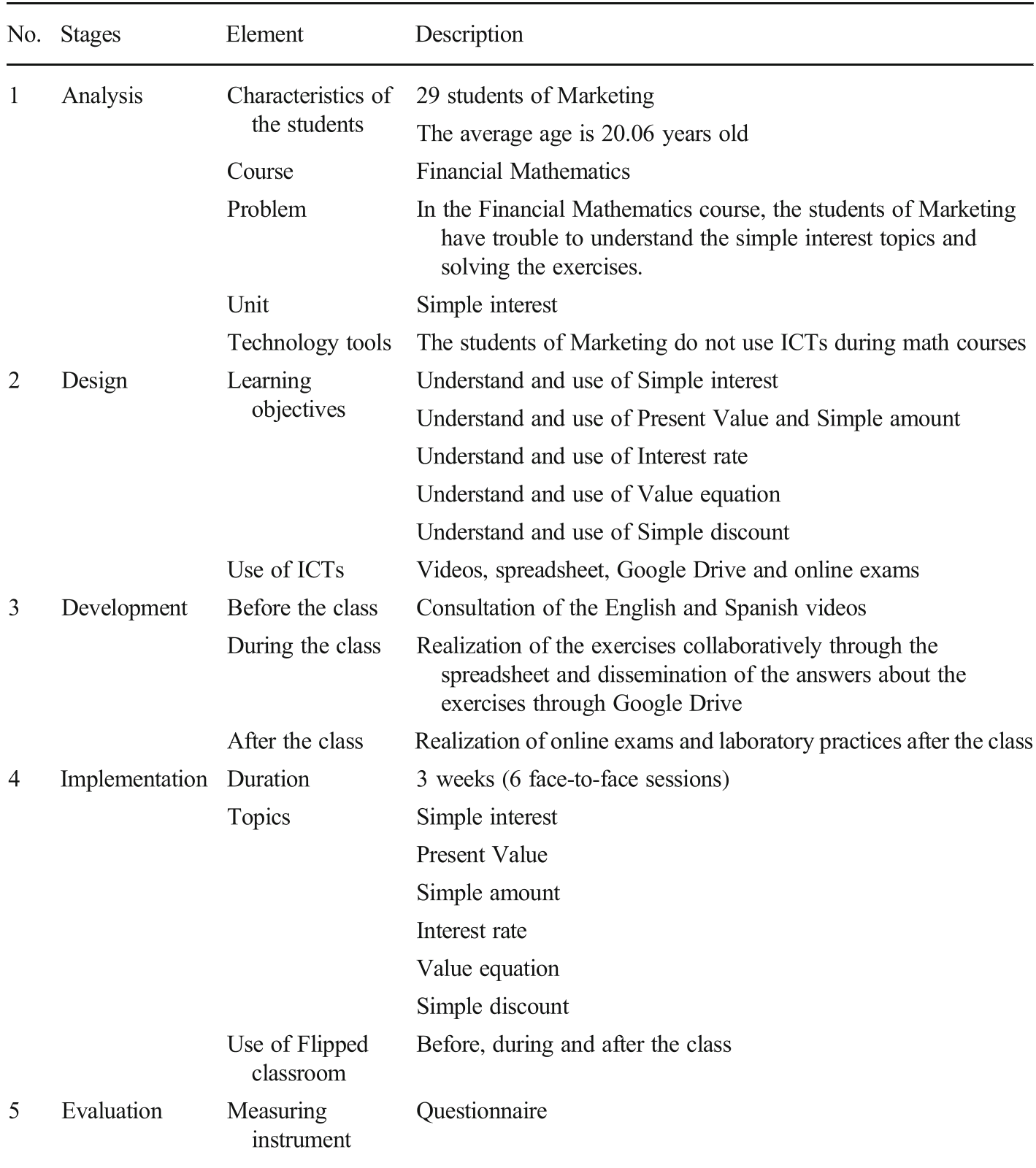
The core of this method is the temporal organization of technology. The study used a sample of 29 Marketing students and tracked their progress through a meticulously designed 3-week course on simple interest.
The Workflow Architecture
- Pre-class: Engagement with Spanish and English YouTube content to provide diverse perspectives.
- In-class: Moving away from pen-and-paper to Spreadsheets. This allows students to focus on the logic of financial equations rather than manual calculation errors.
- Post-class: PHP-based online exams provide immediate feedback, a crucial element of the learning manifold.
Data-Driven Insights: Beyond Mere Observation
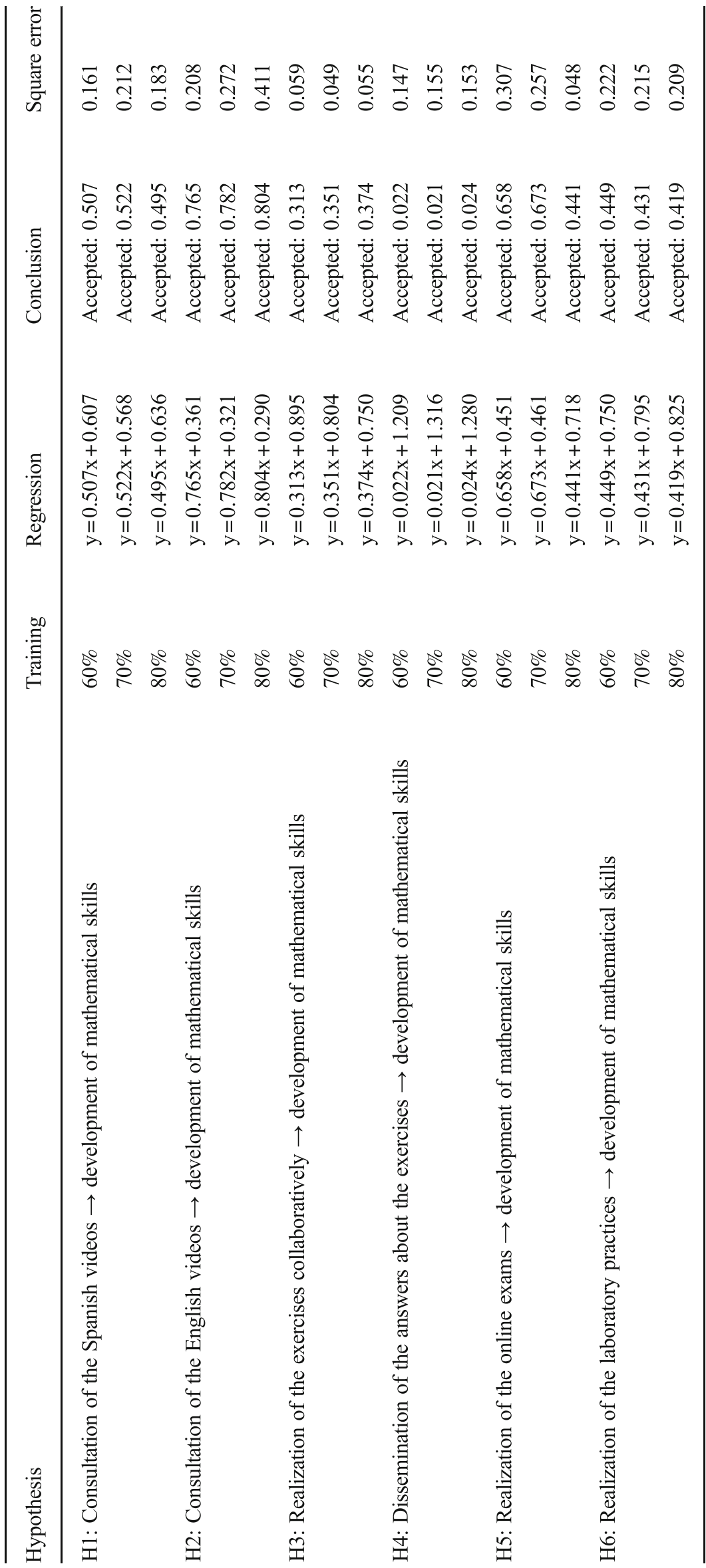
Unlike traditional educational papers that rely solely on qualitative surveys, this study employs Rapidminer to perform Linear Regression and Neural Network analysis.
Key Experimental Results
- The Power of English Resources: Surprisingly, the consultation of English videos had one of the highest positive influences (Regression coefficient ~0.804) on skill development, suggesting that multi-lingual resources provide a broader cognitive schema.
- Collaborative Logic: The neural network analysis highlighted that collaborative spreadsheet work (0.564 weight) during class was a primary driver for success.
- Demographic Predictors: Using Decision Trees (PM1-PM6), the researcher found that age and sex played specific roles in how students interacted with the technology. For instance, younger female students showed higher performance gains when combined with Spanish video previews.
Takeaways & Future Outlook
The study concludes that the Flipped Classroom is not just a "trend" but a robust pedagogical model when backed by data science.
Critical Perspective:
- Value: It proves that spreadsheets are superior tools for teaching financial logic to non-math majors compared to traditional methods.
- Limitations: The sample size is small (n=29). Future research must scale this to larger cohorts to verify the stability of the predictive models.
- Impact: For educators, the message is clear: Stop lecturing, start facilitating. Use the technology to handle the "What" (content) so the classroom can focus on the "How" (application).
Ultimately, this work serves as a blueprint for "updating" the organization of school activities in the 21st century by treating the educational process as a data-optimizable system.