
GraphShield: Mastering Infection Control in Large Social Networks through Flow-Awareness
Flow-Aware Vertex Protection Strategy on Large Social Networks
The paper introduces GraphShield, a novel algorithm for the Flow-Aware Vertex Protection (FAVP) problem in large-scale directed and weighted social networks. By integrating spectral graph theory (largest eigenvalue) with outdegree centrality, the method identifies a critical subset of vertices to protect to minimize infection spread.
TL;DR
In the race to stop digital rumors or biological viruses, knowing which nodes to protect is a multi-billion dollar question. This paper introduces GraphShield, a high-speed, scalable algorithm that solves the Flow-Aware Vertex Protection (FAVP) problem. By merging the "global view" of spectral graph theory with the "local view" of outdegree centrality, it outperforms existing SOTA methods in both protection effectiveness and computational speed ( complexity).
Background & Motivation: Moving Beyond Binary Graphs
Most traditional graph immunization studies treat social networks as static, undirected, and unweighted sets of connections. However, in the real world (e.g., Facebook or Twitter), influence is seldom symmetric. Node A might influence Node B much more than vice-versa.
Existing SOTA methods like NetShield focus primarily on the largest eigenvalue ()—a measure of a graph’s overall connectivity. While mathematically sound, these methods often ignore:
- Infection Flow: The directionality of spreading.
- Magnitude: The varying "weights" of influence between users.
- Scalability: High complexity algorithms that fail when networks grow to millions of edges.
Methodology: The GraphShield Insight
The core innovation of GraphShield is the Protection Score (PS). The authors move beyond the "Shield-Value" of previous works to a more balanced metric:
Where:
- : The element of the principal eigenvector corresponding to node . This represents the node's importance to the global connectivity/vulnerability.
- : The weighted outdegree of the node, representing its immediate potential to infect others.
Why this works:
If a node has a high eigenvector value but zero outdegree, it cannot propagate infection. Conversely, a high outdegree node in an isolated corner of the graph poses little threat to the global network. GraphShield targets nodes that sit at the intersection of these two properties.
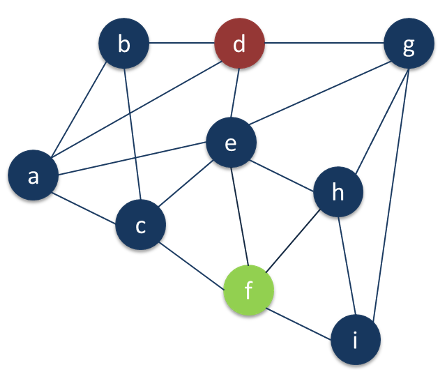 Figure 1: Comparison showing why directionality and flow (weighted edges) matter in protection strategy.
The Algorithm
Unlike NetShield+, which uses complex batching and matrix perturbation, GraphShield is elegantly simple:
- Compute the largest eigenvalue and its eigenvector.
- Calculate weighted outdegrees.
- Rank nodes by the product of these two values. This simplicity allows it to run in linear time relative to the number of nodes and edges.
 Figure 2: The GraphShield Algorithm Logic.
Experiments & Results
The authors tested GraphShield against a wide array of baselines, including PageRank, Degree Centrality, and NetShield+.
1. Superior Efficiency
On large datasets like DBLP Coauthorship (317k nodes), GraphShield demonstrated a dramatic reduction in runtime. While NetShield+'s performance degrades as the budget increases, GraphShield remains nearly constant and significantly faster.
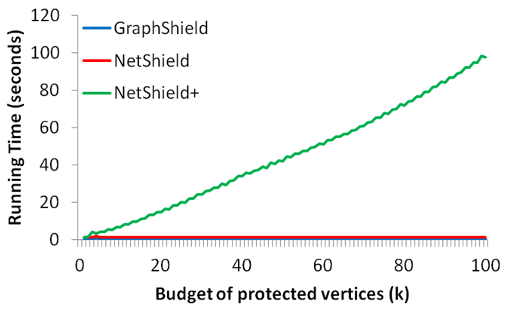 Figure 3: Runtime comparison on large-scale graphs (DBLP and Digg), showing GraphShield's dominance.
2. Effectiveness
In simulation trials using the SIS (Susceptible-Infected-Susceptible) model, GraphShield achieved the highest Survival Node Percentage (). Across undirected, directed, and weighted graphs, it consistently protected a larger portion of the network than its competitors.
| Method | Facebook Ego (θ) | Neural Network (θ) |
|---|---|---|
| NetShield | 88.58 | 70.72 |
| NetShield+ | 88.86 | 70.74 |
| GraphShield | 90.59 | 70.86 |
Critical Insight & Conclusion
The "magic" of GraphShield lies in its realization that network connectivity is a flow, not a state. By acknowledging that nodes have "outward-facing" roles in infection, the algorithm avoids over-protecting nodes that are "well-connected but passive."
Summary Takeaway: GraphShield provides a scalable, solution for vertex protection. It is a vital tool for social media platforms and epidemiologists who need to make rapid, effective protection decisions on massive, evolving datasets. While it currently focuses on random attacks, its lightweight nature makes it a perfect candidate for real-time monitoring and defense systems.