
FooDNet: Revolutionizing Food Delivery via Urban Taxi Crowdsourcing
FooDNet: Toward an Optimized Food Delivery Network Based on Spatial Crowdsourcing
FooDNet is a novel spatial crowdsourcing framework designed to optimize on-demand food delivery by leveraging urban taxi networks. It introduces two service modes, O-OTOD (Opportunistic) and D-OTOD (Dedicated), and utilizes a two-stage optimization approach combining a greedy construction algorithm with Adaptive Large Neighborhood Search (ALNS) to achieve SOTA efficiency in taxi utilization and delivery costs.
TL;DR
FooDNet is a sophisticated spatial crowdsourcing system that transforms city-wide taxi fleets into a massive food delivery network. By balancing two modes—Opportunistic (O-OTOD) for taxis with passengers and Dedicated (D-OTOD) for idle taxis—it solves the "mealtime rush" problem. Using an Adaptive Large Neighborhood Search (ALNS) algorithm, the system reduces the number of required vehicles by up to 28% while ensuring food stays fresh and passengers stay happy.
Background: Why Taxis for Tacos?
Traditional delivery platforms (like Ele.me or UberEats) face a structural paradox: they need a massive workforce for the 12:00 PM rush, but those workers are idle for the rest of the day. Meanwhile, thousands of taxis are already cruising the streets. FooDNet asks: Why not use the empty space in a taxi's trunk or the "deadhead" miles between passengers to deliver food?
The challenge, however, is complexity. Food is more time-sensitive than parcels (it gets cold), and taxi routes are unpredictable.
Methodology: The Two-Stage Optimization
FooDNet splits the problem into two distinct scenarios based on "Area Interactions":
- O-OTOD (Opportunistic): Occurs in frequent-interaction areas where taxis naturally move between restaurants and residential zones. The priority is the passenger, but the taxi picks up food along the way.
- D-OTOD (Dedicated): For infrequent areas, idle taxis are dispatched solely for food, optimizing for the shortest total travel distance to maximize profit.
The Algorithm: From Greedy to ALNS
Solving this is NP-hard. The authors use a two-stage method:
- Construction Stage: Uses greedy heuristics (Best Taxi, Best Delivery) to find an initial feasible route.
- ALNS Optimization Stage: This is where the "magic" happens. The algorithm "destroys" parts of the solution (removing requests via Shaw Removal, which looks at spatio-temporal similarity) and "repairs" them using Regret Insertion. It uses Simulated Annealing to decide whether to accept a move, allowing the system to occasionally accept a "worse" solution to eventually find the "global best."
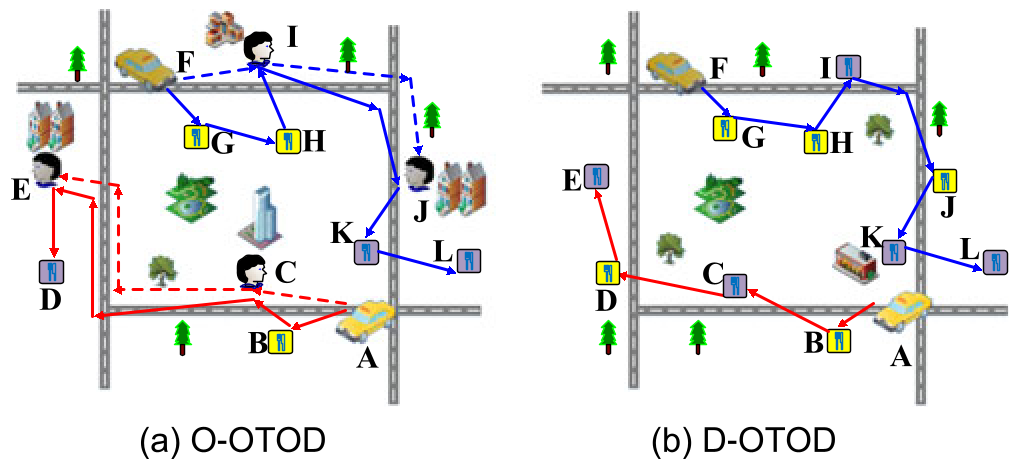 Figure 1: The FooDNet System Architecture, showing the flow from ordering to task allocation.
Experiments and Results
The researchers tested FooDNet using a massive dataset from Chengdu, China, involving 10,000 taxis, cell tower data (to simulate user demand), and restaurant locations.
Performance Gains
ALNS consistently outperformed all baselines. In O-OTOD tests, ALNS needed remarkably fewer taxis to fulfill the same number of orders than greedy methods.
| Metric | FTBI (Baseline) | ALNS (FooDNet) | Improvement |
|---|---|---|---|
| No. of Taxis (D1) | 42 | 18 | 57% decrease |
| Running Time | ~6s | ~1000s | Trade-off for quality |
Impact on Stakeholders
- For Drivers: Extra income! The experiments showed that even after accounting for extra fuel/distance, the "Extra Income per Taxi" remained significantly positive (Table 5 & 8).
- For Passengers: The "waiting time" for food pickup was kept within a strict window (often <5 mins), which could be compensated by fare discounts.
 Figure 2: Performance comparison showing ALNS (bottom row) significantly reducing vehicle count across different datasets.
Critical Insight: The Logic of "Relatedness"
The secret sauce of FooDNet is the Shaw Removal heuristic in the ALNS stage. Unlike random optimization, it calculates a relatedness measure between taxi routes, considering:
- Distance: Are the pickup/delivery points close?
- Time: Do the delivery windows overlap? By shuffling "related" tasks between taxis, the algorithm finds hidden efficiencies that human dispatchers or simple greedy algorithms would miss.
Conclusion & Future Look
FooDNet proves that urban infrastructure is underutilized. By treating food delivery as a spatial crowdsourcing task, we can reduce the number of delivery bikes on the road, lower traffic congestion, and increase taxi driver earnings.
Limitations: The current model assumes taxis can move at a constant speed (50km/h) and uses Manhattan distance. Future iterations will need to integrate real-time traffic data and more complex incentive models to account for the varying "willingness" of drivers during extreme weather or rush hours.
Editor's Note: This paper is a seminal example of how meta-heuristics like ALNS can be adapted from classical logistics (VRP) to modern "Sharing Economy" scenarios.