
Bridging the Gap: Linking Social Media to Physical Devices via Camera Fingerprints
Forensic Analysis of Digital Images over Smart Devices and Online Social Networks
This paper introduces a holistic forensic analysis framework that links physical users to their online social network (OSN) personas by utilizing Mobile Phone Camera Fingerprints (MCF). The core method leverages Sensor Pattern Noise (SPN), specifically Photo-Response Non-Uniformity (PRNU), to uniquely identify source devices and verify the origin of digital images posted online.
TL;DR
In the era of ubiquitous mobile photography, digital forensics faces a fragmentation problem: how do we prove a specific person's phone took a specific photo found on a social network? This paper proposes a unified framework that uses Sensor Pattern Noise (SPN)—a unique hardware "fingerprint"—to link physical mobile devices to digital images and social media accounts, achieving high-accuracy source identification even when metadata is missing.
Background Positioning
This work acts as a methodological bridge in the forensics domain. Rather than proposing a new cryptographic tool, it integrates mature biometric identification (FaceID/TouchID) with advanced signal processing to solve the "attribution problem" in cross-platform investigations.
The Problem: The "Metadata" Fallacy
In many criminal investigations, suspects claim that incriminating images found on their social media were "downloaded from the web" rather than taken by their own device. Relying on EXIF metadata is futile because:
- Malleability: Metadata can be easily edited or stripped using basic software.
- Platform Scrubbing: Social networks (Facebook, WeChat, Instagram) often automatically remove metadata during upload to protect privacy, leaving investigators with "blind" images.
Methodology: The Physics of Imperfection
The authors leverage a physical reality: no two camera sensors are identical. Due to imperfections in the manufacturing of semiconductor wafers, each photosite has a unique Photo-Response Non-Uniformity (PRNU).
The MCF Framework
The paper defines a Mobile Phone Camera Fingerprint (MCF). By treating an image () as a combination of a noise-free image (), the PRNU factor (), and other additive noises (), they can isolate the device's signature.
The mathematical intuition: By applying a denoising filter (), they extract a "noise residual" (): Through a Maximum Likelihood estimator using multiple images (ideally 300), they filter out random noise and scene content to reveal the constant, unique pattern of the sensor.
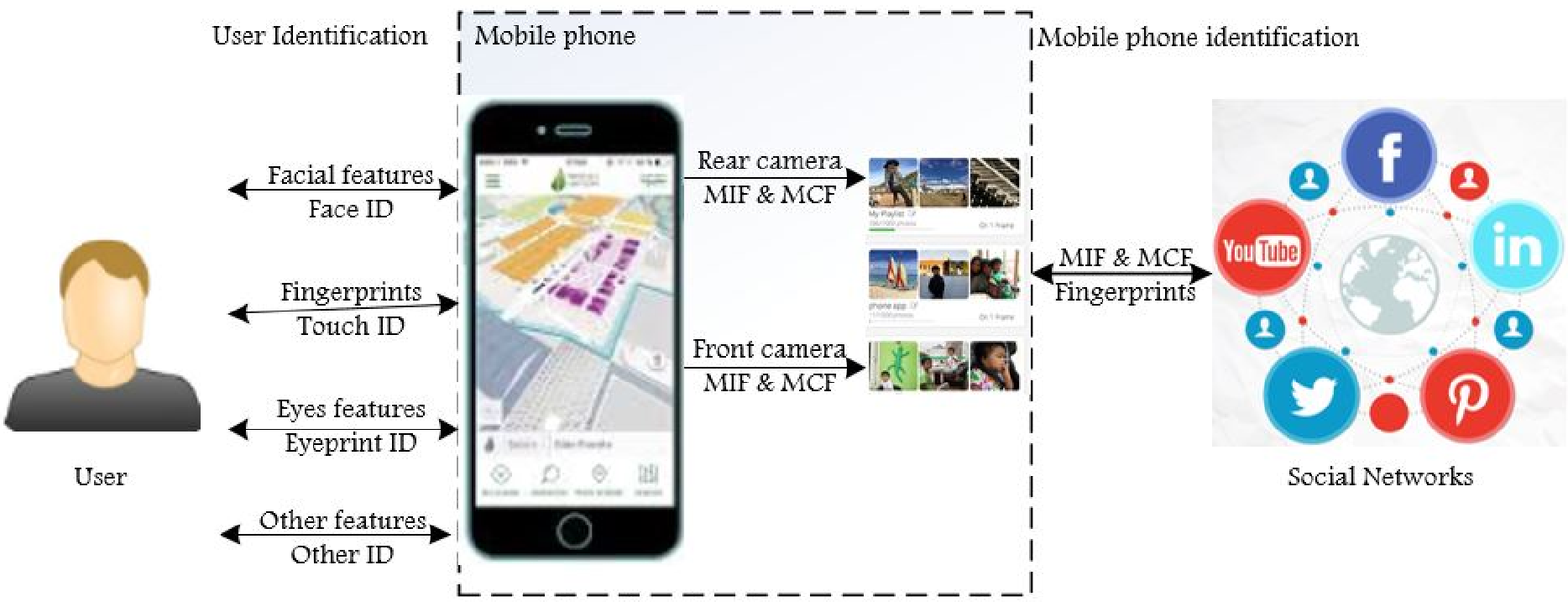 Figure 1: The proposed framework linking User -> Device -> App -> Online Content.
Experimental Validation
The researchers tested 10 different mobile devices, including various generations of iPhones and Samsung Galaxy models.
Key Findings:
- Convergence: The fingerprint becomes significantly more reliable as the number of sample images increases. While 50 images provide a baseline, 300 images lead to a converged, stable MCF.
- Discrimination Power: Using a 512x512 central block (where lens distortion is lowest), the system showed a massive disparity between matching and non-matching devices.
 Table: Correlation between the Mobile Image Fingerprint (MIF) of a test image and the MCF library. Note the 0.7596 score for the correct match (M1) vs. near-zero for others.
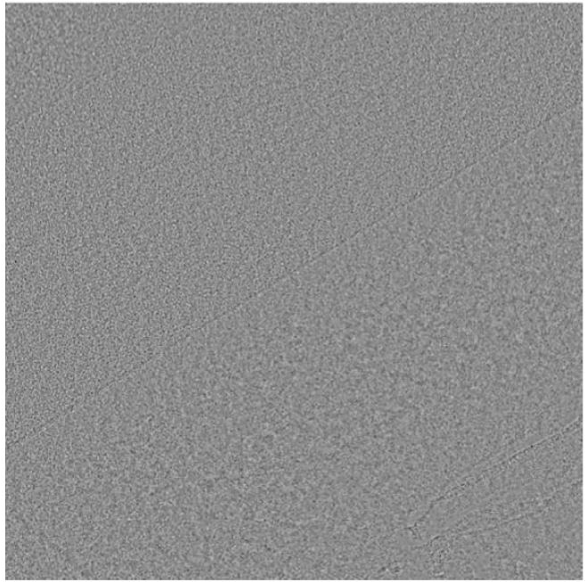 Visual representation: (a) Original Photo, (b) Extracted Noise Residual (MIF), (c) Computed Camera Fingerprint (MCF).
Critical Insight & Conclusion
This paper's value lies in its end-to-end perspective. By defining the relationship between the physical sensor and the cyber persona, it provides a roadmap for "Cyber-Physical Forensics."
Limitations: The study primarily focuses on high-quality originals. In real-world scenarios, heavy JPEG compression by social media platforms can "smear" the PRNU pattern. Future work must address how to recover these fingerprints from heavily downsampled or filtered social media uploads.
Takeaway: For forensic investigators, this method turns Every single photo into a "silent witness," proving ownership and origin far more reliably than any digital tag or filename.