
Formalizing the Chain of Trust: A New Delegation Model for Multimedia Social Networks
A formalized delegation model for multimedia social networks
This paper proposes a formalized delegation model for Multimedia Social Networks (MSNs) to address unauthorized second-hand sharing and multi-step delegation control. The model employs a systematic approach involving delegators, delegatees, and an MSNS server to manage digital content rights through explicit policies and formalized logic.
TL;DR
As social networks evolve from simple consumption hubs to creation-sharing communities, protecting original digital content becomes a nightmare of "uncontrolled sharing." This paper introduces a formalized delegation model that uses behavior sequence logic to manage how permissions are passed from user to user, ensuring that every "sub-delegation" remains under the original owner's policy constraints and can be revoked at any time.
Problem & Motivation: The "Second-Hand" Sharing Crisis
In the current multimedia landscape, your video or audio is often protected by a simple password or a bulk token. However, once you share that access with a friend, you lose control. What if they share it with someone else?
Existing systems fail because:
- Granularity is too coarse: You can't easily limit how many times a "friend of a friend" plays the file.
- Conflict Ignorance: If two people try to delegate the same right to one person, the system doesn't know who should take precedence.
- Revocation Blindness: Revoking one person's access often fails to "clean up" the downstream chain of unauthorized users.
Methodology: The Logic of Delegation
The authors define a triad M = (S, A, P) where S represents system states, A represents behaviors (like trydelegate), and P represents predicates or policies.
1. The Delegation Chain
The model treats delegation as a weighted directed graph G = (V, E). Each node is a user, and each edge is a path of authority delivery.
2. Architecture Overview
The Multimedia Social Network Server (MSNS) acts as the central brain, storing the policies and supervising the usage of delegated authorities.
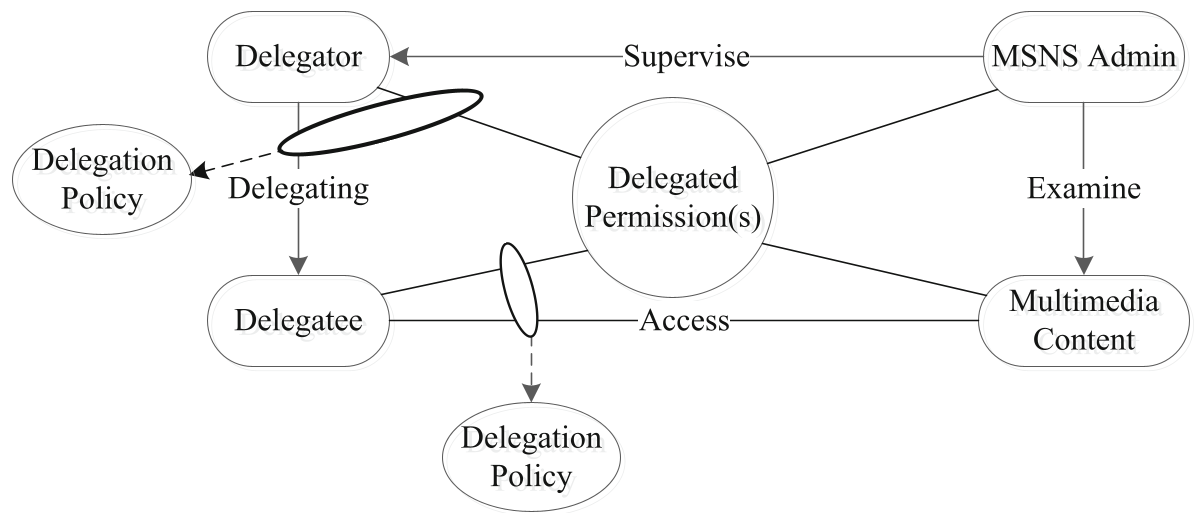 Fig 1. The delegation model showing the interaction between Delegator, Delegatee, and the MSNS.
3. Solving Conflicts with Intelligence
When multiple delegators attempt to grant the same right to one user, the model applies three key strategies:
- Credit-based: Prefers the path with the smallest credit product (Least Authority Principle).
- Depth-based: If the goal is revocation ease, it chooses shorter paths (lower depth). To prevent out-of-control transmission, it picks higher depth to "trap" the authority.
- Time-based: A "first-come, first-served" approach for uniqueness.
Formalization of Policies
The paper uses BNF grammar to ensure the system is mathematically sound. For instance, a permitdelegate action is only valid if the Delegation Times (DT) is less than the Total Times (TT) and specific predicates are met.
Experiments & Real-World Use Case: CyVOD
The model was implemented in CyVOD, a Chinese multimedia platform. It allows users to set "Duration" or "Times" for sharing copyrighted content.
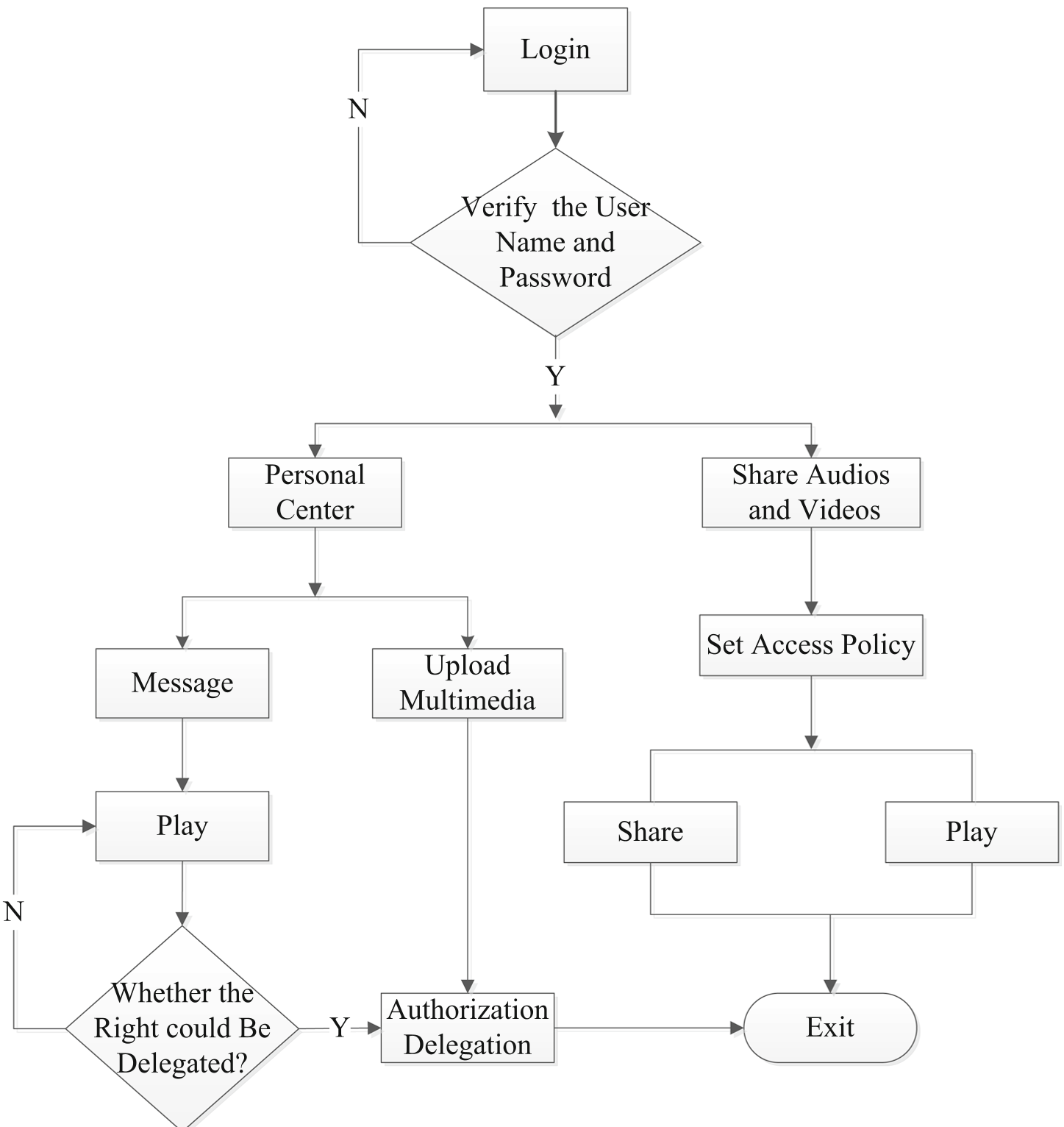 Fig 2. The delegation screen in CyVOD where users configure sharing parameters.
One of the most powerful features demonstrated was Cascade Revocation. If a top-level user revokes access, the system automatically crawls the delegation graph and terminates access for everyone downstream, effectively killing the "viral" unauthorized spread of content.
Critical Analysis & Conclusion
Takeaway
The core value of this research lies in its formalism. By moving away from ad-hoc sharing buttons to a logic-based state machine, MSNs can finally offer professional-grade Digital Rights Management (DRM) to individual creators.
Limitations & Future Work
While the logical framework is robust, the paper relies heavily on a centralized server (MSNS) to enforce these rules. In a truly decentralized or peer-to-peer social network, enforcing these behavior sequences would likely require distributed ledger technology (Blockchain). The authors noted that future work will focus on integrating "trust assessment" to predict which users are likely to abuse delegation rights before they even click "share."