
Fragile Masculinity: Why Online Harassment is a Performance of Manhood
Fragile Masculinity: Men, Gender, and Online Harassment
This empirical study explores the link between "fragile masculinity" and online harassment, specifically targeting women who advocate for gender equality. Using a survey of 264 young men (ages 18-24), the research identifies that "masculinity anxieties"—the distress at failing to meet normative gender roles—systematically predict the endorsement of online misogyny and toxic disinhibition.
TL;DR
Online harassment is often dismissed as a byproduct of "internet trolls" and anonymity. However, a groundbreaking study from the University of Washington and the University of Michigan reveals a deeper sociological root: Masculinity Anxiety. Young men who feel "less masculine" than their peers and experience stress about this gap are significantly more likely to endorse the harassment of women online. This behavior acts as a compensatory mechanism—a way to "reclaim" status by performing aggression in digital spaces.
The "Fragile" Motivation
Traditional Human-Computer Interaction (HCI) research focuses on how platforms enable harassment—tools like anonymity, doxing, and "dogpiling." But this paper asks why certain individuals are motivated to use these tools against women in the first place.
The authors argue that we are witnessing a clash between "Popular Feminism" (the rise of visible feminist activism online) and "Precarious Manhood." For men who define their identity through dominance and aggression, a woman speaking out for equality isn't just a different opinion—it's a high-stakes threat to their social standing.
Methodology: Testing the Stress
The researchers surveyed 264 white, heterosexual men ages 18-24. They measured two distinct psychological states:
- Gender Role Discrepancy: "I am less masculine than the average guy."
- Discrepancy Stress: "I worry that women find me less attractive because I’m not 'macho' enough."
Participants were then shown fictional Twitter profiles of three journalists (Health, Travel, and Gender Equality) and asked to evaluate their competence and their feelings toward harassing tweets directed at them.

Core Insight: The Aggression Pipeline
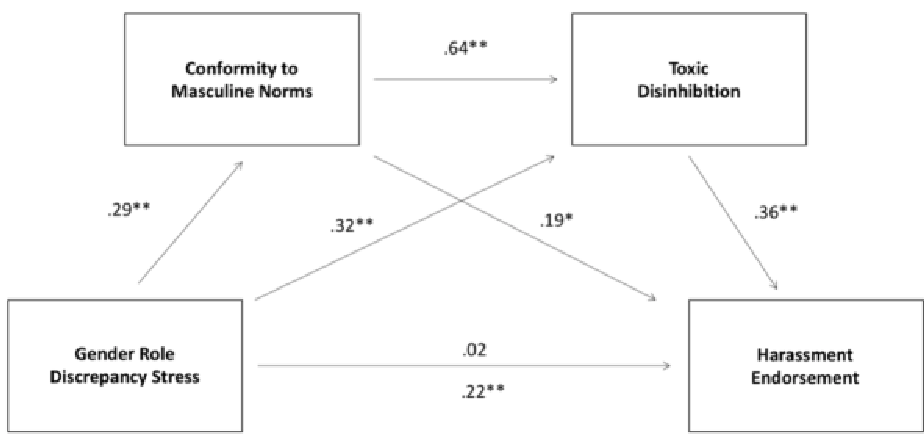
The study found a clear "pipeline" from internal anxiety to external abuse. This wasn't just a direct correlation; it was a mediated process:
- The Catalyst: A man feels anxious about his masculinity.
- The Pivot: To feel "manly" again, he doubles down on masculine norms like dominance and aggression.
- The Outlet: He utilizes the "toxic disinhibition" affordance of the internet (freedom from social consequences) to attack women.
Results by the Numbers
- Competence Denigrated: Men with high discrepancy stress rated the feminist journalist significantly lower in competence than the other two journalists.
- Harassment Endorsed: These same men found harassing tweets (e.g., "go back to the kitchen") more "humorous," "agreeable," and "acceptable."
- Target Specificity: Interestingly, this bias didn't apply to the travel or health journalists. The vitriol was specifically reserved for the woman advocating for gender equality.
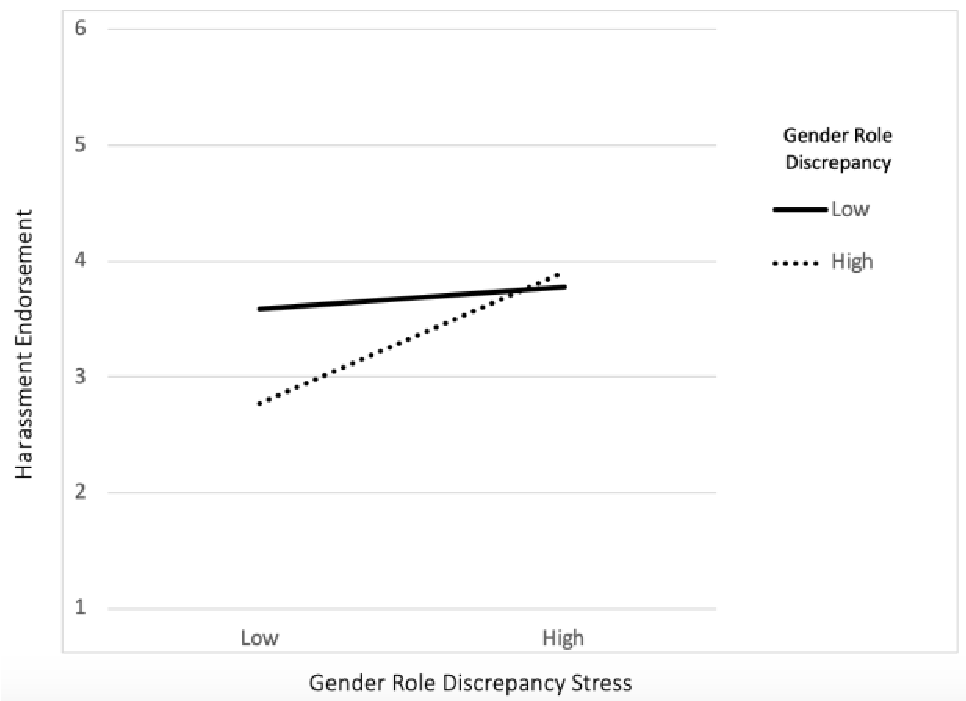 Figure: The interaction shows that as Discrepancy Stress increases, Harassment Endorsement spikes—particularly for those who already feel "less masculine" than the norm.
Critical Insight: Beyond "Neutral" Design
Most social media platforms (Twitter, Reddit, Facebook) claim to be "neutral." Their tools—like block buttons and reporting forms—are designed for a generic user.
The authors argue this is a failure of imagination. Harassment is not an individual problem; it is a systemic performance of gendered power.
Designers should:
- Shift the Burden: Stop making victims do all the "labor" of reporting.
- Bystander Intervention: Create UI cues that encourage friends of the victim to intervene, disrupting the "bandwagon effect."
- Empathy Hooks: Use "normative sanctions"—reminding perpetrators that their actions have real-world consequences—which has been shown to reduce the use of slurs.
Conclusion
Online misogyny isn't just "internet noise." It is a specific political tool used to silence women who challenge the status quo. By understanding that this behavior often stems from the perpetrator's own internal gender anxieties, we can move away from reactive "whack-a-mole" moderation and toward proactive systems that foster healthier online masculinity.
Future Work: The researchers suggest looking at how these dynamics shift when the target is a woman of color or an LGBTQ+ individual, where "overlapping systems of oppression" likely intensify the harassment.