
HatterHealthConnect: Bridging the Gap Between Body Sensors and Social Networks
Framework for the integration of body sensor networks and social networks to improve health awareness
This paper introduces HatterHealthConnect, a cross-domain framework that integrates Body Sensor Networks (BSN) with popular social networks (Facebook and Twitter). It leverages the SPINE open-source framework and Android-based mobile controllers to collect real-time physiological data and foster health awareness through community-driven social interaction.
TL;DR
The paper presents HatterHealthConnect, an innovative framework that moves health monitoring from the hospital to the social sphere. By integrating Body Sensor Networks (BSN) with Android devices and social media platforms like Facebook and Twitter, the authors aim to transform health data from dry statistics into social currency that promotes wellness through peer motivation and competition.
Background & Motivation: The Loneliness of Health Data
For years, Body Sensor Networks (BSN) have been viewed through a strictly clinical lens—monitoring patients post-surgery or tracking vitals in a lab. However, the authors argue that the "missing link" in public health is awareness and motivation.
The core problem identified is twofold:
- The Technical Barrier: BSNs are plagued by energy constraints and the need for seamless data coordination.
- The Human Barrier: Without a feedback loop or a support community, individual health data often fails to inspire lasting behavioral change.
Methodology: The Technical Blueprint
The authors leverage the SPINE (Signal Processing In Node Environment) framework to create a robust, energy-efficient bridge between hardware and software.
The Hardware Stack
- Nodes: Intel Shimmer units with EMG expansions for electrical heart impulses and Zephyr HxM Bluetooth monitors for heart rate and distance.
- Controller: A Samsung Captivate (Android OS), serving as the "Data Sink" or gateway.
- Protocols: Bluetooth for intra-node communication; 3G, WiFi, or SMS for cloud/social connectivity.
System Architecture
The architecture follows a classic many-to-one pattern but adds a unique "Social Layer" atop the traditional physical and network layers.
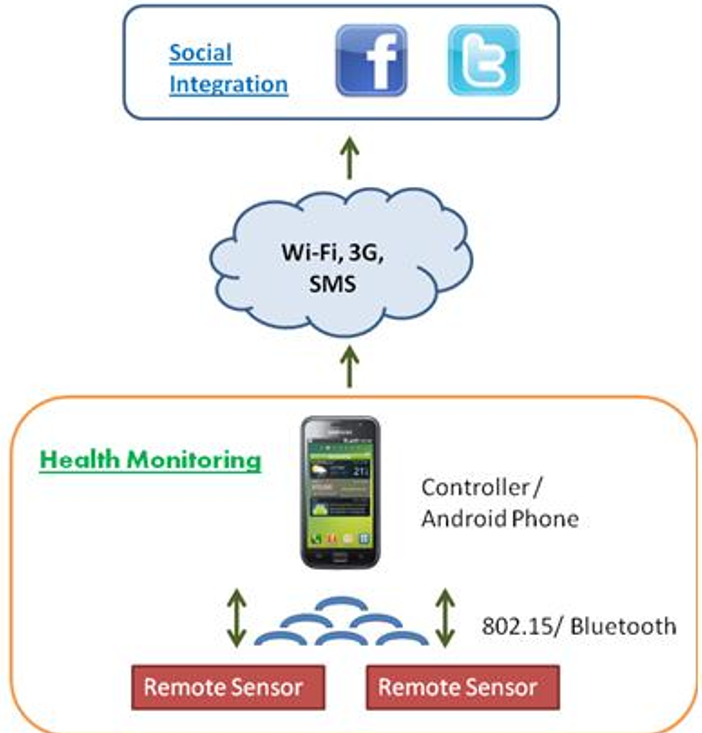 Figure 1: The multi-tier architecture from body sensors to the Android gateway.
Designing for Efficiency and Security
A BSN is only as good as its battery life. The paper discusses critical optimizations:
- Congestion Control: Implementing Learning Automata-Based Congestion Avoidance (LACAS) and Additive Increase Multiplicative Decrease (AIMD) to adjust data reporting rates dynamically.
- Energy Management: Moving processing to the "processing block" on nodes to reduce the number of transmissions, which is the primary energy drain.
- The Security Paradox: Balancing the need for high-level encryption with the low-power nature of sensors. The authors advocate for Identity-Based Encryption where physiological data (like ECG patterns) itself forms the basis of the encryption key.
Social Integration: From Stats to Status Updates
The "social layer" is implemented via Facebook and Twitter APIs. The framework allows users to:
- Compete: Rank caloric expenditures against friends.
- Encourage: Share workout durations to inspire peer groups.
- Automate: Use Android's REST architecture to push statistics seamlessly to a central database that feeds social applications.
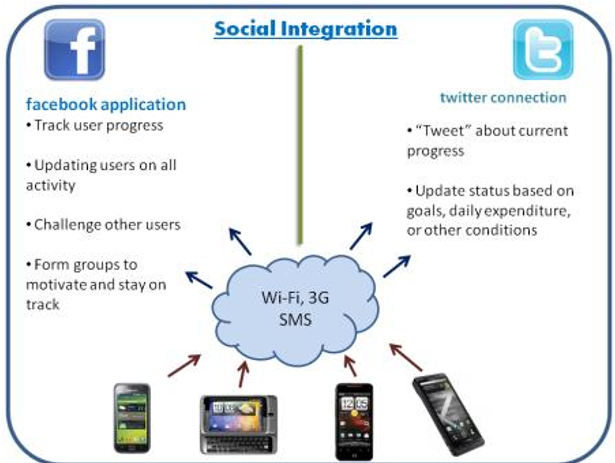 Figure 2: The feedback loop between physiological data collection and global social dissemination.
Critical Analysis & Future Outlook
While HatterHealthConnect was pioneering at its time (2011), it laid the groundwork for today's wearable ecosystem (Apple Health, Strava).
Key Insights:
- Unobtrusiveness is Key: The transition from wired sensors to Bluetooth was the catalyst for user adoption.
- The Power of API: By porting SPINE to Android, they proved that general-purpose mobile OSs are the ideal controllers for BSNs.
Limitations: The paper acknowledges the Privacy vs. Sharing conflict. While social sharing is opt-in, the storage of sensitive health data on public social platforms remains a high-risk area requiring more sophisticated "time-slice" access controls.
Conclusion
HatterHealthConnect successfully demonstrates that health monitoring is not just a medical task but a social one. By combining the technical rigor of WSNs with the reach of social networks, the framework offers a roadmap for moving toward a "Global Health Awareness" community.