
Trusted Communities in the Wild: Solving Decentralized Membership in Mobile Social Networks
A Framework for Building Trust Based Communities in P2P Mobile Social Networks
2010-06-01
Summary
Problem
Method
Results
Takeaways
Abstract
This paper presents a decentralized framework for building trust-based communities in Peer-to-Peer (P2P) Mobile Social Networks (MSNs). It introduces specialized algorithms—Greedy, High Group Trust (HGT), and Optimal Group Trust (OGT)—built upon the Dynamicity Aware Graph Relabeling System (DA-GRS) to identify and isolate untrustworthy nodes in highly dynamic environments.
## TL;DR
In a world moving toward decentralized infrastructure, managing "Who do we trust?" in a mobile P2P setting is a massive technical hurdle. This paper introduces a framework that uses **Dynamicity Aware Graph Relabeling (DA-GRS)** to form trusted groups in Mobile Social Networks (MSNs). By shifting from centralized "Gatekeepers" to local, rule-based "Tokens," the authors achieve up to **97% isolation of untrustworthy nodes** in challenging mobile environments.
## Background: The Trust Problem in P2P Mobility
When you use Facebook or Twitter, a central server decides if you belong to a group. But in a **Mobile Peer-to-Peer (P2P)** network—where phones talk directly to each other via Bluetooth or Wi-Fi—there is no central authority. If a malicious or unreliable user enters your "community," how do you revoke their access?
The problem is doubled by the nature of **Delay Tolerant Networks (DTNs)**: connections are fleeting, batteries die, and users move. Existing reputation models often fail because they require "global knowledge" that simply isn't available when nodes are constantly disconnecting.
## Methodology: Tokens, Rules, and Greedy Logic
The authors pivot from global monitoring to **Local Computation**. They utilize the **DA-GRS** model, which views the network as a graph that relabels itself based on local interactions.
### 1. The Token System
Each node starts with a "token." When two nodes meet, they can merge their tokens to form a "spanning tree" (a group). This paper adds a **Trust Metric** to this process. Trust is calculated based on:
* **Social Reputation**: Direct encounters (+1 for trust, -1 for untrust).
* **QoS Metric**: Battery life, signal quality, and uptime.
### 2. The Power of Greedy Merging
The core of the methodology lies in three proposed algorithms that improve upon standard DA-GRS:
* **Greedy Labeling**: Nodes always try to merge with the neighbor who has the highest individual trust rating.
* **High Group Trust (HGT)**: Nodes evaluate the "Group Cost"—a measure of the total reliability of a potential community—before joining.
* **Optimal Group Trust (OGT)**: This is the most sophisticated version. It focuses on the ratio of "Group Cost" to "Isolation Cost," ensuring that a group doesn't just have high-trust stars, but also effectively marginalizes "dead wood" (isolated, low-trust nodes).
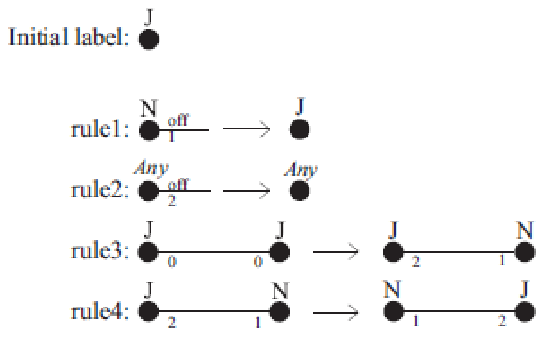
*Figure 1: The underlying DA-GRS rules that govern how tokens circulate, merge, and regenerate in the mobile environment.*
## Experimental Evidence: Campus vs. Street
The researchers tested these algorithms in three distinct scenarios using the **Madhoc simulator**:
1. **Campus**: High connectivity, low mobility.
2. **Shopping Mall**: Moderate mobility.
3. **City Street**: High mobility and frequent disconnections.
### Key Result: Isolation Performance
The metric that matters most is the **Percentage of Isolated Nodes** (how many "bad actors" were accurately removed from the community).
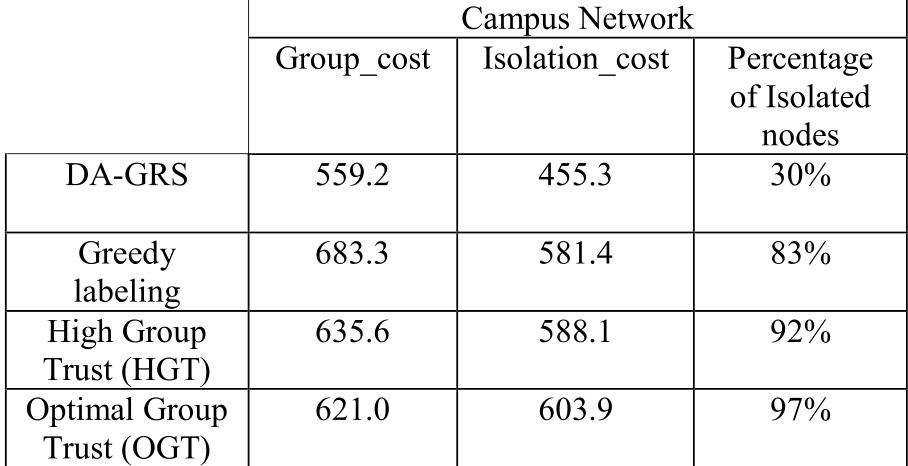
*Table 1: Performance in a Campus Network environment.*
In the Campus network, while the baseline DA-GRS only isolated 30% of untrustworthy nodes, the **OGT algorithm isolated 97%**. Even in the chaotic City Street scenario, OGT maintained a 94% isolation rate, proving its robustness against high mobility.
## Critical Insight: Why Does This Work?
The brilliance of the approach is the **Isolation Cost function**. By specifically quantifying how many connections are wasted on low-trust nodes, the OGT algorithm forces the network to "prune" its edges. It creates a self-healing social fabric where trust inherently drives the network's topology.
## Conclusion & Future Outlook
This framework proves that we don't need a central observer to maintain a healthy social network. By using local relabeling rules and greedy optimization, P2P networks can become self-policing.
**Limitations**: The current model assumes a degree of cooperative behavior in reporting opinions. A future extension involving **Adaptive Learning** or **Adversarial Resilient Trust** could further harden the system against malicious peers who lie about their neighbors' reputations.
**Takeaway**: The transition from "Global Authority" to "Local Logic" is the future of resilient mobile social infrastructure.