
Bridging the Gap: A Collaborative Framework for Social Media in Emergency Response
A Framework for ealing ollaboratively with nteractions from ocial edia in mergency ituations
This paper proposes a collaborative framework for emergency response teams to integrate social media interactions into official workflows. It introduces a structured system for bidirectional communication, automatic classification, and prioritization of crowd-sourced data using Computer Supported Cooperative Work (CSCW) principles.
TL;DR
In times of crisis, social media becomes a chaotic yet vital pulse of information. This paper presents a conceptual framework designed to help official rescue teams (Command and Control) transform noisy social media "chatter" into actionable "intelligence." By applying Computer Supported Cooperative Work (CSCW) principles, the authors propose a system that moves beyond simple monitoring toward a bidirectional, collaborative relationship between the authorities and the public.
Problem & Motivation: The Chaos of the Crowd
During events like Hurricane Sandy or the Japan Tsunami, millions of messages are generated every second. While valuable, this data presents a "Digital Convergence" problem:
- Information Overload: Thousands of tweets per second make manual sorting impossible.
- Lack of Standards: Slang, icons, and abbreviations in "panic-mode" messages defy traditional database entry.
- One-Way Flow: Current systems usually just "listen." There is no efficient way for officials to ask the crowd for specific verification or to provide real-time feedback to victims.
The authors argue that we need a framework that treats social media as a two-way channel, integrating the spontaneous participation of citizens directly into the Incident Command System (ICS).
Methodology: The 3C Framework for Emergencies
The core of the paper is a framework that organizes users into four groups: the Public, Command & Control (C&C), the Operations Team (on-ground), and a specialized Interaction Team.
1. The Interaction Engine
The framework focuses on a rigorous pipeline to process "Spontaneous Interactions":
- Classification: Automatically sorting messages into categories (e.g., Victims, Blocked Roads, Fire) and originators into roles (Volunteer, Person in Need, Event Follower).
- Prioritization: A scoring system that ranks messages based on proximity to the epicenter, credibility indicators, and proximity to current rescue actions.
- Bidirectional Loops: Unlike basic scrapers, this system includes "Information Request" flows, allowing officials to query the crowd (e.g., "Is the bridge at Location X still passable?").
2. CSCW and Situational Awareness
To ensure the internal team works effectively under pressure, the framework suggests:
- Shared Awareness: Mechanisms like color-coded notations so that team members can see who modified a message's priority at a glance.
- 3C Model: Supporting Communication (exchanging info), Coordination (managing dependencies between rescue tasks), and Cooperation (working towards the shared goal of saving lives).
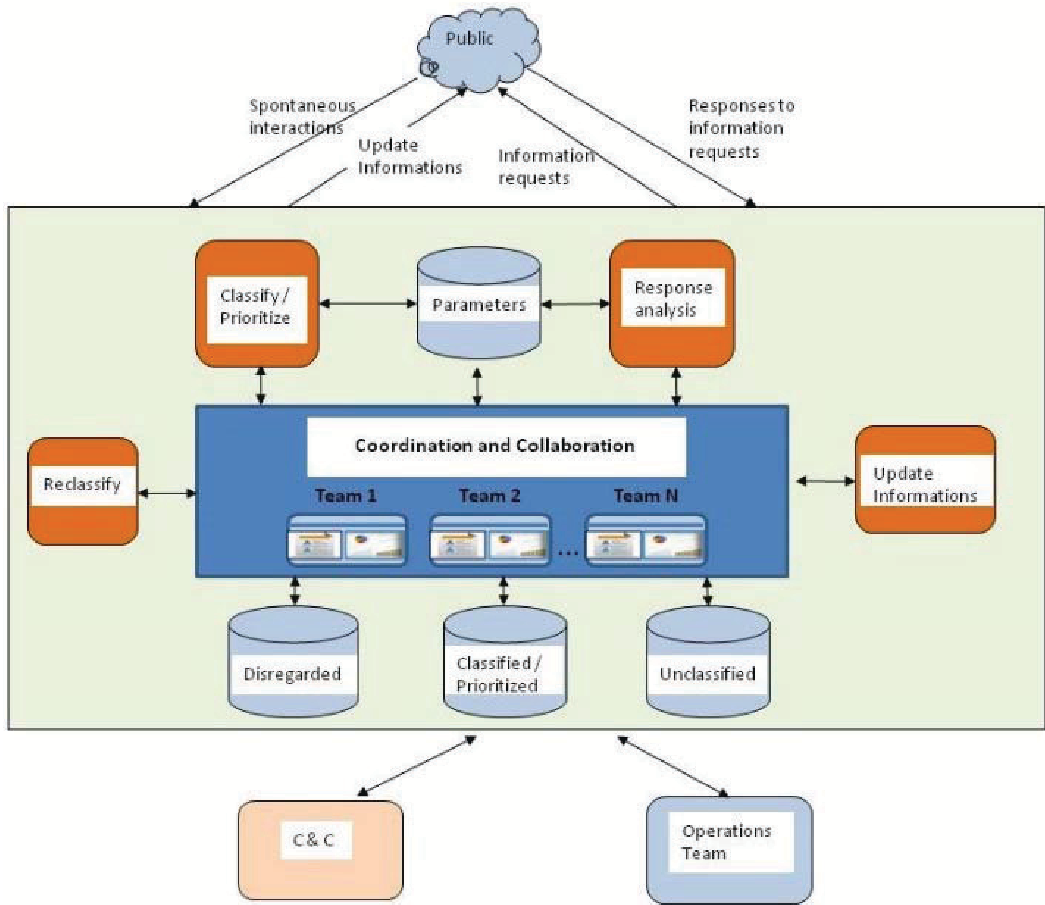 Fig 1: The proposed framework architecture, highlighting the flow between APIs and internal data repositories.
Experiments & Results: The Professionals' Perspective
The researchers validated the framework through qualitative interviews with emergency management veterans.
Key Insights:
- Reliability vs. Real-time: Experts highlighted that while real-time data is invaluable, the "degree of reliability" and the "emotional condition" of the informer remain the biggest challenges.
- Role Mapping: The study effectively mapped social behaviors to information needs (Fig 2). For instance, "Helpers" feed information to the rescue team, while "Persons in Need" consume escape route data.
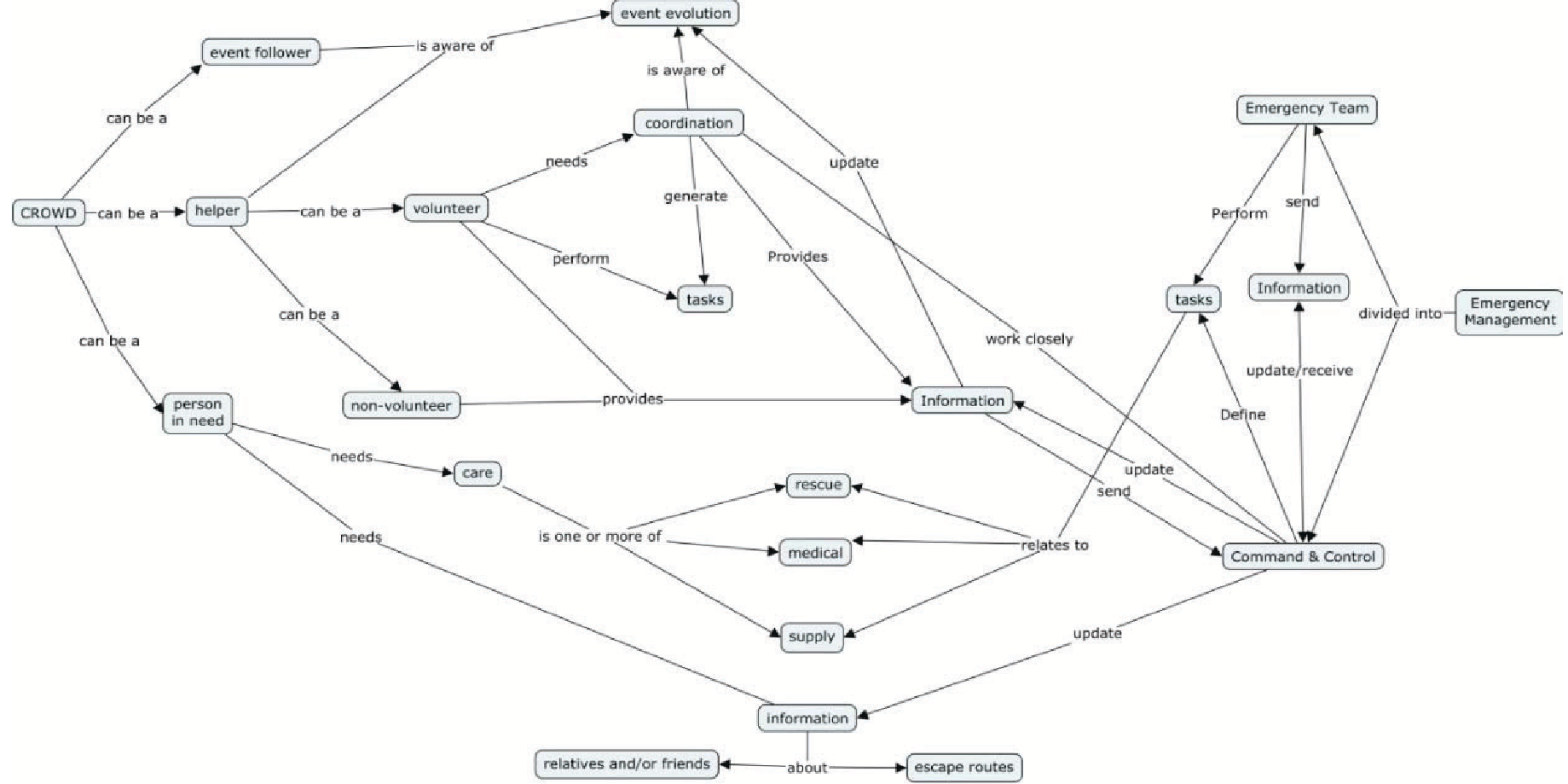 Fig 2: Mapping user roles to specific tasks and information flows during a disaster.
Critical Analysis & Conclusion
Takeaway
The framework's strength lies in its philosophical shift: viewing the public as a "Distributed Sensor Network" that can be interacted with, rather than just a noise source. By formalizing the Interaction Team within the existing ICS structure, it provides a realistic path for adoption by government agencies.
Limitations
- Trust Calibration: The paper defines "credibility" as a parameter but does not detail the algorithmic approach to verify "fake news" during a disaster.
- Implementation: This is a conceptual framework; the practical challenges of API rate limits and data privacy (GDPR/LGPD) during emergencies require further engineering exploration.
Future Outlook
As AI and Large Language Models (LLMs) evolve, the "Classification" and "Prioritization" modules could be automated to handle even higher volumes, allowing human PIOs to focus solely on high-level decision-making and direct public engagement.