
Verifying the Unverifiable: A Framework to Detect Tampered Tweet Images
A Framework to Detect Fake Tweet Images on Social Media
This paper introduces a specialized framework to detect tampered or impersonated Tweet images (screen captures) often used for cross-platform misinformation. By integrating OCR via Microsoft Azure and real-time validation through the Twitter API, the system achieves an accuracy of 83.33% in identifying fabricated social media content.
TL;DR
Researchers from the University at Albany have developed a framework to combat a rising trend in misinformation: the weaponization of fake Tweet screenshots. By combining OCR (Optical Character Recognition) and Twitter API validation, the system can identify if a shared image of a tweet is a legitimate capture or a fabricated "impersonation," achieving a benchmark accuracy of 83.33%.
Problem & Motivation: The Cross-Sharing Loophole
In the digital age, a screenshot is often treated as "evidence." However, online "Fake Tweet Generators" (intended for satire) are increasingly used to create harmful content where public figures appear to say things they never did.
The core challenge lies in Cross-Sharing. When a fake Tweet is shared on Facebook or Instagram as an image, it loses its digital signature. Traditional fact-checking tools that analyze URLs or metadata are useless against a flat .jpg file. This paper addresses this "blind spot" by treating the image text as the primary source of truth.
Methodology: The Verification Pipeline
The authors propose a logic-driven pipeline that moves from visual pixels to database queries:
- Extraction: Using Microsoft Azure’s Computer Vision, the system extracts four distinct "Inductive Biases" of a Tweet: the Display Name, @Username, Tweet Content, and Timestamp.
- Querying: The system uses the
@usernameandcontentas search keys within the official Twitter API. - Cross-Referencing: It doesn't just check if the tweet exists; it performs a multi-factor match. If the text matches but the timestamp is different, it is flagged as tampered.
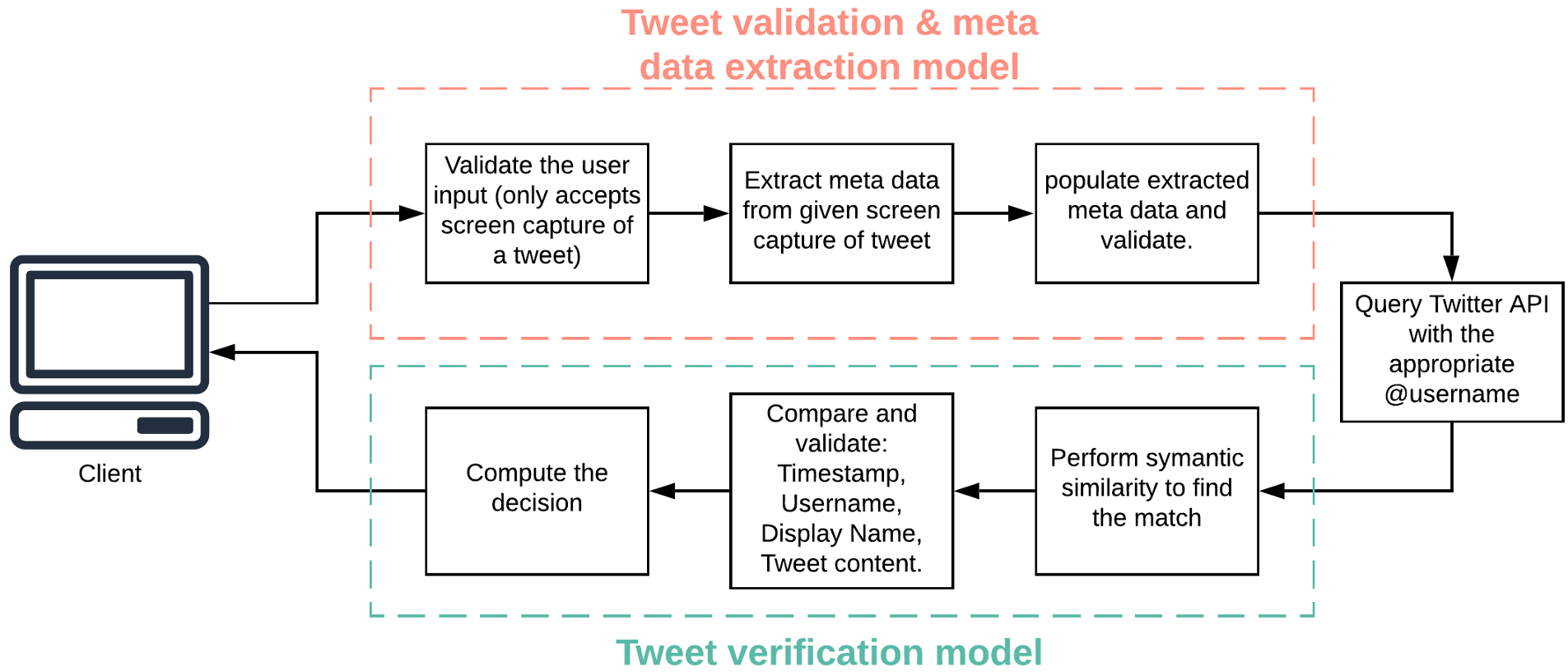 Fig 1: The architecture of the proposed verification framework showing the flow from image upload to API validation.
Experiments and Results
To test the framework, the authors created a robust dataset of 120 cases, categorized by the "Type of Tamper":
- Content Tampering: Changing the text (wholly or partially).
- Identity Tampering: Changing the display name or handle to impersonate someone else.
- Temporal Tampering: Altering the date to create false context for an event.
Performance Metrics
The study proved that the more features the model checks, the more accurate it becomes:
| Features Used | Accuracy (ACC) |
|---|---|
| Display Name + Username | 60% |
| Name + User + Content | 79.16% |
| All Four Features | 83.33% |
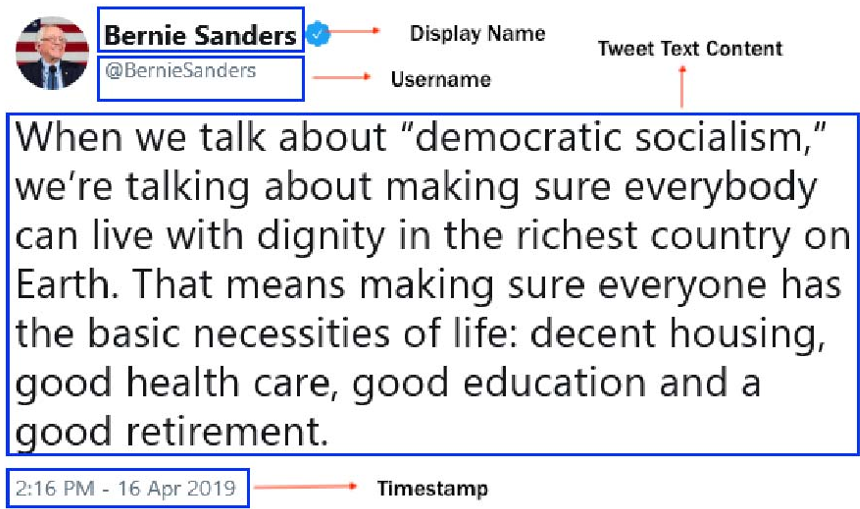 Fig 2: The specific segments of a Tweet image analyzed by the framework to ensure authenticity.
Critical Analysis & Limitations
Despite the high accuracy, the framework faces two significant hurdles:
- The "Ghost" Tweet Problem: If a user deletes a real tweet, the API can no longer find it. In the experiments, this led to 20 False Positives (real tweets flagged as fake because they were no longer on Twitter).
- Display Name Updates: Twitter allows users to change their display names frequently. If a screenshot displays an old name but the API returns the new one, the system might incorrectly flag it as tampered.
Future Outlook: The authors suggest that a "caching layer" or an archive of deleted tweets (like those provided by the Sunlight Foundation) would be necessary to bridge this gap, though this raises significant privacy concerns and compliance challenges with policies like the "Right to be Forgotten."
Conclusion
This work provides a critical first step in automating the detection of impersonated social media content. By moving beyond text-only analysis and looking at the visual evidence of a post, the proposed framework offers a practical tool that could be integrated into social media platforms to flag suspicious screenshots before they go viral.