
Beyond Specific Symptoms: A General Framework for Global Health Surveillance via Twitter
A framework for detecting public health trends with Twitter
The paper introduces a novel framework for automated public health surveillance using Twitter. By combining FP-Growth item-set mining with Wikipedia article indexing, the system identifies emerging health trends (such as Influenza or seasonal allergies) without requiring predefined keywords or specific disease models.
TL;DR
Researchers from Georgetown University have developed an automated framework that listens to the "pulse" of Twitter to detect public health trends. Unlike previous tools that only looked for a single disease like the Flu, this system uses frequent item-set mining and Wikipedia indexing to discover any emerging health concern—from seasonal allergies to summer-induced "brain freeze"—in near real-time.
The Motivation: Moving from "What" to "Why"
Public health officials usually operate with a "rear-view mirror" approach. By the time enough clinic reports reach the CDC, an outbreak has often already peaked. While social media monitoring (Infodemiology) has existed for years, it has suffered from two major flaws:
- The Specificity Trap: Most models require you to know what you are looking for (e.g., "Flu"). If a new virus emerges, these systems are blind.
- The Noise Problem: Twitter is messy. Distinguishing between "I have a headache" (medical) and "This homework is a headache" (colloquial) is notoriously difficult.
The authors' insight was to leverage the collective intelligence of Wikipedia as a filter. If trending words on Twitter lead to a medical Wikipedia article containing specific ICD-10 (International Classification of Diseases) codes, it is highly likely a real health trend is occurring.
Methodology: The Trend-Detection Pipeline
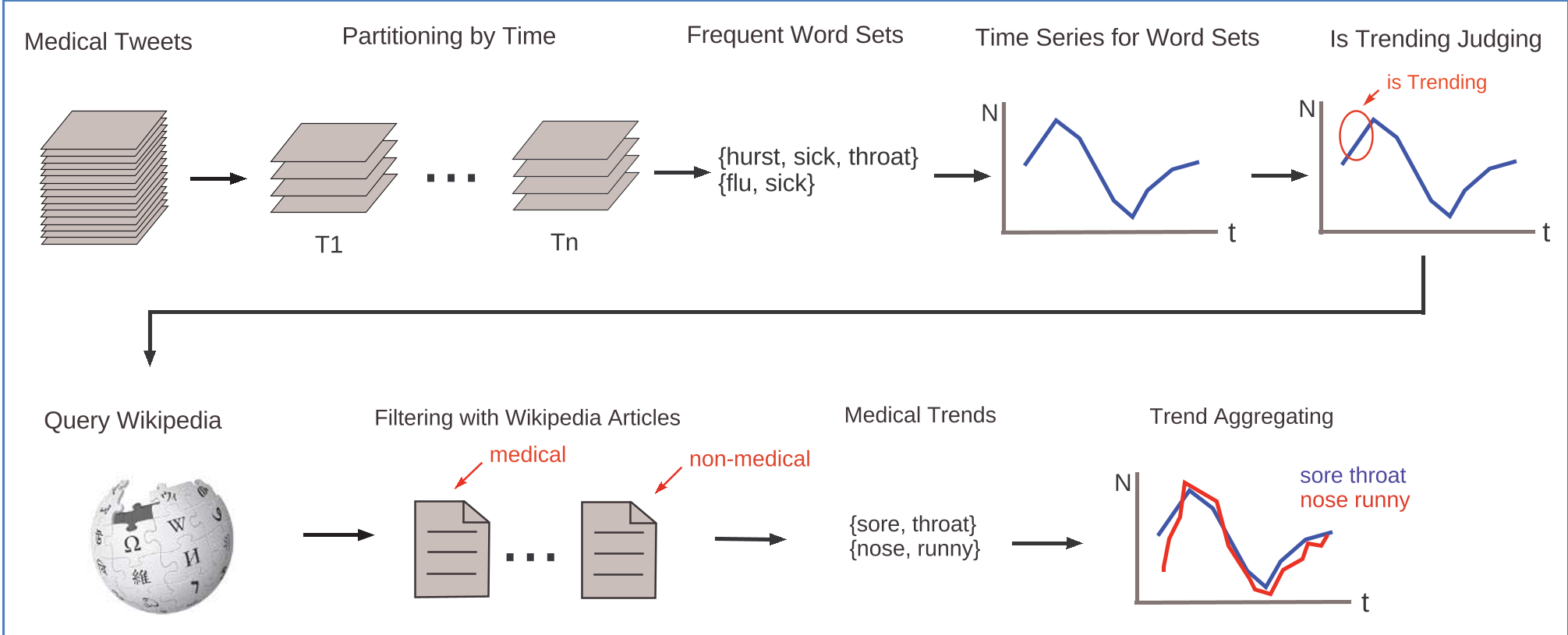
The framework operates in a series of logical steps designed to distill raw noise into medical insights.
1. Item-Set Mining with FP-Growth
Instead of looking for single words, the system looks for Frequent Word Sets (e.g., {sore, throat, hurts}). By using the Parallel FP-Growth algorithm, the system identifies combinations of words that appear together more frequently than a predefined threshold (0.1% of monthly tweets).
2. The Wikipedia Knowledge Link
Once a word set is identified as "trending" (meaning its prevalence increased significantly compared to the previous month), it is fed into a Lucene index of Wikipedia.
- Intuition: Wikipedia articles are written in layman’s English, just like tweets, but contain structured medical metadata (ICD codes).
3. Medical Filtering
To ensure precision, the authors compared two filtering strategies:
- Precision Filter: Only accepts Wikipedia articles containing an ICD code in the info box.
- Recall Filter: Includes articles where the introduction has a high density of medical terms (verified against Stedman’s Medical Dictionary).
Experimental Results & Insights
The framework was tested on a corpus of 1.6 million health-related tweets.
Detecting the Expected (Influenza)
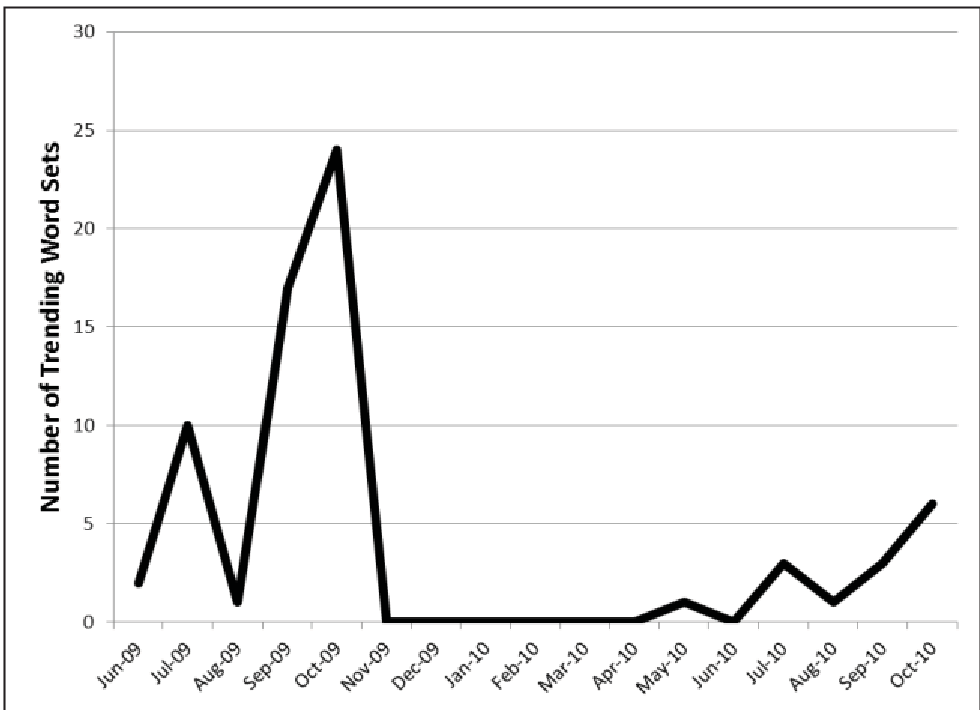
The system's "Influenza" signal (based on the number of trending word sets pointing to the Influenza Wikipedia page) closely matched the actual weekly flu cases in the US. Notably, a spike in July 2009 was detected—this didn't align with clinical cases but did align with the WHO's Phase 6 Pandemic alert, showing the system also captures public "anxiety" and information-seeking trends.
Detecting the Unexpected (Ice-Cream Headaches)
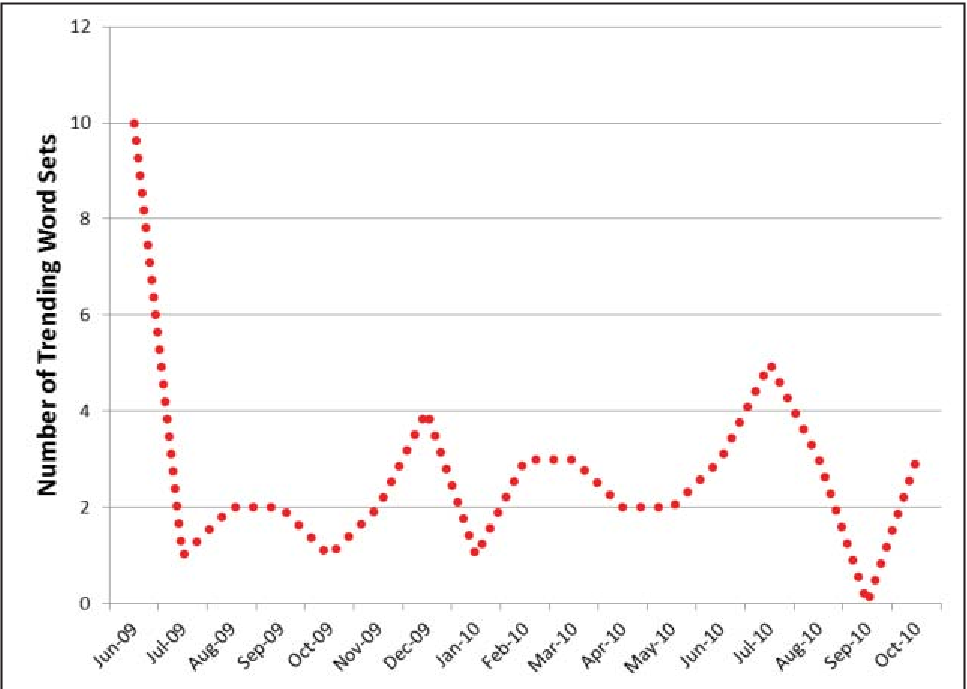
The system proved its "general-purpose" value by detecting Sphenopalatine ganglioneuralgia (Ice-cream headaches). Trending word sets like {eating, headache, ice} spiked significantly in June 2009 and July 2010—the hottest months on record—proving that the system can find trends without a priori knowledge.
Critical Analysis & Future Outlook
Strengths:
- Agnosticism: It doesn't care if the disease is the Flu, Zika, or a new strain; if people talk about symptoms, it finds it.
- Efficiency: Using mature tools like Lucene and Mahout makes it computationally feasible for large-scale data.
Limitations:
- Linguistic Ambiguity: The "Headache" example shows that colloquialisms still create noise (e.g., "bad weather is a headache").
- Dependency on Structured Data: Using ICD codes is brilliant for precision but might miss "novel" diseases that don't have a Wikipedia page or ICD code yet.
Takeaway: This work represents a shift toward Empirical Surveillance. By letting the data define the trends rather than the researcher, we can build a more resilient global health monitoring network that is ready for the "unknown unknowns" of future pandemics.