
MiCoI: Breaking Classroom Walls via Cross-Institutional Microblogging
A Framework to Enrich Student Interaction via Cross-Institutional Microblogging
The paper introduces MiCoI (Microblogging for Community of Inquiry), a pedagogical framework designed to foster social, cognitive, and teaching presences in higher education. Leveraging a cross-institutional experiment between Australian and American universities using Twitter, the authors demonstrate that microblogging can shift from purely informal social interaction to a robust tool for collaborative, deep learning.
TL;DR
Researchers Suku Sinnappan and Samar Zutshi have developed MiCoI, a framework that transforms microblogging from a simple social tool into a pedagogical powerhouse. By linking students from Australia and the US via Twitter, they demonstrated that structured micro-interactions can drive high levels of Cognitive Presence, proving that learning doesn't have to stop when the lecture ends.
Beyond the "Status Update": The Motivation
Most educators view Twitter as a double-edged sword: highly engaging but potentially distracting. Previous research suggested that 80% of users simply broadcast personal "noise." However, Sinnappan and Zutshi saw an untapped opportunity. Traditional Learning Management Systems (LMS) are "walled gardens"—they don't allow students to interact with experts or peers at other institutions.
The authors' intuition was simple: What if we use the inherent "real-time" and "open" nature of microblogging to facilitate a Community of Inquiry (CoI)?
Methodology: The MiCoI Framework
the authors didn't just tell students to "go tweet." They developed a rigorous three-phase approach to ensure the tool served the pedagogy:
- Planning Phase: Identifying debate-worthy topics (e.g., WikiLeaks, ethics) and finding partner educators globally to synchronize curricula.
- Implementation Phase: Scaffolding students on how to use hashtags (e.g.,
#leb215) and@mentionsto engage in cross-continental discourse. - Monitoring Phase: Instructors actively "tune" the conversation, ensuring that students move beyond simple social "LOLs" toward deeper integration of ideas.
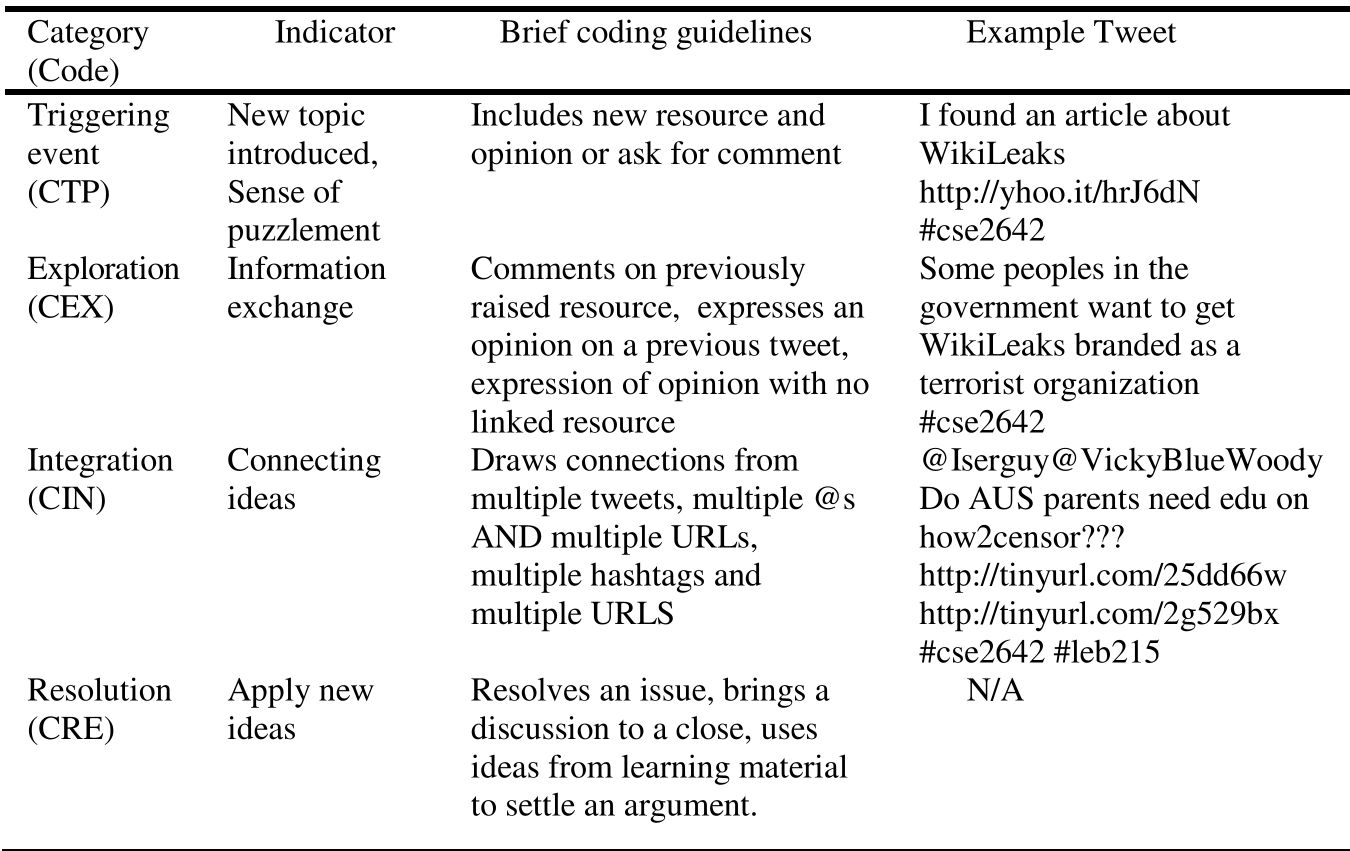 Figure 1: Adapting the CoI Coding Scheme to the 140-character world of microblogging.
Challenging the Myths: Experimental Results
The most striking finding was the composition of the interaction. Traditional views suggest social media is for Social Presence. This study found the opposite:
| CoI Element | Results (%) |
|---|---|
| Cognitive Presence | 67.51% |
| Social Presence | 24.82% |
| Teaching Presence | 7.67% |
Students weren't just saying "Hi"; they were sharing links, debating government censorship, and connecting disparate ideas across time zones.
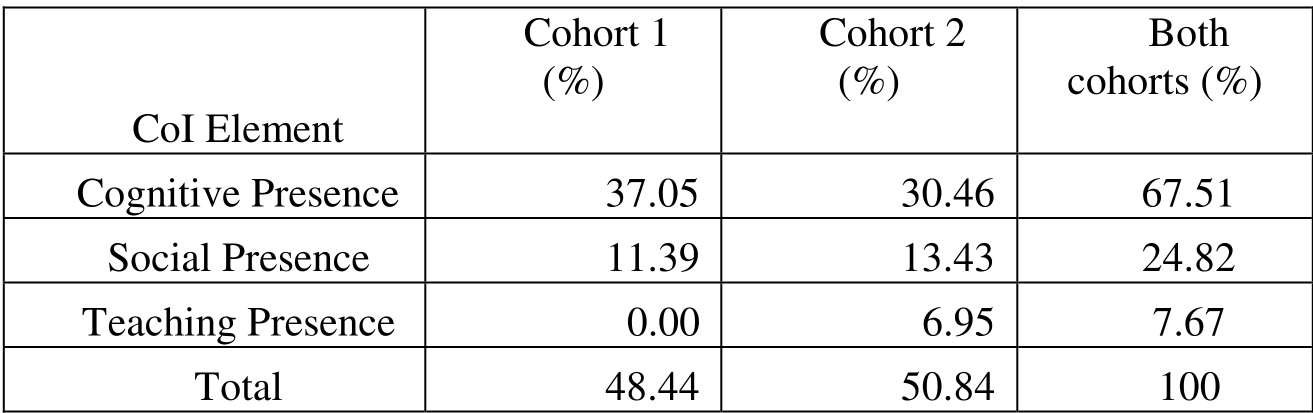 Figure 2: Statistical evidence showing that Cognitive Presence dominated the cross-institutional collaboration.
Critical Insight: The "Teaching Presence" Gap
One fascinating takeaway from the data is the low Teaching Presence exhibited by students (mostly handled by staff). In a mature Community of Inquiry, students should eventually take the lead in facilitating discourse. The authors suggest that future iterations of the MiCoI framework should include specific "student-led" moderator roles to decentralize authority and further empower the learner.
Conclusion & Future Outlook
The MiCoI framework offers a blueprint for "boundary-less" education. It proves that with the right scaffolding, social media tools can foster a global classroom. While the study was limited by a small sample size (47 participants), it paves the way for a more "on-demand," socially situated higher education experience.
Are we ready to let students "tweet" their way to a degree? If it leads to 67% cognitive engagement, the answer from this study is a resounding "Yes."