
Social Sensing: Optimizing Building Energy Use via Social Media Sentiment
A framework for integrating user experience in action plan evaluation through social media: Transforming user generated content into knowledge to optimise energy use in buildings
This paper introduces a methodological framework that utilizes User Generated Content (UGC) from social media (Twitter and Facebook) to evaluate and optimize building energy management. By performing sentiment analysis on occupants' posts regarding thermal comfort, the system dynamically adjusts temperature set-points to improve user satisfaction and energy efficiency.
TL;DR
Researchers have developed a framework that transforms social media posts from building occupants into actionable data for energy management. By analyzing the sentiment of tweets and Facebook posts, the system dynamically adjusts temperature set-points, bridging the gap between objective sensor data and subjective human comfort.
Background & Positioning
In the era of Smart Buildings, we often rely heavily on "hard sensors" (thermometers, CO2 sensors). However, the ultimate judge of a building's environment is the human occupant. This paper sits at the intersection of Social Computing and Energy Management, moving beyond traditional questionnaire-based surveys toward a real-time, "Social Sensing" approach for Demand-Side Management (DSM).
The Problem: The Gap Between Sensors and Comfort
Existing energy action plans are often rigid. Why?
- Questionnaires are slow: By the time a survey is processed, the environmental conditions have changed.
- Sensors are objective, but comfort is subjective: A room at 24°C might feel "perfect" to one person but "freezing" to another based on metabolism or clothing.
- Unstructured Data: While social media is a goldmine of feedback, it is "fuzzy" and unstructured, making it difficult to plug into a control algorithm.
Methodology: From Tweets to Thermostats
The framework operates through a sophisticated pipeline that cleanses and categorizes human speech:
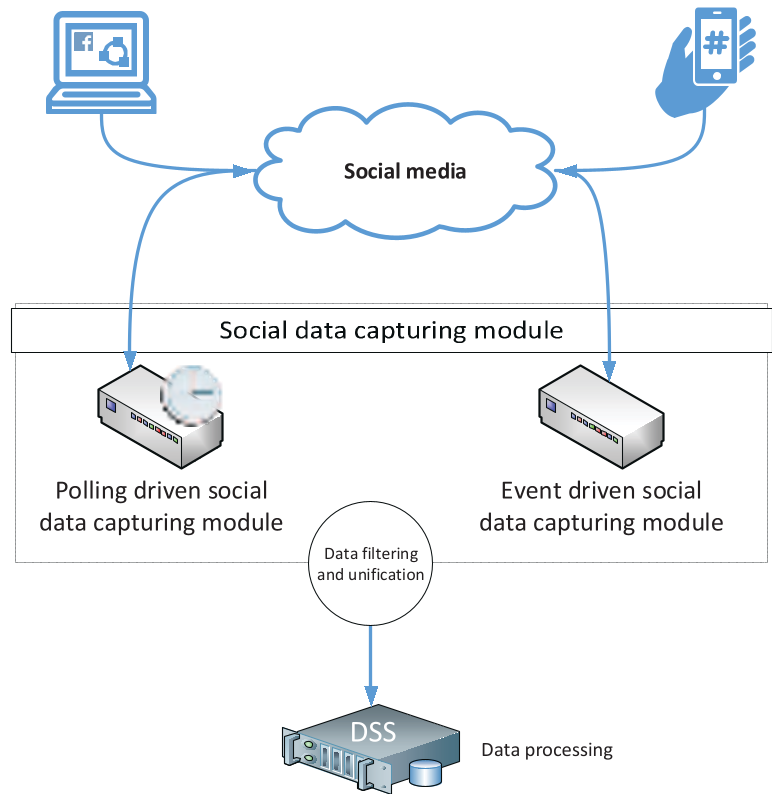
1. Data Capturing & Filtering
The system uses two models:
- Event-driven: Real-time harvesting of Twitter feeds.
- Polling-driven: Regular checks of Facebook pages. The messages are then cleansed of URLs and unrelated media to ensure a "pure" text input.
2. The Sentiment-to-Action Mapping
This is the core innovation. Each word in a message is scored against a training set of 1,000+ thermal comfort expressions.
- Positive/Neutral Sentiment: Assigned a value of 0 (No change needed).
- Negative Sentiment: Assigned +1 (request for increase) or -1 (request for decrease).
3. Accounting for Thermal Inertia
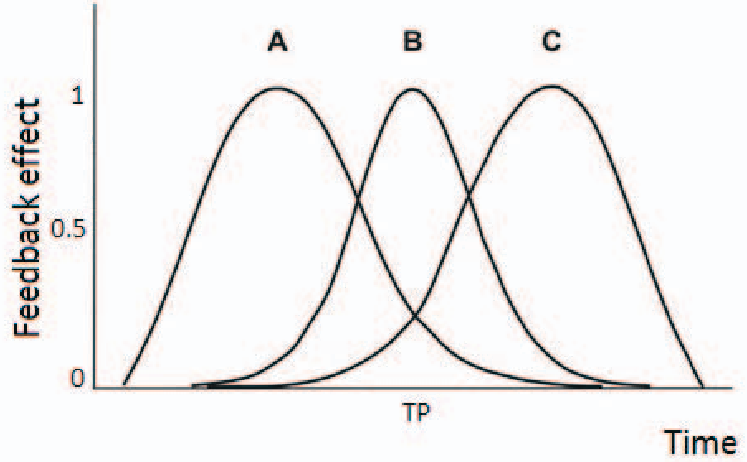
Buildings don't heat up or cool down instantly. The authors intelligently model the "effect duration" of a post. They assume a post reflects the user's feeling not just at the moment of posting, but over a window of time, modeled via Normal or Skewed Distributions (see Fig. 4 in the paper).
Experimental Validation: A Pilot Scenario
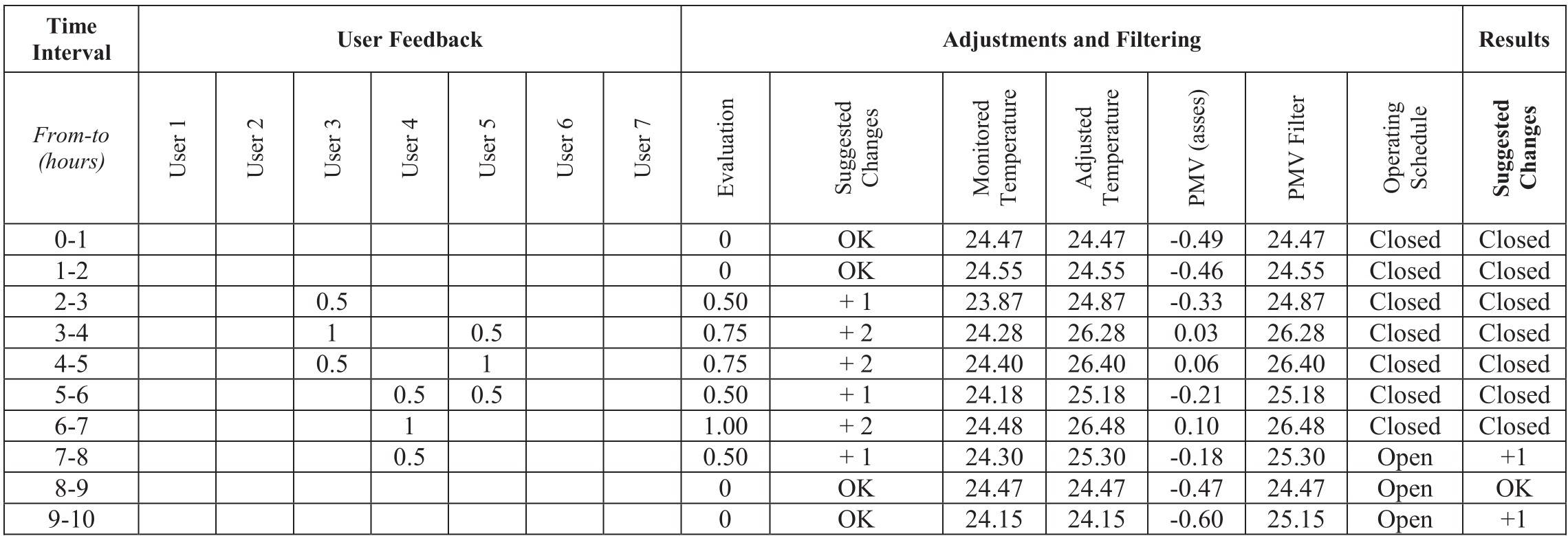
The paper presents a case where seven users provide feedback (e.g., "It's so freezing cold!").
- Initial Action: The average sentiment score is calculated per hour.
- The PMV Filter: To prevent extreme or inefficient settings, the system cross-references suggestions with the Predicted Mean Vote (PMV) index and technical standards (ASHRAE 55).
- Result: The system successfully identifies hours where temperatures should be raised by +1°C or +2°C to meet user expectations while staying within operational safety limits.
Critical Insight & Future Outlook
The genius of this approach lies in its Human-in-the-loop architecture. It treats occupants not as passive bystanders, but as active, distributed sensors.
Limitations:
- Data Sparsity: If no one tweets, the system has no feedback. The authors suggest "stimulating" responses by posting questions on social media.
- Demographic Bias: Younger occupants may be more likely to use social media than older ones, potentially skewing the comfort profile.
Future Work: Integrating this with IoT and AI-driven predictive maintenance could lead to buildings that "learn" the specific comfort profiles of their occupants over time, potentially saving significant energy by avoiding over-cooling or over-heating when occupants are satisfied.