
CATS Framework: Orchestrating Middleware for the Next Generation of Vehicular Social Networks
A framework for mobile and context-aware applications applied to vehicular social networks
The paper introduces the CATS (Context-Aware Transportation Services) framework, a service-oriented architecture designed for vehicular social networks and mobile users. Leveraging OSGi and iPOJO, it enables real-time adaptation of applications like VESPA by hot-swapping functional services (e.g., switching from broadcast dissemination to reservation protocols for parking) based on environmental context.
TL;DR
As we transition toward smarter cities, our mobile applications must become as instinctive as humans in adapting to their surroundings. This paper presents CATS (Context-Aware Transportation Services), a framework that allows vehicular applications to swap their internal modules (services) on the fly. Whether changing how a car finds a parking spot or how it communicates with peers, CATS ensures these transitions happen in under a second, maintaining a seamless user experience.
Problem & Motivation: The Volatility of the Road
Modern transportation apps like Waze or VESPA rely heavily on a "community of nodes." However, the vehicular context is uniquely challenging:
- High Mobility: Nodes move at 100km/h, leading to rapid connection losses.
- Context Fluidity: An app might need a GPS service on the highway but a localized, infrastructure-specific protocol inside a smart parking garage.
- Resource Constraints: Smartphones and in-car units have limited RAM and CPU compared to servers.
The authors argue that existing solutions are either too rigid or handle content adaptation rather than functional adaptation. Their goal was to build a system where the very logic of the application changes based on where the car is and what it is doing.
Methodology: SOA Meets Autonomic Computing
The CATS framework is built on Service-Oriented Architecture (SOA), specifically using OSGi (Open Services Gateway initiative) and the iPOJO component model.
The Core Components
- Context Manager: Monitors snapshots of the environment (location, speed, network) and stores them in XML format.
- Execution Manager: The "brain" that detects service failures or context shifts and triggers a switch.
- Trader: Handles the discovery and acquisition of new services from neighboring vehicles or the cloud.
The VESPA Use Case
A standout example is the VESPA system. In a low-traffic area, VESPA broadcasts available parking spaces (Dissemination). In a crowded city center, it automatically swaps the "Dissemination Service" for a "Reservation Protocol Service" to prevent "parking wars" between drivers.
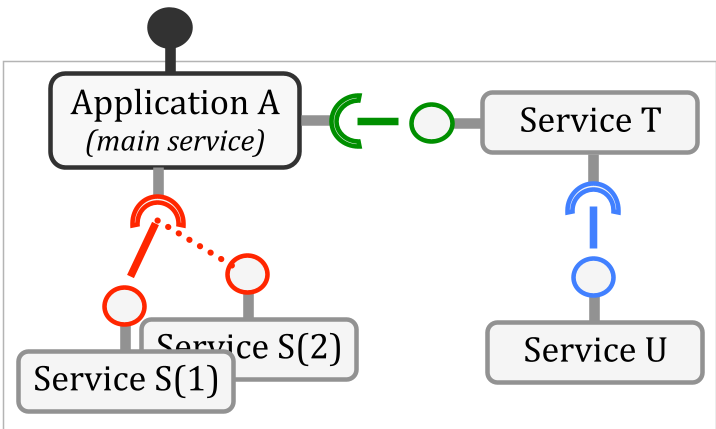 Figure 1: The CATS Framework architecture shows the internal Managers and the Trader facilitating service exchange for applications like VESPA.
Experiments: Measuring the "Switch"
The researchers tested four scenarios for exchanging services (Case 1 to 4), ranging from having services pre-loaded to installing them from scratch at runtime.
- Case 1 (Instant): Multiple equivalent services are running; the switch is nearly 0ms.
- Case 2 (Register): Registering a pre-started service.
- Case 3 (Start): Instantiating and starting a service.
- Case 4 (Install): The "cold start" where a component is installed and started.
Performance Results
Testing on hardware as old as a 528MHz HTC Hero, the results were impressive:
- Registration Time: Averaged ~130ms on newer devices.
- Installation Delay: Even on the oldest device (HTC Hero), the delay was ~1000ms.
This is critical because 2 seconds is the psychological threshold where users perceive a "lag." CATS comfortably fits within this limit even during heavy "Install" operations.
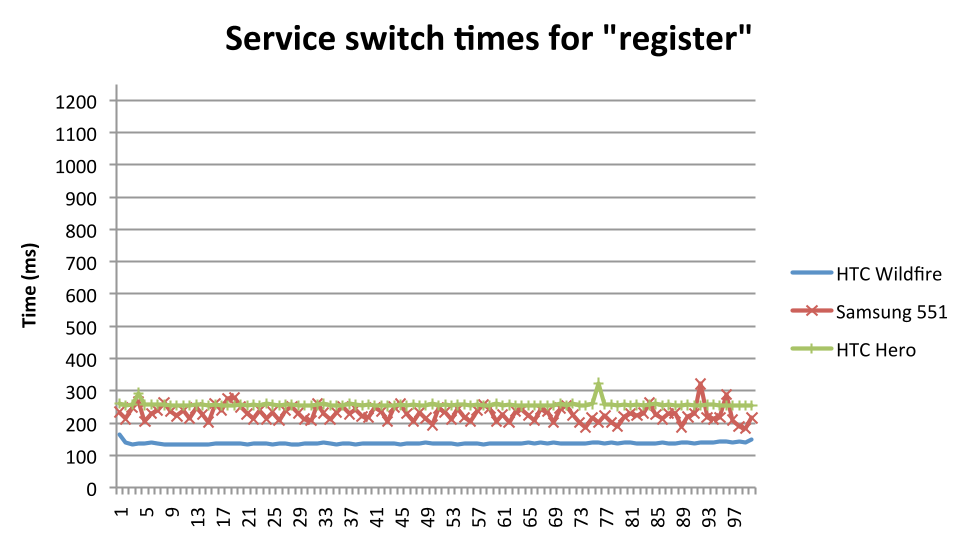 Figure 2: Average time for Test A (Register), B (Start), and C (Install) across three generations of Android hardware.
Deep Insight: Memory and Longevity
The study also monitored memory consumption. While installing and starting components (Case C) leads to a steeper memory usage slope, the overhead is manageable. The framework was robust enough to run mixed tests for over an hour on devices with as little as 256MB RAM.
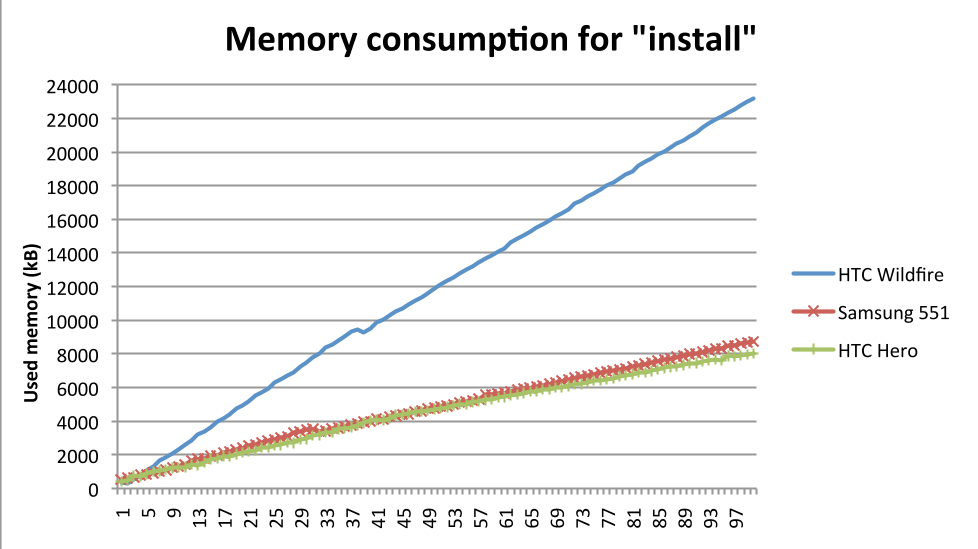 Figure 3: Memory consumption trends showing manageable increases despite repeated service restarts.
Conclusion & Future Outlook
The CATS framework proves that high-level software engineering principles like SOA can be effectively applied to the messy, high-speed world of vehicular networks.
Takeaway: For developers in the IoT or automotive space, this paper validates that modular, hot-swappable services are not just a luxury for the cloud—they are a necessity for the "intelligent edge."
Limitations: The paper focused heavily on Java-based OSGi. In a modern 2024+ context, we might look toward lighter-weight WASM (WebAssembly) modules or containerization (KubeEdge) to achieve similar goals with even less overhead.