
Intelligent SCD Monitoring: Bridging the Gap Between Mobile Technology and Chronic Hematology
A Framework to Support Ubiquitous Healthcare Monitoring and Diagnostic for Sickle Cell Disease
This paper introduces a ubiquitous m-Health framework for real-time monitoring and diagnosis of Sickle Cell Disease (SCD) using mobile platforms. The core method utilizes Instance-based Learning (IBL) algorithms to classify patient data, achieving a high SOTA accuracy of 99% in distinguishing SCD traits from normal conditions.
TL;DR
Sickle Cell Disease (SCD) management is undergoing a digital transformation. This paper presents a framework that leverages mobile devices and Instance-based Learning (IBL) to classify SCD patients with an astounding 99% accuracy. By shifting diagnosis from the hospital lab to the patient's pocket, the system reduces clinical overhead and provides a lifeline for patients in remote areas.
The Motivation: From Manual Stress to Automated Alerts
SCD is a genetic blood disorder that leads to red blood cell (RBC) abnormalities, significantly reducing life expectancy. The current clinical status quo is fraught with friction:
- Financial Barriers: Testing equipment is expensive, making home monitoring nearly impossible.
- Operational Latency: Manual data entry by patients is slow and often processed too late during life-threatening crises.
- Geographical Constraints: Patients in developing regions or remote areas cannot afford regular hospital visits for routine checks.
The authors' insight was to utilize the Ubiquitous Healthcare (U-health) paradigm—using smartphones not just as data loggers, but as diagnostic expert systems.
Methodology: The Architecture of Instant Diagnosis
The proposed framework bifurcates the healthcare process into two distinct sectors:
- Patient Side: An Android application serves as the primary interface. It collects 12 critical attributes (e.g., Hemoglobin levels, MCV, Bilirubin, and Urea) and performs local analysis.
- Medical Side: High-risk conditions (detected via abnormalities in heartbeat or breathing) trigger instant alerts to medical consultants, while low-level conditions are managed through self-care reminders to reduce "alarm fatigue" for doctors.
Core Architecture
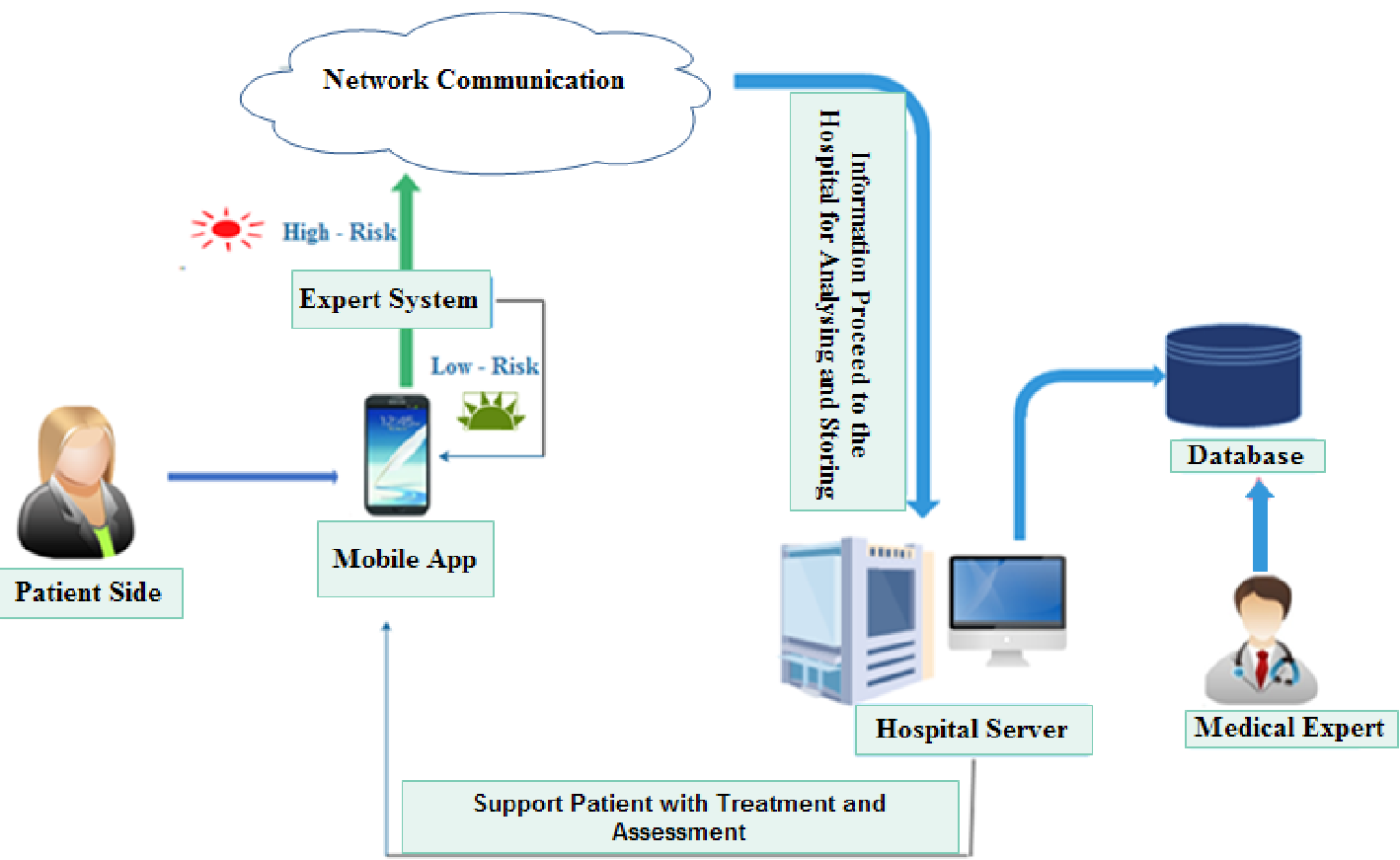
Machine Learning Analysis: Why Instance-Based Learning?
The researchers compared two primary algorithms: Zero-Rule (0-R) and Instance-based Learning (IBL).
The Zero-Rule algorithm, which relies on simple frequency-based rules, achieved a mediocre 62% accuracy. In contrast, the IBL algorithm reached 99% accuracy.
Why was IBL so effective? Unlike rigid rule-based systems, IBL stores the training set and uses specific heuristics to calculate the distance/similarity between a new patient's data and stored instances. It is particularly adept at handling multi-attribute medical data where the interaction between features (like age, gender, and Hemoglobin F) is complex.
Key Performance Metrics
| Metric | Zero-Rule | Instance-Based (Proposed) |
|---|---|---|
| Accuracy | 62% | 99% |
| Precision | 0.372 | 0.990 |
| Recall | 0.610 | 0.990 |
| F-Measure | 0.462 | 0.987 |
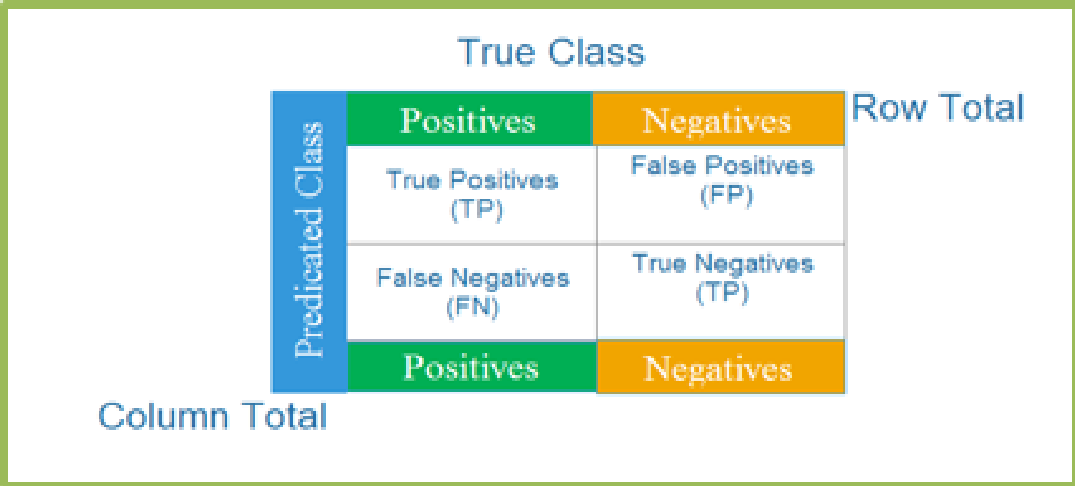 Figure 2: The confusion matrix used to validate the model's performance on the 100-patient dataset.
Critical Insight: Beyond the Accuracy Numbers
While reaching 99% accuracy on 100 instances is impressive, the true value of this work lies in its Inductive Bias. By selecting 12 specific hematological features (including ALT and Ferritin), the system creates a "digital phenotype" of the disease.
Limitations & Future Scope:
- Sample Size: 100 patients is a solid pilot, but robust clinical deployment requires larger, multi-ethnic datasets.
- Connectivity: While designed for ubiquitous use, the framework’s reliance on 3G/4G connectivity must be coupled with strong offline diagnostic capabilities for the most remote regions.
Conclusion: The Future of Personalized Hematology
This framework proves that we can move beyond episodic hospital care toward continuous, automated monitoring. For SCD patients, this isn't just a technical upgrade—it's a critical safety net that ensures that when a crisis hits, the system reacts before the patient even has to ask for help.