
U-Control: Reclaiming Sovereignty Over Digital Personas in Social Networks
A Framework for Enabling User-Controlled Persona in Online Social Networks
The paper introduces U-Control, a user-centric framework for Online Social Networks (OSNs) that manages digital personas through Ontology-based Privacy Attribute Management and Authenticated Dictionary (ADT) based selective sharing. It allows users to disclose only specific attributes to service providers while mathematically proving their validity without revealing sensitive metadata.
TL;DR
U-Control is a robust privacy framework designed to tackle the "privacy paradox" in Online Social Networks (OSNs). By combining a Privacy Attribute Ontology for risk assessment and Authenticated Dictionaries (ADTs) for selective data disclosure, it empowers users to share only what is necessary (e.g., age bracket) without exposing their entire identity (e.g., full birth date and SSN).
The Core Friction: Centralized Data vs. Individual Privacy
Most current SN sites function as "Data Black Holes." Once you upload your profile, the platform—and by extension, its partners and advertisers—gains total visibility. The authors identify a critical gap: users lack a systematic way to manage their Digital Persona and Privacy (DPPM).
The motivation is clear: social activities require personal info for features like personalization, but this shouldn't necessitate a total loss of control. The challenge is creating a system that is secure, user-friendly, and computationally efficient enough for real-time social networking.
Methodology: The U-Control Architecture
The framework operates on two pillars:
1. Privacy Attribute Ontology
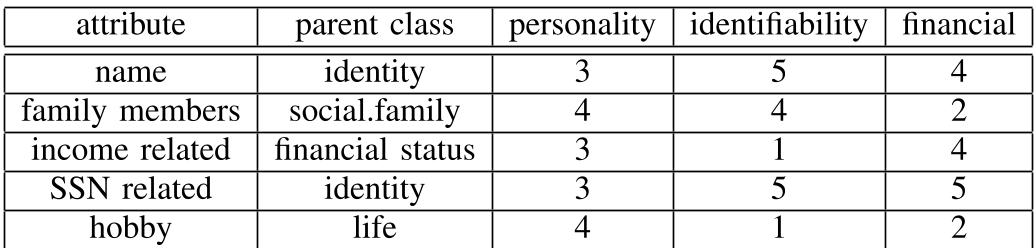
Before sharing data, users need to understand the risk. U-Control classifies information based on three "Privacy Factors":
- Personality: Risk of embarrassment (e.g., hobbies, address).
- Financial: Risk of monetary loss (e.g., credit card info).
- Identifiability: Risk of identity exposure (e.g., SSN, email).
2. Selective Disclosure via Authenticated Dictionaries
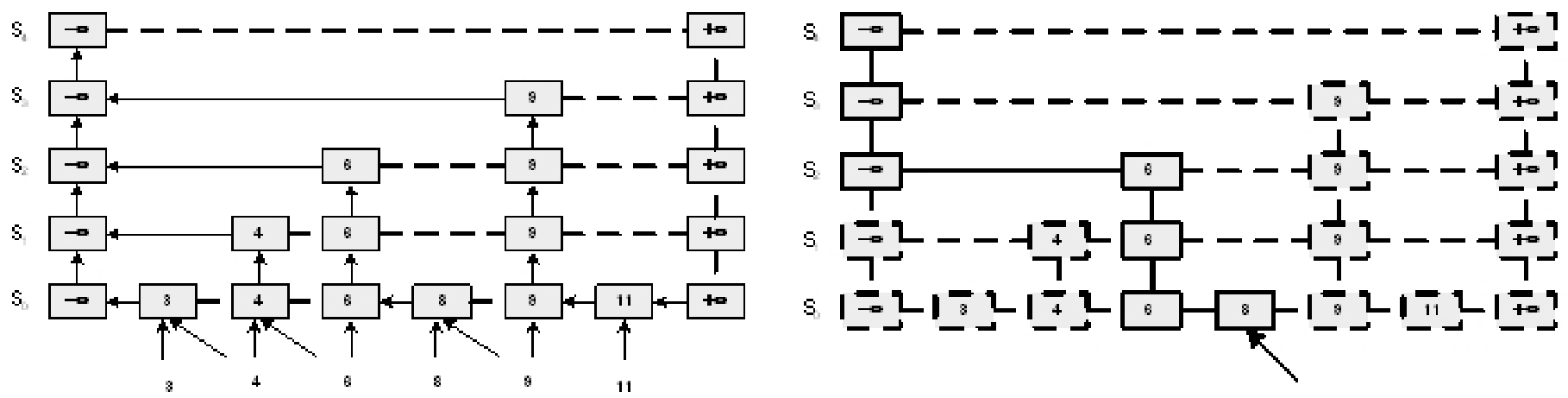
This is the technical "secret sauce." Instead of a flat file, user attributes are stored in an Authenticated Dictionary based on Skip Lists.
- How it works: Attributes are salted and hashed. Only the top-level "root hash" is signed by the identity provider.
- Selective Proof: When a social network asks for your "Hobby," you only provide that specific node and the "path values" (hashes) required to recompute the root hash. This proves the "Hobby" came from your verified profile without revealing your "SSN" node.
Performance & Efficiency
One might worry that such heavy-duty cryptography would slow down the user experience. However, the use of Commutative Hashing and Skip Lists ensures that:
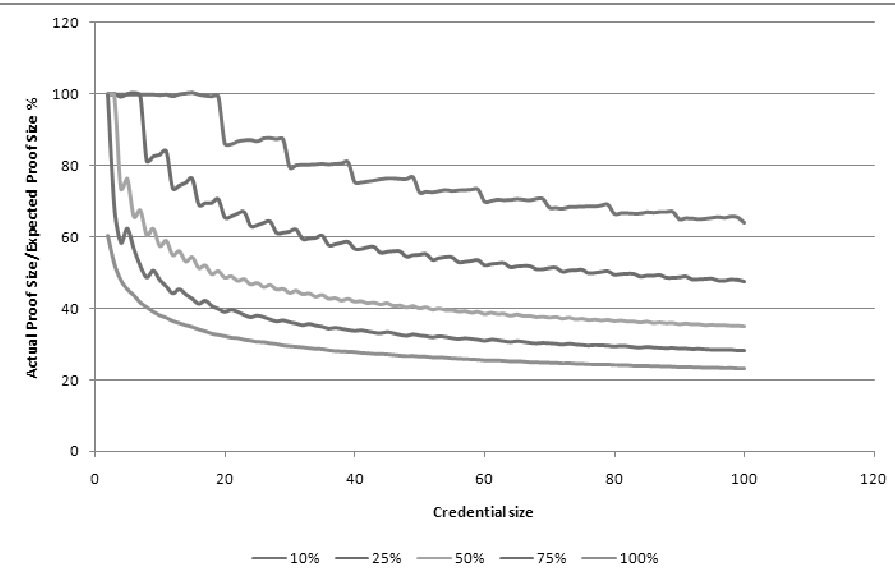
- Search/Verification: Complexity is , meaning even with 100+ attributes, the proof remains tiny.
- Optimization: The authors discovered a "Performance Gaining" phenomenon. If you share three attributes, they likely share the same high-level branch in the hash tree, reducing the total data sent (the "Overlapping Proof Path").
Critical Insight & Future Outlook
While the paper successfully demonstrates a Proof of Concept (PoC) using XML and SWT-based UI, its true value lies in its User-Centric Philosophy. By moving the decision-making engine to a "U-Control Agent" on the user's side, it breaks the dependency on the social network's benevolence.
Limitations: The current prototype relies on a "Circle of Trust" (CoT). In a truly global, adversarial internet, managing these trust relationships remains a hurdle. Furthermore, the "Privacy Ratings" are currently based on social consensus, which may shift rapidly across different cultures.
Summary: U-Control is a sophisticated bridge between the convenience of social networking and the necessity of data sovereignty. It proves that we don't have to sacrifice our privacy to be social online.