
Deciphering the Blueprint of Crowds: A Systematic Unified Framework for Collective Intelligence
9775_Frameworks for Collective Intelligence A Systematic Literature Review.
This systematic literature review (SLR) investigates Collective Intelligence (CI) frameworks in ICT, analyzing 9,418 articles to propose a novel, granular framework. It extends Malone's CI genome into a unified model that describes CI systems through "Who, Why, What, and How" using 24 unique technical attributes across diverse domains.
Executive Summary
Collective Intelligence (CI)—the phenomenon where "the whole is greater than the sum of its parts"—has evolved from an 18th-century sociological concept to a critical driver of modern ICT platforms like Wikipedia, Climate CoLab, and Threadless. However, despite the success of these systems, the field suffers from a lack of architectural standardization. Scholars have long relied on domain-specific intuition rather than a general engineering framework.
This paper provides a seminal Systematic Literature Review (SLR), synthesizing 12 major CI models into a unified framework. By extracting 24 unique attributes, the authors offer a high-resolution map for designing, analyzing, and scaling CI systems, treating them as Complex Adaptive Systems (CAS) rather than static tools.
The "Intuition Gap": Why CI Systems Are Hard to Build
Prior to this study, CI research was fragmented. While the "Wisdom of Crowds" (Surowiecki) provided philosophical guidance, and "CI Genomes" (Malone) provided organizational categories, there was no bridge to actual system requirements. Most platforms were built in silos:
- Domain-Specificity: Models for medical collaboration rarely informed models for environmental monitoring.
- Lack of Implementation Detail: Existing literature focused on what CI can achieve (Macro-level) rather than how the data flows and components interact (Micro-level).
- The Reproducibility Crisis: Proprietary algorithms (like those of Google or Goldcorp) lack scientific transparency, making it difficult for new researchers to replicate success.
Methodology: The Unified CI Framework
The researchers conducted a multi-phase SLR across 9,418 articles, narrowing down to 12 primary studies (S1-S12) that defined the core theoretical foundations of the field. From these, they distilled a Generic Model for CI Systems structured around four fundamental questions:
1. Who is performing the task? (Staff)
The framework moves beyond the simple "Crowd" vs. "Hierarchy" binary. It identifies:
- Active Actors (Contributors): Can be the distributed crowd or a structured hierarchy of experts/admins.
- Passive Actors (Beneficiaries): Stakeholders who utilize the output without contributing to the process.
- Required Properties: Diversity (to prevent groupthink), Independence (to avoid info-cascades), and Critical Mass (the minimum user threshold for system effectiveness).
2. Why are they doing it? (Motivation)
CI thrives on an delicate balance between:
- Intrinsic Motivation: Passion, self-fulfillment, and social cause (crucial for "Decide" tasks).
- Extrinsic Motivation: Tangible rewards like money/cash or intangible ones like "Design Quotients" and "Glory."
3. & 4. What is being accomplished? & How is it done? (Goal & Process)
The researchers detail the interplay between independent actions (Collection) and interdependent actions (Collaboration).
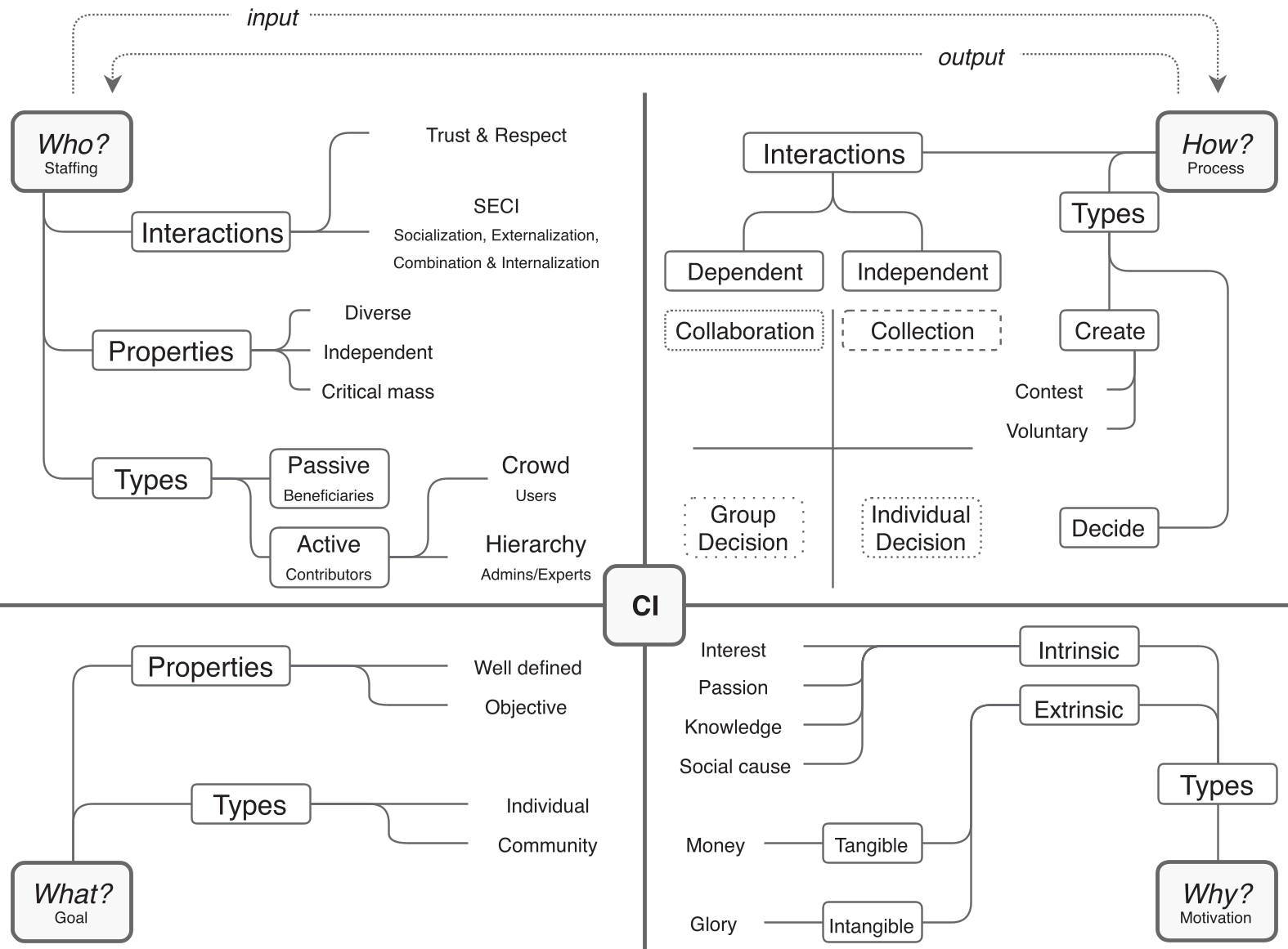 Figure 1: The proposed unified Generic Model for Collective Intelligence systems.
CI as a Complex Adaptive System (CAS)
A standout contribution of this paper is the explicit treatment of CI as an Adaptive System. For CI to sustain itself, three properties are necessary:
- Adaptivity: The ability to modify structure based on user feedback (The "Perpetual Beta").
- Self-Organization: The emergence of structure (e.g., communities/reputations) without central control.
- Emergence: When simple individual interactions produce a sophisticated global outcome (e.g., Wikipedia's accuracy vs. individual expertise).
Case Study Insights: Comparing the Giants
The authors evaluated six diverse platforms—from CAPSELLA (Agribiodiversity) to WikiCrimes (Law Enforcement)—to test the model.
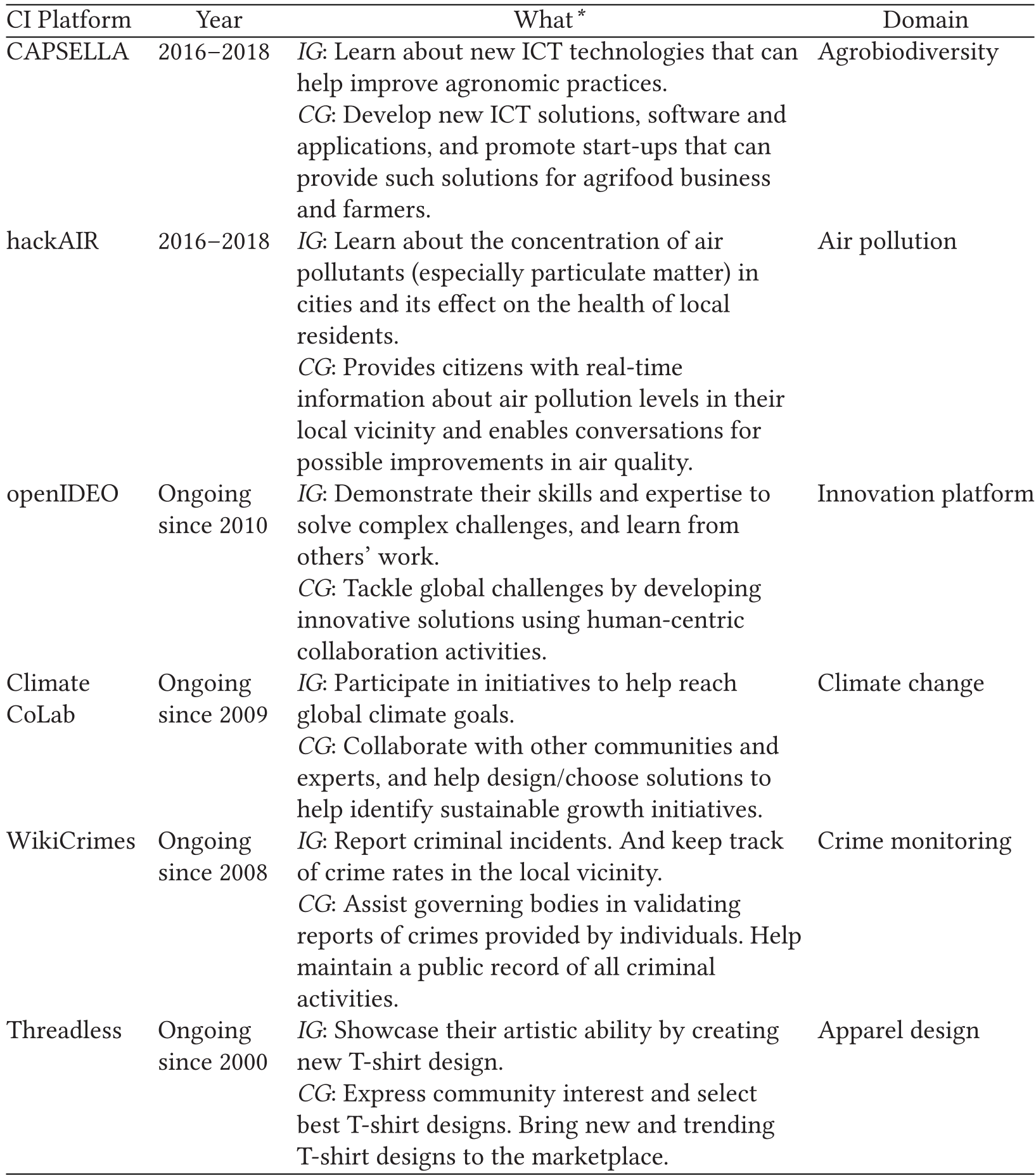 Table: Mapping ongoing CI initiatives to the unified framework.
Key finding from the analysis:
- Motivation Correlation: Contest-based "Create" activities are almost universally driven by extrinsic rewards (money/recognition).
- Decision Mechanisms: While crowds provide the "Wisdom," final "Group Decisions" often involve a hierarchical review or consensus mechanism to ensure quality.
Critical Insight & Future Outlook
This paper succeeds in transforming CI from a "mystery" of social behavior into an engineering discipline. By defining 24 specific attributes (e.g., A14: Task Allocation, A16: Aggregate Knowledge), it allows developers to treat CI components like modular blocks.
Limitations & Future Work: While the taxonomy is comprehensive, the paper notes that the Trust and Reputation models (A10) need deeper mathematical exploration. As we move into an era of AI-human collaboration, the definition of "Individual" (Who) may soon expand to include autonomous agents, requiring the framework to adapt once more.
Takeaway for Practitioners: Don't build CI platforms on intuition. Follow the "Unified Framework": ensure diversity and independence to avoid bias, define clear extrinsic motivators for creation tasks, and design for emergence by facilitating massive interactions.