
FDSC: Boosting Fraud Detection in Social Commerce via Multimodal Fusion
Fraud Detection in Social Commerce: combining structured attributes and images
This paper proposes FDSC (Fraud Detection in Social Commerce), a multimodal framework that integrates structured ad attributes with image analysis using Deep Learning. It demonstrates that combining these data sources significantly outperforms traditional unimodal methods, achieving a 7% improvement in F-score on real-world datasets.
TL;DR
With the explosion of social commerce, manual fraud detection has become an impossible task. This paper introduces FDSC (Fraud Detection in Social Commerce), a method that proves product images are a "gold mine" for fraud detection. By combining traditional structured data with probabilities derived from Deep Learning image analysis, the researchers achieved a 7% gain in F-score, demonstrating that visual cues are essential for modern security.
The Missing Link: Why Structured Data Isn't Enough
Traditionally, fraud detection systems look at "hard facts": Is the price too low? Is the account new? While effective, these systems are blind to the visual narrative.
The authors identify two key visual "red flags" that traditional systems miss:
- Low-Quality Artifacts: Images that are repeatedly screenshotted often carry digital artifacts suggestive of stolen content.
- Suspicious Framing: For example, a car photographed at an unusual vertical angle (see Figure 1 in the paper) might indicate a non-professional or fraudulent listing.
Methodology: The FDSC Framework
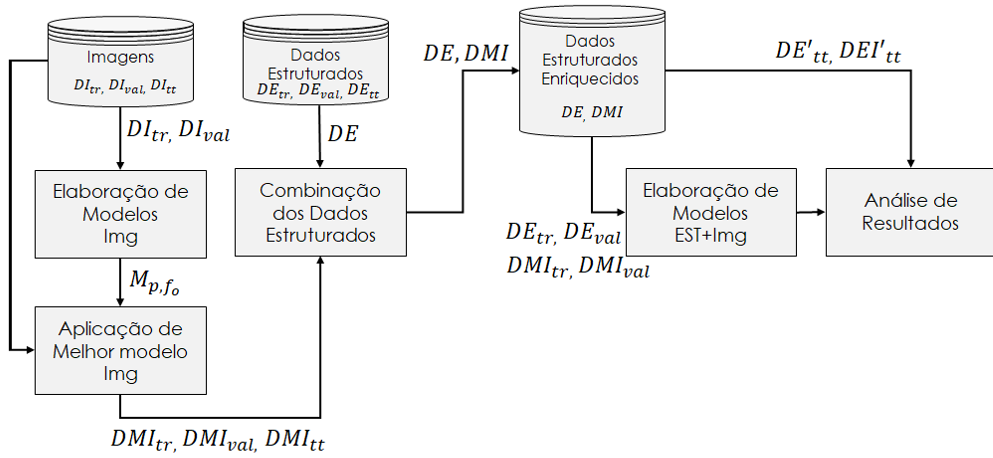
The FDSC framework operates across three configurations: Structured only (Est), Image only (Img), and the hybrid FDSC(Est+Img).
1. Visual Feature Extraction
The authors utilized MobileNetV2 with Transfer Learning. The model analyzes images to output a "fraud probability." Since a single ad can have multiple images, these are aggregated using metrics like Mean, Max, and Min to create a flattened feature vector for the ad.
2. The Hybrid Fusion
Instead of just predicting from images, the system takes the image-derived probabilities and appends them to the 179 structured attributes (user behavior, ad categories, etc.). This combined vector is then processed by standard classifiers like Random Forest (RF) or Linear Discriminant Analysis (LDA).
Experimental Results: The Proof is in the Data
Using a real-world dataset provided by a major social commerce firm (comprising over 19,000 ads and 43,000 images), the results were conclusive.
- The Power of One: Image-only detection reached a precision of over 95%, suggesting that when a model "sees" fraud, it is almost always correct.
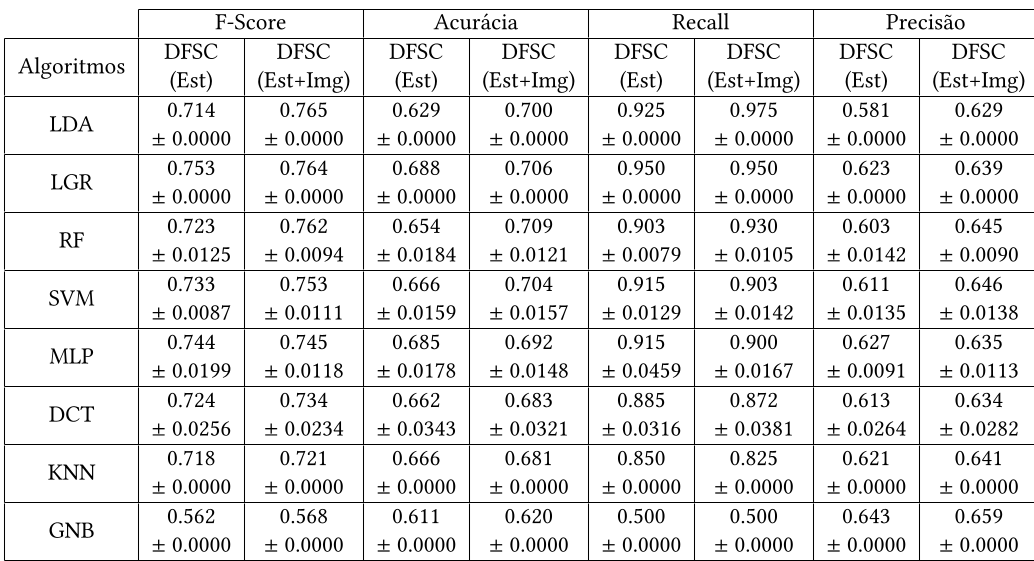
- The Power of Two: Combining modalities yielded the best performance. The LDA classifier saw an F-score jump from 0.714 to 0.765.
- Statistical Significance: Using Paired T-tests and Wilcoxon tests, the authors confirmed that the performance gains were not due to chance for most algorithms.
Critical Insight & Future Outlook
The most striking takeaway is the unrealized potential of image metadata. While the paper focuses on the visual content itself, it opens the door for analyzing "Image Editing Styles" as a signature of fraudster groups.
Limitations: The current approach uses a relatively simple late-fusion (concatenating probabilities). Future work could explore Tensor Fusion or Cross-Attention mechanisms to find deeper correlations between specific text attributes and visual features.
Conclusion
FDSC proves that in the battle against online fraud, seeing is believing. By integrating deep learning for images with traditional tabular data models, social commerce platforms can significantly reduce financial losses and protect their user base more effectively than ever before.