
LR k-fold MLT: Elevating Fraud Detection in Cloud-IoT Smart Societies
Fraud Prediction in Smart Societies Using Logistic Regression and k-fold Machine Learning Techniques
2021-02-27
Summary
Problem
Method
Results
Takeaways
Abstract
The paper develops a robust credit/debit card fraud detection framework using a Logistic Regression based k-fold Machine Learning Technique (MLT). Evaluated on European bank transaction datasets (0.175% fraud rate), the method achieves high reliability and an Area Under Curve (ROC-AUC) of approximately 97.0%.
## TL;DR
Detecting credit card fraud is a "needle in a haystack" problem due to massive data imbalance. This paper presents a **Logistic Regression (LR) k-fold Machine Learning Technique** that achieves a **97% AUC-ROC score**. By combining strategic data under-sampling, outlier cleaning, and k-fold validation, the authors provide a highly reliable framework for protecting digital transactions in modern Cloud-IoT environments.
## The Core Challenge: The Skewness Trap
In the digital banking world, fraudulent transactions represent a tiny fraction—often less than **0.2%**—of total activity. This creates a "skewness trap" for typical Machine Learning models. If a model simply predicts "Not Fraud" for every transaction, it would technically be 99.8% accurate while being completely useless for security.
The authors identify that standard methods like **Support Vector Machines (SVM)** are often too slow for large datasets, while **Random Forest** models suffer from memory-intensive over-fitting when data spikes suddenly.
## Methodology: Intelligent Data Engineering
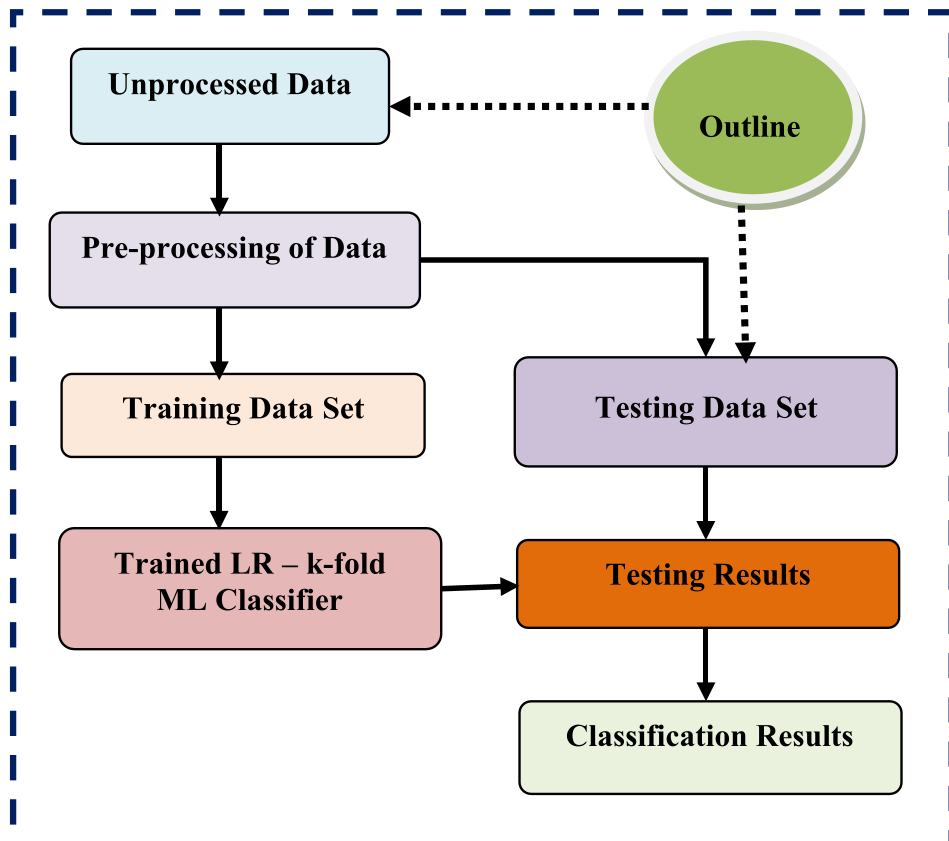
The proposed solution isn't just a single algorithm; it's a sophisticated pipeline designed to handle the noise and imbalance of real-world European bank data.
### 1. The Balancing Act
To force the algorithm to learn what fraud looks like, the authors used **Random Under-sampling**. They created a 50:50 ratio between fraud and non-fraud cases, ensuring the Logistic Regression classifier had enough "villainous" examples to study.
### 2. Dimensionality Reduction & Outlier Removal
With 30 different transaction features, visualization is impossible. The authors used **t-SNE** (t-Distributed Stochastic Neighbor Embedding) to compress these features into a 2D space, allowing them to see clusters of fraud versus legitimate activity. They also applied a strict **2.5x Inter-Quartile Range (IQR)** rule to strip away extreme outliers that might confuse the model.
### 3. The k-fold Logistic Regression
Instead of a single test, the data was split into "k" folds. The model was tested with varying "C parameters" (inverse regularization strength).
## Experimental Results: High Precision, High Trust
The researchers tested their model against a benchmark dataset from European banks.
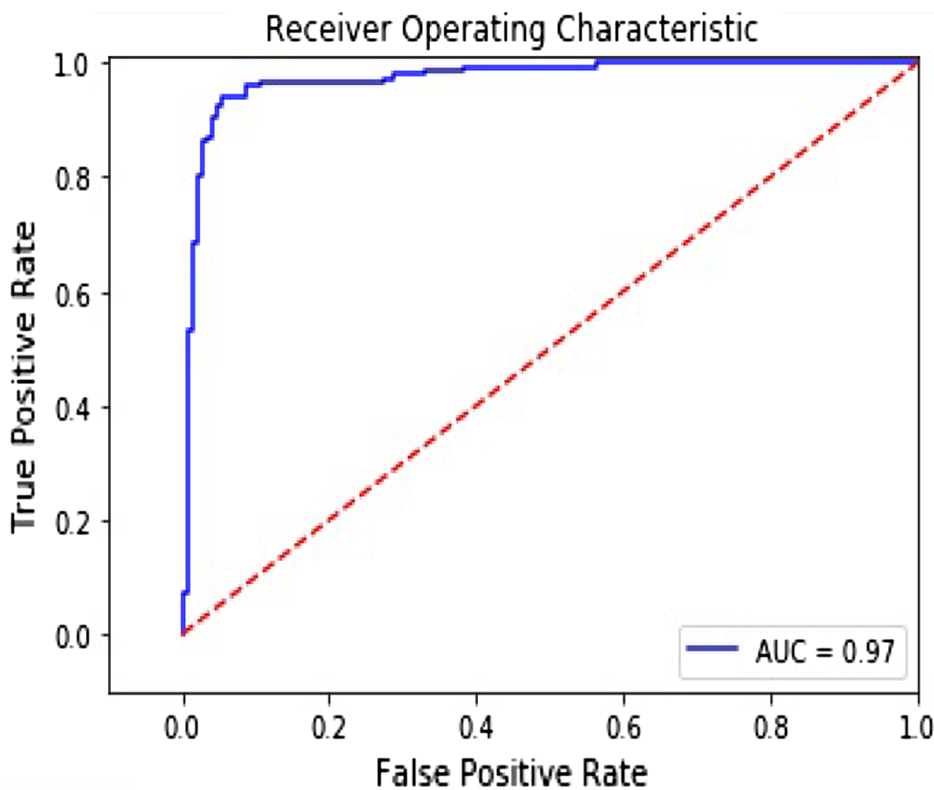
* **ROC-AUC Performance**: The model achieved an Area Under the Curve of **97%**, indicating an exceptional ability to distinguish between fraud and genuine clicks.
* **Parameter Optimization**: Through k-fold testing, a C-parameter of **0.01** was identified as the optimal balance for the highest Mean Recall Score (MRSV).
* **Reliability**: Unlike basic ANN or MLR models, the proposed LR k-fold MLT showed minimal variance across different probability thresholds (from 0.1 to 0.9).
## Critical Insights & Future Outlook
While the **Logistic Regression k-fold** approach is mathematically simpler than Deep Learning, its strength lies in its **interpretability and speed**. In a Cloud-IoT environment where millisecond latency matters for transaction approval, "simple and fast" often beats "complex and slow."
However, the authors note a limitation: while their model excels in stability, emerging **Random Forest Decision Tree (RFDT)** models might offer higher peak accuracy if the over-fitting problem for massive data bursts can be solved. This sets the stage for future "hybrid" systems that combine the stability of Logistic Regression with the power of ensemble trees.
## Conclusion
The paper successfully shifts the focus from "black box" complexity to **robust data preprocessing**. By treating the data imbalance as the primary enemy, the LR k-fold MLT provides a scalable blueprint for securing the financial backbone of our smart societal infrastructure.