
iTop-K: Transforming Social Contacts into Computational Assets for Efficient Task Offloading
“Friend is Treasure”: Exploring and Exploiting Mobile Social Contacts for Efficient Task Offloading
This paper introduces iTop-K, an adaptive task offloading algorithm for Mobile Social Networks (MSNs) that leverages social contact frequency and priorities. By replacing pure random selection with a "Top-K" friend-based assignment, the method achieves superior load balancing and task execution efficiency on real-world mobility traces.
TL;DR
Mobile task offloading often relies on the "power of two random choices," but real human mobility isn't random—it's social. This paper presents iTop-K, an algorithm that exploits social "intimacy" to balance computational loads. By prioritizing frequent contacts (friends) and using an adaptive search window, iTop-K achieves up to 15x better efficiency than random assignment.
Problem & Motivation: The Failure of Randomness
In distributed mobile networks, users offload heavy tasks to neighbors to save energy and time. Classic theory suggests that picking two random neighbors and choosing the one with the lighter load ("d-choice") should balance the system.
However, the authors' analysis of the MobiClique trace reveals a stark reality:
- Social Dominance: Human contact is highly non-uniform. A few "stable" friendships account for most contact duration.
- Inefficiency: Randomly assigning tasks to an infrequent contact leads to "stranded" tasks and massive delays.
- Weighted Bins: Real networks act like "weighted bins" rather than uniform ones, making the -choice paradigm effectively collapse into a chaotic, imbalanced state.
Methodology: "Your Friends are More Powerful Than You"
The core philosophy of iTop-K is that intimate social contacts are more reliable and likely to give your tasks higher execution priority.
1. Social-Relationship-Based Allocation
Instead of choosing any neighbor, iTop-K identifies a user's Top-K friend list based on historical contact frequency. Tasks are preferentially assigned to these high-frequency contacts.
2. Scalable K-Value
What happens if your best friends aren't around? iTop-K uses a scaling law:
- Step 1: Look for Top-K friends in the current contact window.
- Step 2: If none are found, double the scope () until a suitable candidate is met.
- Step 3: Revert to once a contact is established.
3. Priority Factor
The authors introduce a psychological/social insight: friends process tasks for friends faster. They model execution time for a user ranked as: Where is a base factor (). This mathematically captures the "priority" incentive of social ties.
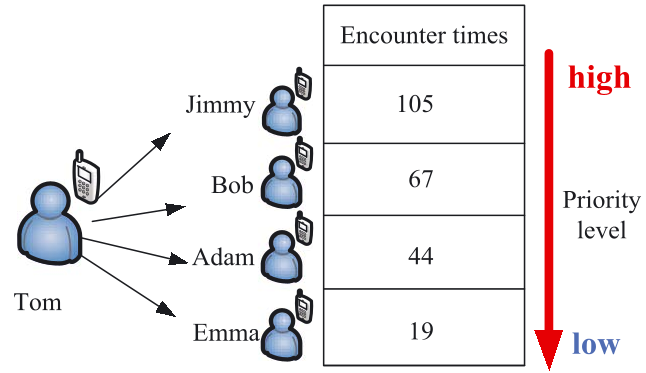 Figure 1: The mechanism of waiting for "Top-K" users with scalability.
Experiments & Results: Crushing the Baselines
The team tested their approach against three legendary real-world traces: Sigcomm-2009, Infocom-2005, and Stanford-2010.
Key Breakthroughs:
- Load Balancing: Without priority, even increasing fails to balance the load (see Fig. 6). However, adding the Social Priority module creates a remarkably flat CDF (Cumulative Distribution Function), indicating nearly perfect task distribution (see Fig. 7).
- Efficiency Gains: The scheme outperforms random choice by 15x regarding the load on the most stressed users.
- Robustness: In the Stanford trace (representing a high school), the scalability of iTop-K allowed it to approach near-optimal balancing even in dense environments with many "marginal" contacts.
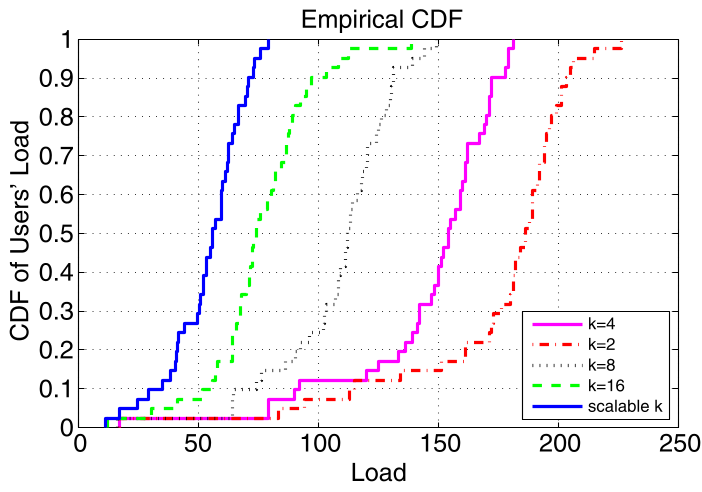 Figure 2: Impact of K-value when tasks are executed without priority—note the significant imbalance.
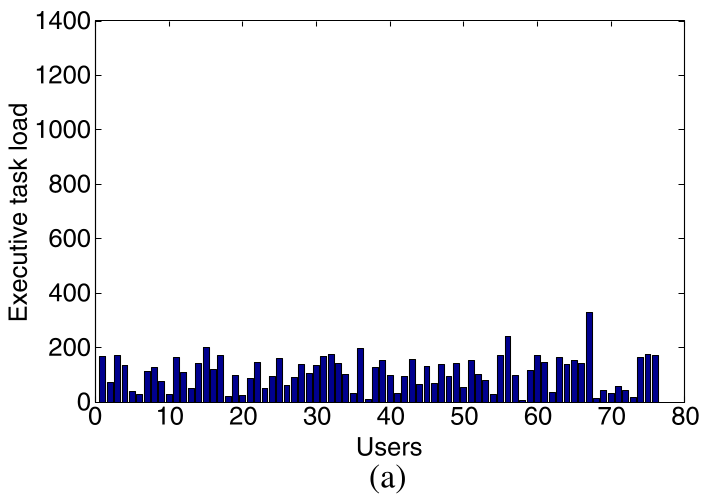 Figure 3: Efficiency comparison across datasets. iTop-K performs best in social environments with clear relationship hierarchies.
Critical Analysis & Conclusion
Takeaway: The "Friend is Treasure" approach proves that standard distributed algorithms (like Ball-and-Bin) must be "socially aware" to function in human-centric networks. By incorporating the Inductive Bias of social stability, iTop-K solves both the fairness problem (balancing load) and the efficiency problem (minimizing delay).
Limitations:
- The model assumes a direct one-hop offloading. Multi-hop social routing could further improve coverage but would introduce complex trust and latency issues.
- The priority model is empirical; real-world human behavior might fluctuate based on task type (e.g., a friend might help with a photo but not a complex data crunch).
Future Work: This research lays the foundation for "Socially-Aware Crowdsourcing," where the "who you know" is just as important as "what you compute."