
Friendship, Collaboration, and Semantics: Is Social Media Changing Your Language?
Friendship, collaboration and semantics in Flickr: from social interaction to semantic similarity
2011-01-01
Summary
Problem
Method
Results
Takeaways
Abstract
The paper investigates semantic assortativity in Flickr, analyzing how social connections (contacts and groups) correlate with tag-based similarity. By comparing social networks against a randomized null model, the authors find significant semantic alignment among socially connected users.
## TL;DR
Does interacting with friends online make you talk (or tag) like them, or do you become friends simply because you already think alike? By analyzing a year’s worth of Flickr data, this study reveals a surprising truth: while social circles in Flickr are highly "semantically similar," this isn't due to mutual influence. Instead, it is the result of **pre-existing shared backgrounds**.
## Background: The Social-Semantic Link
In the mid-2000s, "Folksonomies" like Flickr and Delicious revolutionized the web by allowing users to categorize content with free-form tags. Researchers quickly noticed that friends tended to use similar tags—a phenomenon known as **Assortative Mixing**. However, a fundamental question remained: Is the social network a "melting pot" where users converge on a shared vocabulary, or is it a "filter" that brings together people who are already aligned?
## Methodology: Measuring the "Tag Cloud"
The researchers modeled user behavior using **Tag Clouds**, represented as vectors. The core metric used was **Cosine Similarity**:
$$C(u, w) = \frac{t^u \cdot t^w}{|t^u| |t^w|}$$
By calculating this between different types of social links (mutual contacts vs. group members), they could quantify how "close" two users were in their conceptual understanding of the world.
### Structural Insights
The study examined two types of social structures:
1. **Contact Networks**: Explicit "follow" relationships.
2. **Group-Based Networks**: Users linked by shared membership in Flickr groups.
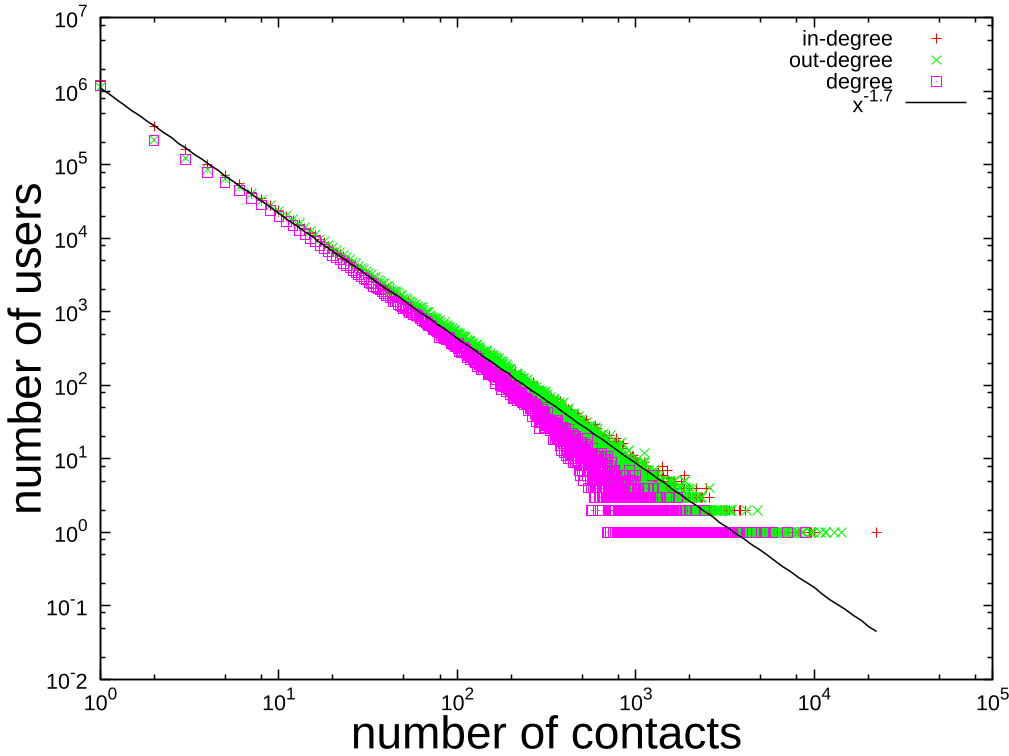
*Figure 1: The in-degree and out-degree distributions confirm that Flickr's social network is scale-free.*
## The Core Insight: Alignment Dynamics
The researchers compared "Cumulative Similarity" (the history of all tags) with "Snapshot Similarity" (tags used only within a specific time window).
### 1. The Cumulative Growth
When looking at the entire history (Figure 4), similarity appears to increase over time. This suggests that as users spend more time on the platform, they become more similar to their friends.
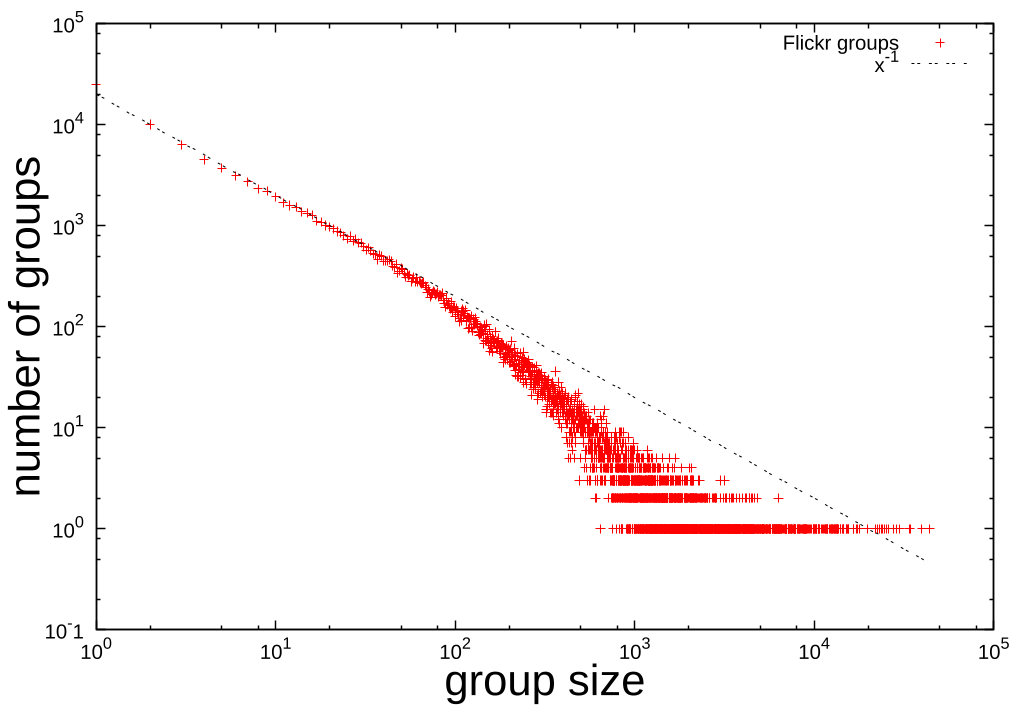
*Figure 4: The steady rise of cumulative similarity in various social networks compared to a null model.*
### 2. The Smoking Gun: Snapshot Stability
However, the "Snapshot" analysis (Figure 5) told a different story. The similarity of *new* tags used in any given month did **not** increase.
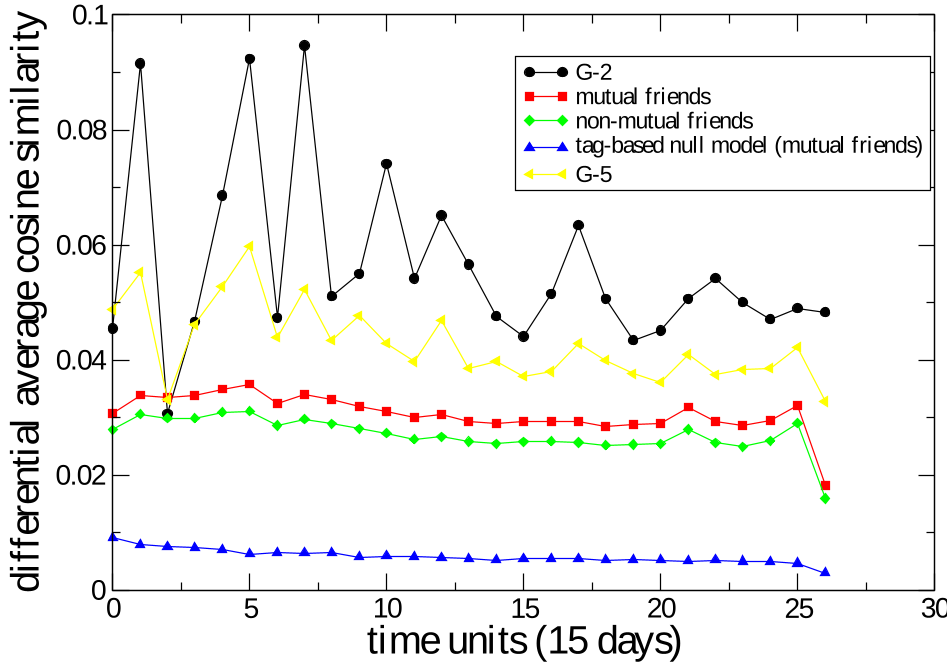
*Figure 5: Snapshot similarity remains flat, indicating no real-time imitation is occurring.*
If imitation were the primary driver, we would expect snapshot similarity to trend upward as users "learned" from their peers. Since it remains flat, the researchers concluded that users simply pull from a static, pre-existing shared vocabulary.
## Critical Analysis: Why This Matters
This work challenges the "Social Influence" narrative. In Flickr’s case:
* **Group Size Matters**: Small groups (under 10 members) show the highest similarity. In large groups, the social-semantic link dissolves.
* **Homophily over Interaction**: People join groups or follow others *because* they already share a semantic background (e.g., they are both enthusiasts of a specific camera brand or photography style).
### Limitations
The study focuses on 2006 data. Modern algorithms (like TikTok or Instagram Reels) are far more aggressive in *recommending* content, which might actually induce the "imitative" behavior that was missing in the early Web 2.0 era of Flickr.
## Conclusion
The semantic assortativity of Flickr is a powerful signature of human interest, but it is a "pre-existing condition." For developers and data scientists, this implies that social graphs are excellent proxies for interest-based recommendations, not necessarily because people change each other's minds, but because the graph is a map of pre-existing intellectual alignment.