
Hybrid Socio-Spatial Patterns: A New Frontier for Friendship Prediction in LBSNs
Exploiting social and mobility patterns for friendship prediction in location-based social networks
This paper introduces three novel link prediction methods for Location-Based Social Networks (LBSNs): WOCP, CNP, and TPOP. By effectively fusing social neighborhood patterns with geographical mobility data, the authors achieve state-of-the-art friendship prediction performance on the Brightkite and Gowalla datasets.
TL;DR
Predicting who will become friends in Location-Based Social Networks (LBSNs) like Foursquare or Gowalla is a complex task. This paper presents a breakthrough by arguing that social ties and physical mobility are not independent. The authors propose three new methods—WOCP, CNP, and TPOP—that combine common-neighbor metrics with location check-in data. The result is a more efficient prediction model that significantly reduces "noise" (false positives) while maintaining high precision for top-tier recommendations.
The Problem: Social and Spatial Silos
Most existing link prediction algorithms fall into two categories:
- Topology-Based: Analyzing the graph structure (e.g., "If we have 5 mutual friends, we might become friends").
- Location-Based: Analyzing check-ins (e.g., "If we both visit the same coffee shop, we might become friends").
The Motivation: The authors noticed a gap—existing methods disregard the strength of relationships among visitors. Just because two people visit the same mall doesn't make them likely friends. However, if they visit the same mall and share mutual friends who also frequent that mall, the probability of a social link skyrockets. This insight addresses the "Prediction Space" problem, where the sheer number of potential pairs makes computation expensive and accuracy difficult.
Methodology: Fusing Friends and Frequent Haunts
The core contribution lies in three new scoring mechanisms that filter social neighbors through a spatial lens:
- CNP (Common Neighbors of Places): Instead of just counting mutual friends, it counts mutual friends who have also visited locations frequented by the target users.
- WOCP (Within and Outside of Common Places): A ratio that gauges whether mutual friends are concentrated within shared locations or scattered elsewhere.
- TPOP (Total and Partial Overlapping of Places): Refines the social overlap by distinguishing between total spatial agreement versus partial overlap.
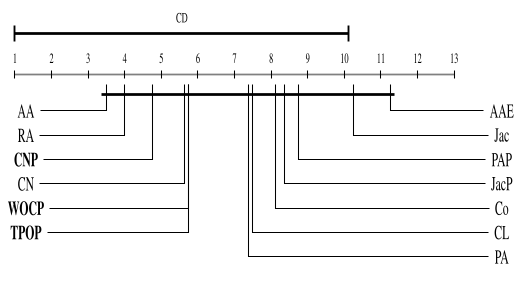 Figure 1: Comparison of prediction space size. The proposed methods (G3) drastically reduce the number of irrelevant predicted links compared to pure social methods (G1).
Experiments and Results
The authors tested their methods on two massive real-world datasets: Brightkite and Gowalla.
1. Unsupervised Performance
While social methods like Adamic-Adar (AA) traditionally hold high recall, the authors' CNP method dominated the Precision@L metrics. This is crucial for real-world apps: when a system only shows you the "Top 10" suggestions, those suggestions must be highly accurate.
2. Supervised Learning Efficiency
By treating the scores as features for machine learning classifiers (Decision Trees, Random Forest, etc.), the study found that the "VTotal" dataset (Social + Location + Proposals) achieved the highest AUC.
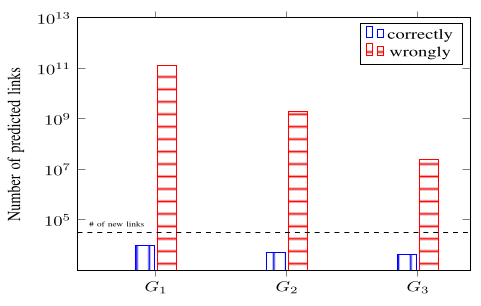 Figure 2: Precision at top L recommendations. CNP consistently outperforms standard baselines across different values of L.
Deep Insight: Quality over Quantity
The most striking takeaway is the reduction of the Prediction Space. Figure 1 in the paper illustrates that social-only methods generate a massive number of candidates, most of which are false leads. The proposed hybrid methods act as a "smart filter," focusing only on candidates with shared social AND spatial context. This makes the algorithm not only more accurate but significantly more computationally efficient for Large-Scale systems.
Conclusion & Future Work
This research proves that "where you go" is a powerful signal for "who you know," especially when viewed through your social circle's movement. While the paper focuses on friendship, the authors suggest the next step is Location Prediction—reversing the logic to recommend new places based on your social-spatial trajectory.
Takeaway for Practitioners: When building recommendation engines for mobile social apps, don't just look at the social graph. Filter the graph using movement entropy and shared location history to provide "high-signal" recommendations.