
Memetic Markets: How Social Learning and Market Feedback Shape Fundamentalism
Fundamentalism in a social learning perspective: A memetic agent model of vegetarianism, social interaction networks and food markets
This paper presents a multi-agent memetic model to simulate the emergence of fundamentalism, using dietary choices (vegetarianism/veganism) as a proxy. Utilizing a social learning framework, the model predicts how individual adaptation and market feedback loops lead to the stabilization of behavioral traits.
TL;DR
Can your burger choice explain the rise of ideological extremism? This study utilizes a multi-agent simulation to model how "memes" (behavioral units) for dietary choices like veganism spread through a society. It reveals that fundamentalism is not an outlier but a systemic outcome of specific initial conditions and fragmented social networks. When markets adapt to consumer needs, moderation usually wins; however, isolated social clusters remain the primary breeding ground for extremist traits.
The Motivation: Dietary Choice as a Proxy for Ideology
Fundamentalism—characterized by uncompromising, anti-relativist mindsets—is often studied in religious or political contexts. However, Thomas Schmickl argues that these dynamics are observable in everyday life, specifically in dietary preferences (veganism vs. meat-eating).
The core problem is understanding the Symmetry Breaking of a population: why does a once-homogeneous group split into "uncompromising" factions? By viewing diet through the lens of Memetic Evolution, the paper explores how the interplay between individual frustration, social imitation, and market response drives societal shifts.
Methodology: The Triple-Loop Adaptation
The model operates on a grid where 250 agents interact over a simulated 10-year period (10,000 steps). The "logic" of an agent is governed by three feedback loops:
- Individual Experience: Agents eat based on a "menu offer." If the meat content matches their strategy (), satisfaction () increases. If not, they go hungry and frustrated.
- Social Learning: Agents interact locally. If a neighbor is "happier" (), the focal agent imitates their strategy (), effectively spreading the "dietary meme."
- Global & Market Feedback: The market (the environment) isn't static. It observes aggregate consumption and shifts its "average menu" to meet demand, creating a co-evolutionary dance between supply and demand.
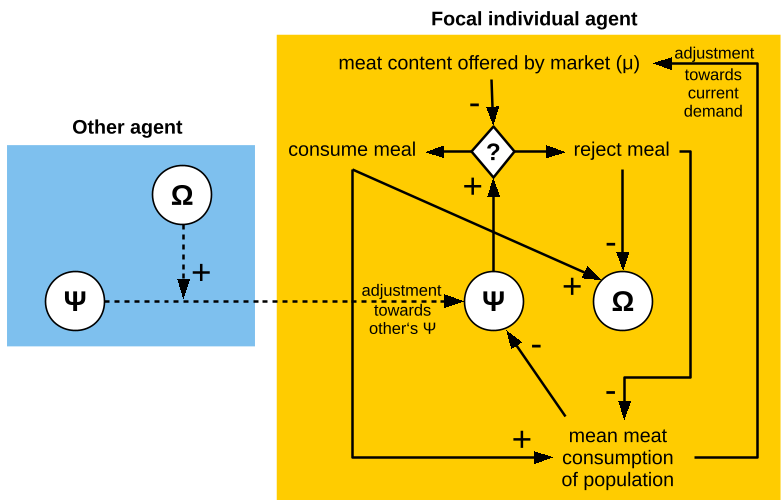 Fig 1: The feedback loops governing agent satisfaction () and dietary strategy ().
Key Insights: When Does Extremism Thrive?
1. The Fragmented Network Effect
One of the most profound findings is the role of Interaction Radius ().
- Low Connectivity: When agents only talk to immediate neighbors, "fundamentalist clusters" (vegans) emerge more frequently. Fragmentation protects extremist memes from being "diluted" by the moderate majority.
- High Connectivity: Global interaction pulls the entire population toward a meat-eating moderate consensus, as the "market" finds it easier to satisfy a broad, connected base.
2. Market Adaptation as a Pacifier
The "Market" acts as a stabilizing force. As agents move toward vegetarianism, the market reduces the meat content in its offers. This "comforting" of the society prevents mass dissatisfaction, which in turn reduces the drive for further radical shifts.
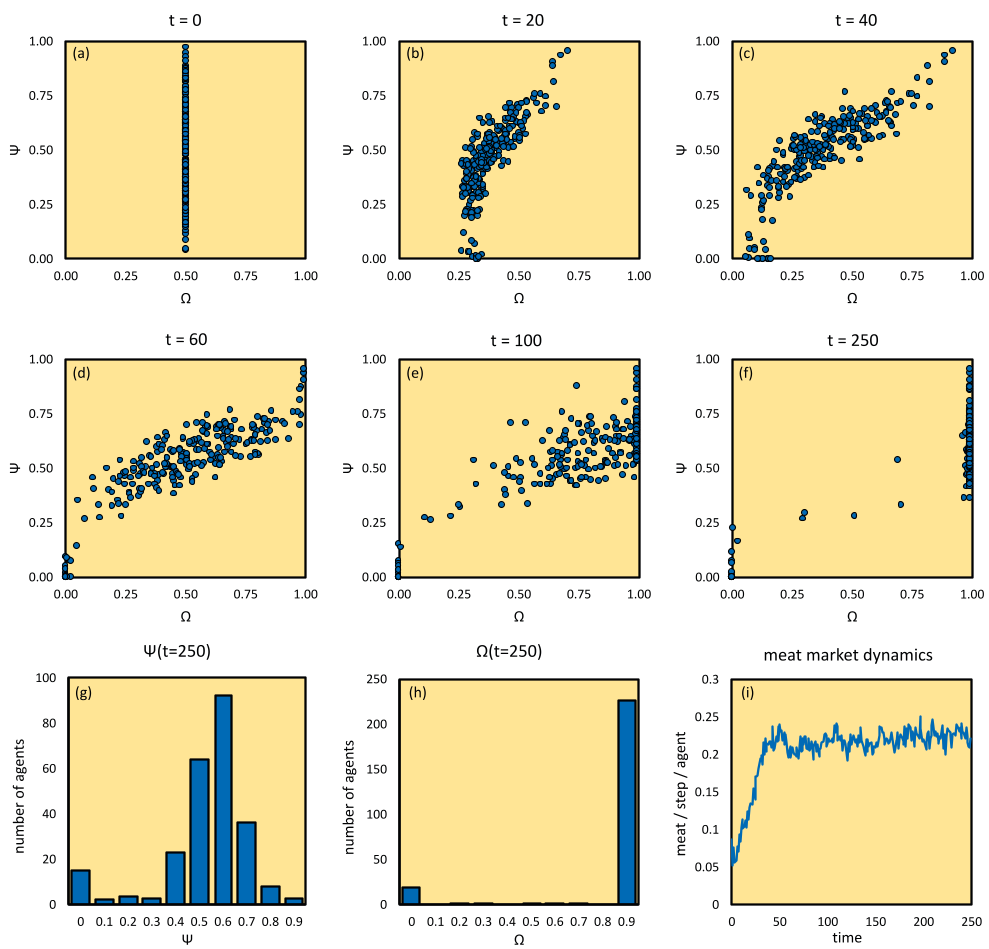 Fig 2: Social network state at . Dark faces (vegans) and bright faces (meat-eaters) coexist, often stabilized within small clusters.
3. Stability and Equilibrium
Does the system spiral out of control? No. The model shows that the system reaches a Bimodal Equilibrium. Most people become "moderately satisfied" meat-reducers, while only a small percentage (approx. 6-7%) remain "fundamentalist vegans."
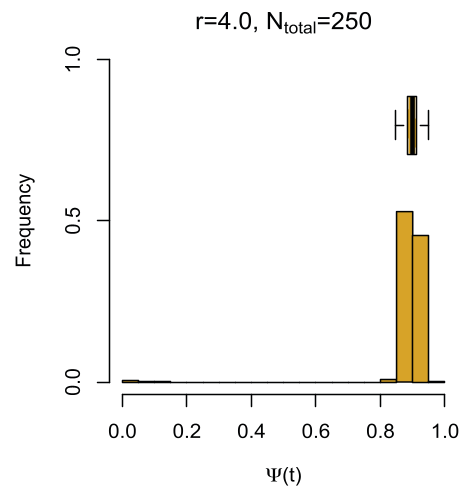 Fig 3: Distribution of strategies based on initial conditions, highlighting how the population usually trends toward moderation.
Critical Analysis & Conclusion
Takeaway: This research demonstrates that a very simple set of rules—satisfaction, imitation, and market response—can replicate complex societal behaviors. It suggests that if you want to reduce extremism in a system, you must either increase social mixing (breaking the isolated clusters) or ensure the market reflects evolving values to prevent mass dissatisfaction.
Limitations: The model assumes agents only "imitate the happy." In reality, fundamentalism often persists despite low material satisfaction due to "identity-driven" rewards, a factor not fully captured by the variable.
Future Outlook: The "dietary choice" model is a template. By replacing "meat content" with "political bias" or "product preference," we can use this memetic framework to predict how internet algorithms (which act as the new 'market') might be inadvertently fueling the very fundamentalism this paper warns about.