
Fusion: Re-architecting Healthcare Records for Cloud-Scale Privacy
9997_Fusion Managing Healthcare Records at Cloud Scale.
This paper introduces Fusion, an experimental open cloud-based platform designed for large-scale, secure management and sharing of Electronic Health Records (EHRs). It leverages a novel metadata tree architecture and cryptographic key rotation to enable decentralized data sharing while maintaining strict patient privacy and regulatory compliance.
TL;DR
Fusion is an open, experimental cloud platform developed by HP Labs to solve the "Healthcare Trilemma": achieving massive scale and low cost without sacrificing patient privacy. By utilizing a unique encrypted metadata tree, it allows patients and providers to share data securely without the cloud provider ever seeing the clinical content.
The "Fragmentation" Problem in Healthcare
The healthcare landscape is a patchwork of small clinics, large hospitals, and various payers. While the shift to Electronic Health Records (EHR) is mandated by regulations like the HITECH Act, the IT infrastructure required to manage these records at scale is prohibitively expensive for smaller providers.
Current cloud-based EHR solutions often force a trade-off: you get scalability and accessibility, but the cloud provider typically holds the keys to the kingdom, raising significant privacy concerns and regulatory hurdles.
Methodology: The Fusion Architecture
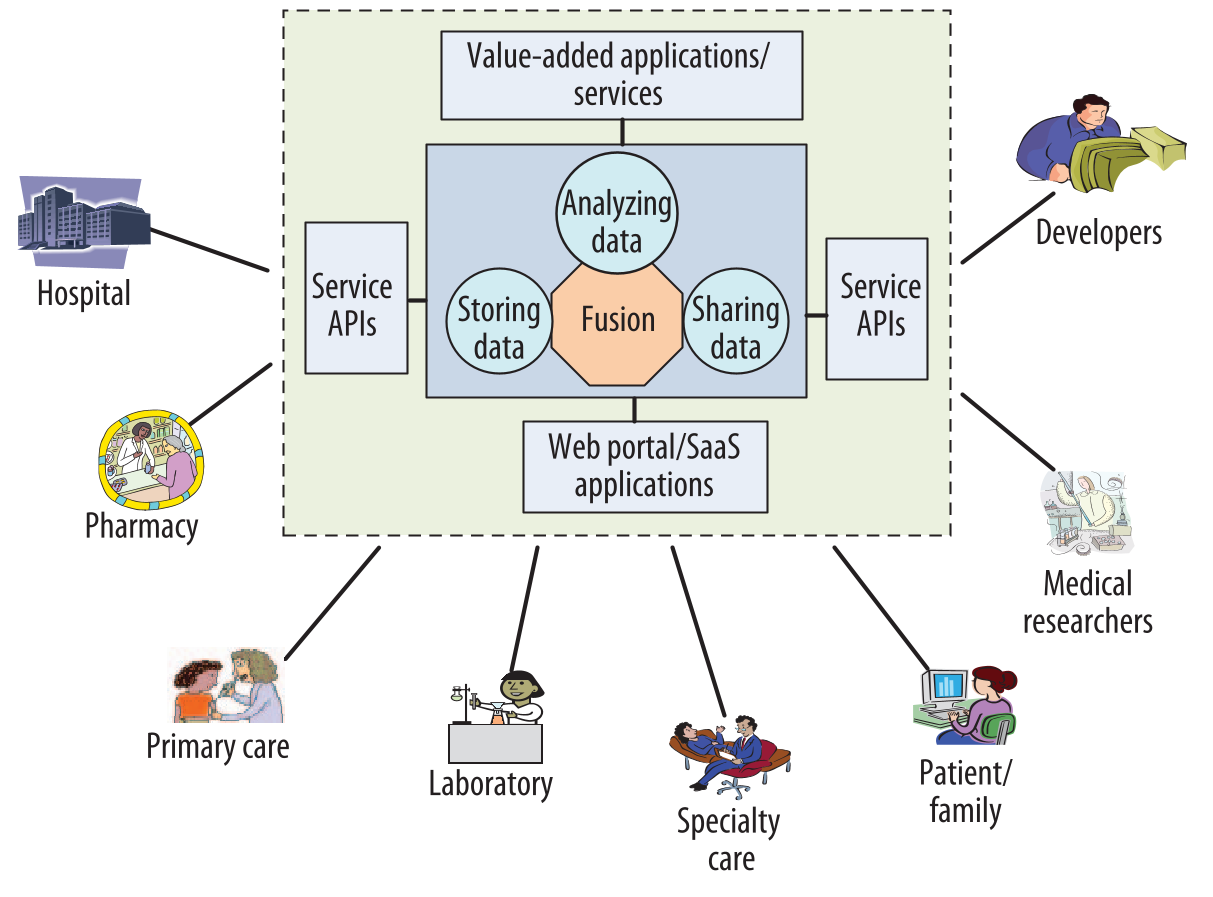
Fusion's core innovation lies in its Common Data Policy Management Layer. This layer separates the infrastructure (storage/compute) from the data policy (who can see what).
1. The Zero-Visibility Store
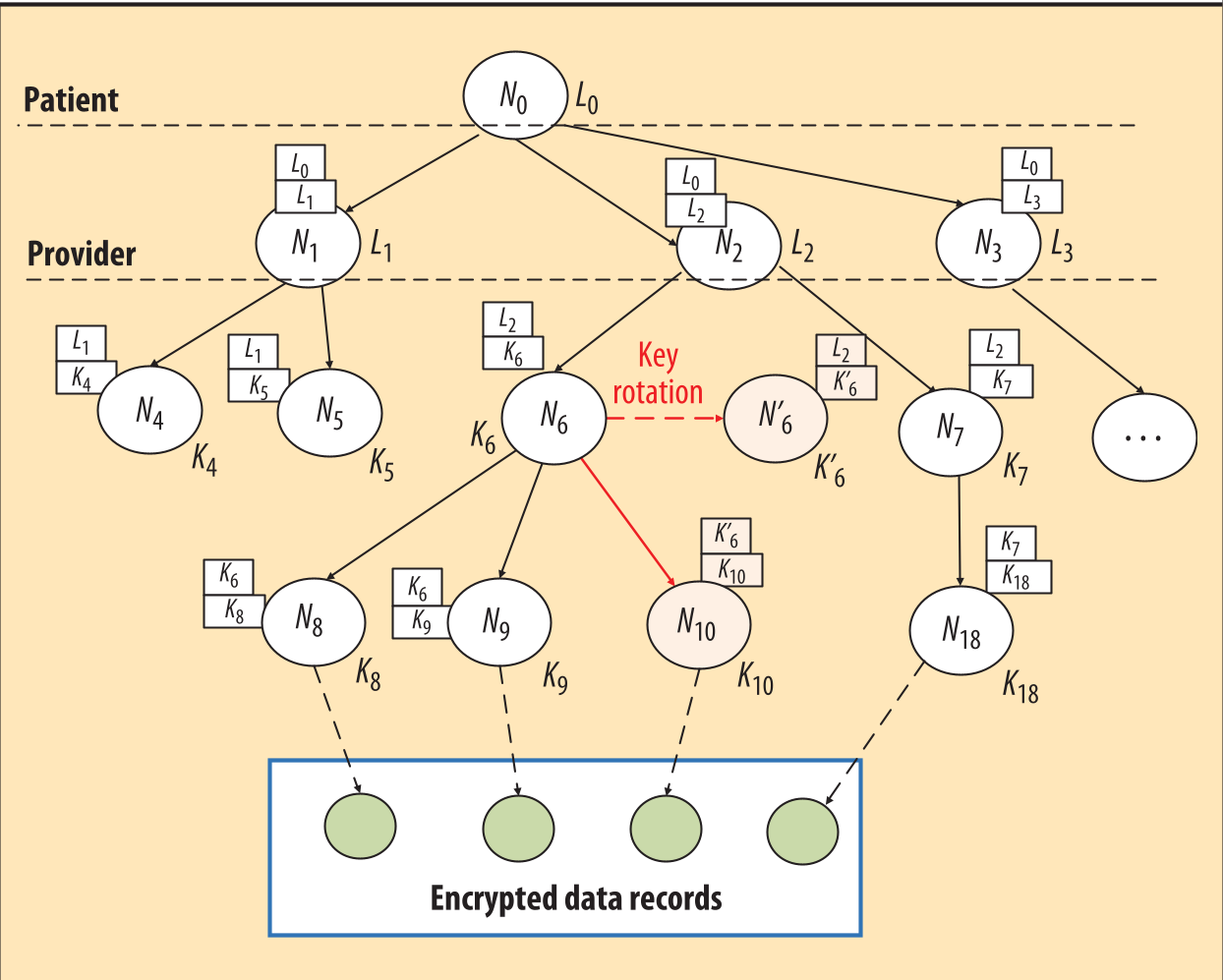
Unlike traditional databases, the Fusion Store treats the cloud as "untrusted." Every record is encrypted with a unique key. These keys are not stored in a central database but are embedded within an encrypted Metadata Tree.
2. Lockboxes and Key Delegation
The system uses a hierarchical "Lockbox" mechanism. A patient holds a root secret (potentially on a smart card). From this, provider-specific secrets are derived.
- Access: By sharing a key to a specific node in the metadata tree, a provider can delegate access to an entire branch of a patient's history to another specialist.
- Revocation: Fusion uses Lazy Revocation. When a provider's access is revoked, the system "rotates" the keys. Old records remains accessible via the old key (to preserve history), but any new records are encrypted with the rotated key that the revoked party does not possess.
Data Modeling and Sharing
Fusion isn't just a vault; it's an ecosystem. It provides the Fusion Data Share, which makes de-identified data available for medical research and analytics. By linking existing open-source EHR applications (like OpenMRS and Oscar) through a common object-oriented data model, Fusion ensures that disparate systems can speak the same language while maintaining a high security bar.
Critical Results & Scaling
The architecture is designed with the following targets in mind:
- Scale: Up to 1 Billion patients and 100 Billion records.
- Availability: Horizontal scalability via shared cloud resources to ensure lower costs for small clinics.
- Validation: Initial prototypes on HP Cloud Services have successfully validated that the overhead of key rotation and metadata tree navigation is negligible compared to the privacy benefits gained.
Potential & Limitations
Takeaway: Fusion effectively demonstrates that the cloud can be a secure medium for EHRs if we move the "Trust Boundary" from the service provider to the encryption layer.
Limitations:
- Key Management: The current design places a burden on the patient to maintain a root secret (e.g., a smart card). Losing this secret could be catastrophic.
- Regulatory Gaps: While technically secure, full HIPAA compliance involves administrative safeguards that a purely technical platform cannot solve alone.
- Complex Revocation: "Lazy revocation" is efficient but assumes that immediate "purge" of access to old data isn't always a requirement in clinical history contexts.
Future Outlook
As we move toward a more patient-centric healthcare model, platforms like Fusion provide the blueprint for decentralized but interoperable health systems. The next step for this research involves more robust auditing mechanisms and integrating automated consent management using these same cryptographic primitives.