
SEIM: Investing in Influence - A ROI-Driven Approach to Social Network Maximization
Future Generation Computer Systems
The paper introduces Search Economics for Influence Maximization (SEIM), a metaheuristic algorithm designed to identify a set of users that maximize information spread in Online Social Networks (OSN). It utilizes a "Return on Investment" (ROI) inspired search strategy to navigate large-scale network structures, achieving superior influence coverage compared to standard Genetic Algorithms and Simulated Annealing.
TL;DR
Scaling the Influence Maximization Problem (IMP) to millions of nodes remains a bottleneck for social media marketing and epidemic control. SEIM (Search Economics for Influence Maximization) shifts the paradigm from pure mathematical optimization to an "economic investment" strategy. By treating search regions as investment pools and calculating the "Expected Value" (ROI), SEIM outperforms traditional Genetic Algorithms by over 50% on large-scale datasets.
The Scalability Wall in Social Networks
In the era of Facebook and Instagram, finding the top-K "influencers" is not just about counting followers; it's about predicting how information cascades through a complex, uncertain graph (Independent Cascade or Linear Threshold models).
The core challenge is NP-hardness. Traditional greedy algorithms are accurate but too slow for million-node graphs. Conversely, metaheuristics like Genetic Algorithms (GA) or Simulated Annealing (SA) often get "stuck" in local optima because they don't understand the topography of the search space. They spend too much "computational capital" on low-yield regions.
Methodology: High-Stakes Search Strategy
The authors propose that searching for a solution is like investing in a stock market. If a region (sub-search space) has not been explored for a long time, its "potential yield" increases.
1. The Search Space as a Market
SEIM divides the potential nodes into regions. Each searcher maintains a solution (a set of "seed" nodes) and periodically moves between these regions.
2. The Expected Value Formula
Unlike GA, which simply looks at "fitness" (how many people were influenced), SEIM uses a multi-factor Expected Value () to decide where to move next:
- Investment History (): Acts as a diversity mechanism. If a region is over-searched, its value drops; if neglected, it rises.
- Objective Potential (): The raw influence score.
- Global Best (): Information about how the best-performing solution in that region compares to others.
3. Core Operators
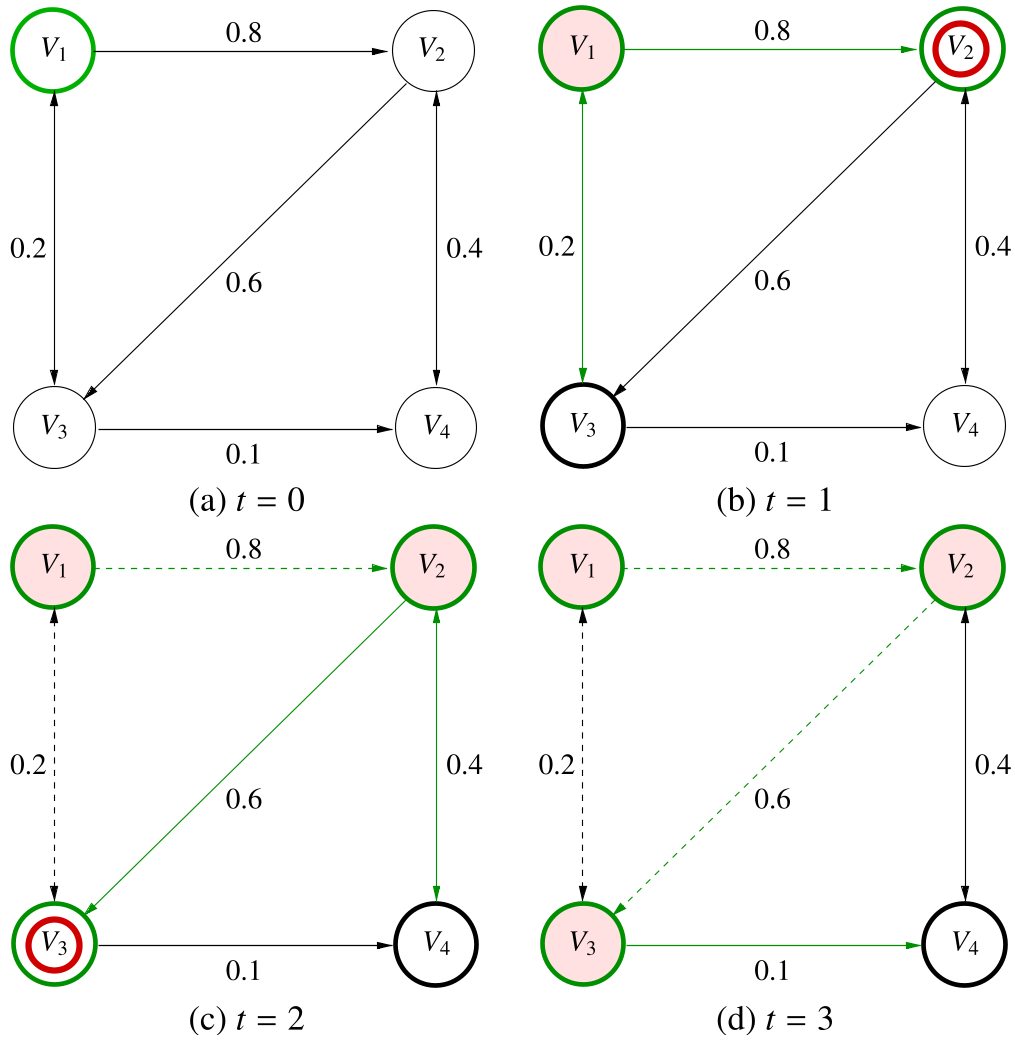 Figure 1: The SEIM algorithmic flow, highlighting the transition from Resource Arrangement to Vision Search.
- Vision Search: Replaces standard crossover by exchanging information between a searcher and "Sample Solutions" (market benchmarks) within a specific region.
- Marketing Research: A metadata update step that tracks how many times each region has been visited () or ignored ().
Experimental Showdown: From Epinions to Amazon
The researchers tested SEIM against SA and GA across five datasets, ranging from 75k to 1.1 million nodes.
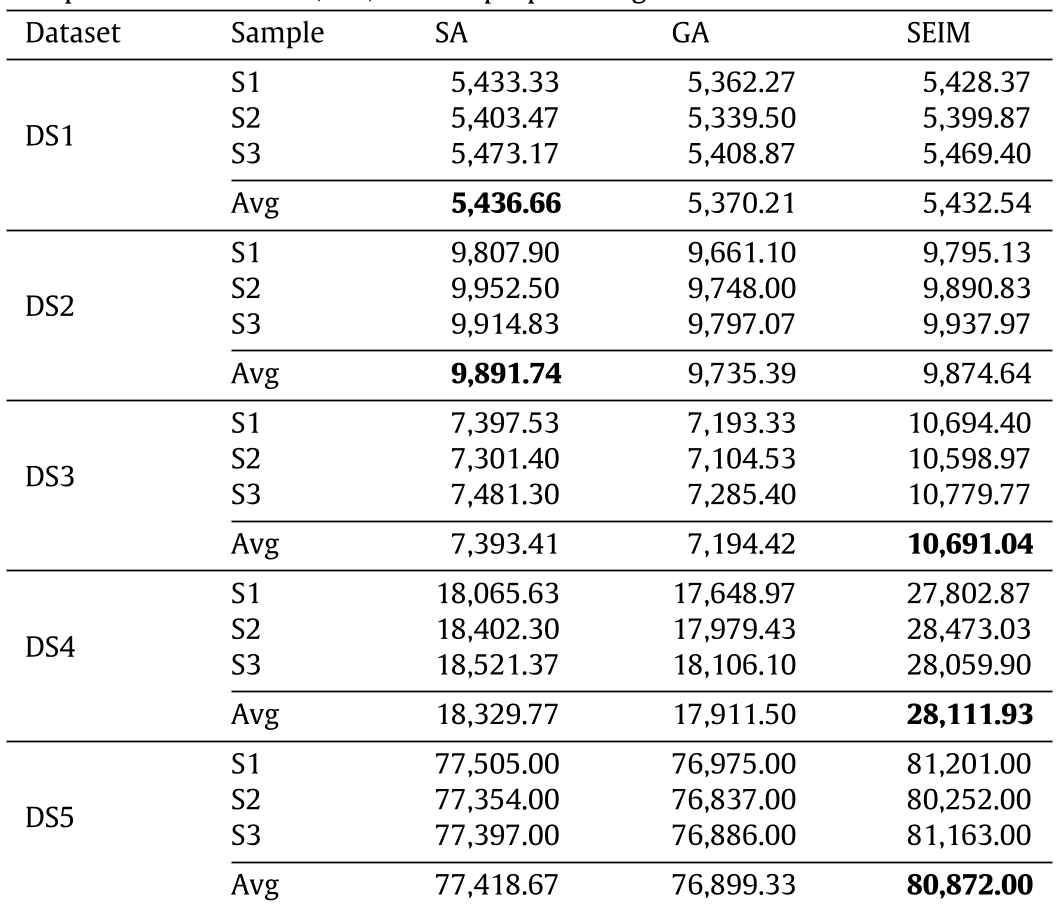 Table 1: Influence results on various datasets. Note the massive gap in large-scale data (DS3-DS5).
Key Insights from Results:
- The Scalability Paradox: On small datasets (DS1, DS2), SEIM performs similarly to Simulated Annealing. However, as the network grows, SEIM's ability to "depict the topography" allows it to find superior influencers that standard GA misses.
- Continuous Improvement: While SA and GA often plateau early (converging to a local optimum), SEIM continues to improve as more evaluations are added. It treats every extra "compute unit" as more investment toward a better ROI.
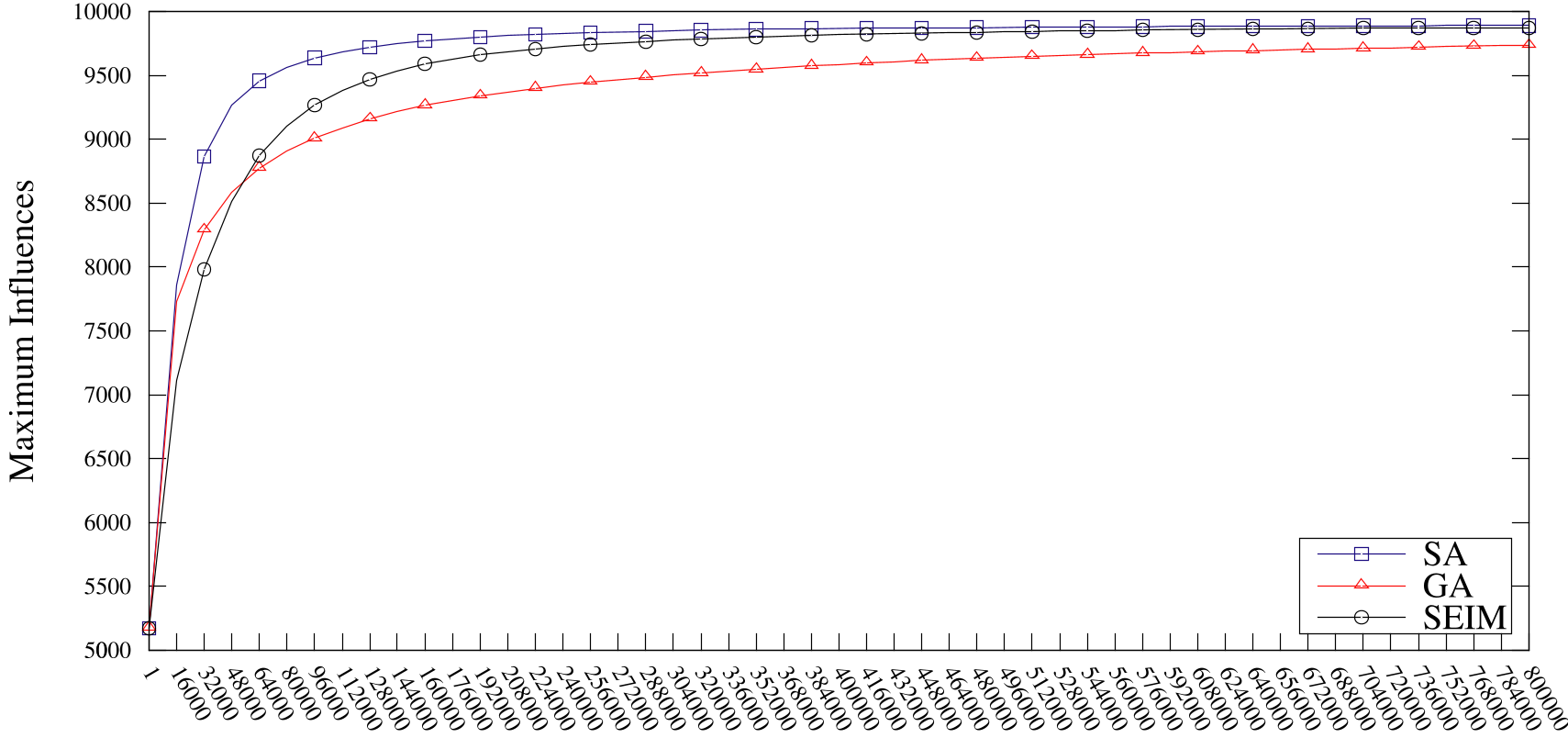 Figure 2: Convergence comparison. SEIM (solid line) demonstrates a superior ability to sustain improvement compared to the rapid but shallow convergence of SA.
Critical Perspective
SEIM's strength—its complex metadata tracking—is also its potential weakness. The algorithm requires more memory to store region-wise samples and ROI statistics. However, in the context of influence maximization where the graph itself occupies gigabytes, this overhead is negligible compared to the massive gains in influence coverage.
Future Outlook: The "Search Economics" philosophy represents a shift toward "intelligent exploration." By incorporating memory and economic theory into search, we move closer to algorithms that can navigate the "Big Data" of social networks without getting lost in the noise.
Takeaway
If you are solving large-scale combinatorial problems, stop just looking at "fitness." Start looking at your "Return on Computation." SEIM proves that in the market of search, a disciplined investment strategy beats a random walk.