
UPA: Anonymizing Popularity in Social Networks Without Sacrificing Utility
Future Generation Computer Systems
This paper introduces the Utility-based Popularity Anonymization (UPA) scheme, a novel framework designed to protect users' authentic popularity privacy in directed online social networks. By combining a k-anonymous popularity-based following (KPF) protocol with a fully utility-based interaction (FUI) protocol leveraging proxy re-encryption and hierarchical attribute-based encryption (HABE), it achieves SOTA privacy protection without sacrificing social network functionality.
TL;DR
In the era of Online Social Networks (OSNs), your "popularity" (the number of followers) is a sensitive metric that attackers can exploit for targeted advertising or influence mapping. While anonymization exists, it usually "breaks" the social network by deleting real connections. This paper introduces UPA (Utility-based Popularity Anonymization), a scheme that uses clever cryptography and "fake" connections to hide your true popularity while keeping every "Follow," "Search," and "Share" button working perfectly.
The Conflict: Privacy vs. Utility
The fundamental problem with classic graph anonymization is that it treats the social graph as a static object. If you delete an edge to protect someone's identity, you've just blocked a communication channel. If you merge nodes, you lose fine-grained user data.
The authors argue that in directed graphs (like Twitter or Weibo), Authentic Popularity—the true number of people who follow you—must be protected from the Cloud Service Provider (CSP) and curious observers, yet the system must still allow:
- Searching through encrypted files.
- Sharing files with specific groups based on attributes.
- Reading content only if authorized.
Methodology: The UPA Architecture
The UPA scheme is built on two pillars: the KPF Protocol for structural disguise and the FUI Protocol for functional utility.
1. KPF Protocol (The Camouflage)
Instead of deleting edges, UPA adds "fake" follows. For every user, the CSP identifies a candidate set of users with similar popularity (within a threshold ). When you follow someone, the system may prompt you to "fake follow" others.
The genius lies in the Encrypted Indicative Variable. To the CSP, your relationship table looks like a list of connections. However, each edge has an encrypted flag (). If , it's a real follow; if , it's a fake one. Since the CSP cannot decrypt this, it sees a -anonymous popularity distribution, but cannot tell who is actually influencing whom.
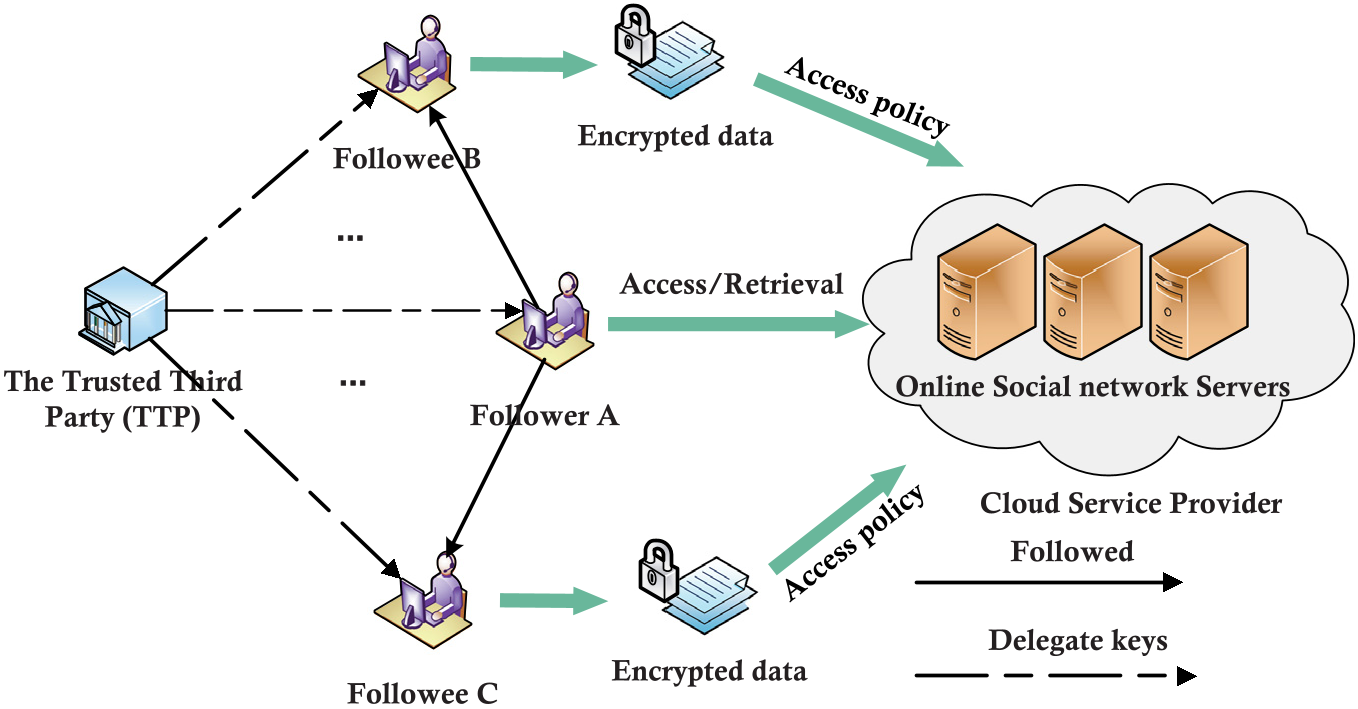 Figure 1: The System Model involving TTP, CSP, and end-users.
2. FUI Protocol (The Engine)
To maintain utility, the paper proposes a Hierarchical Authorization and Capability Delegation (HACD) model. It integrates two heavy-hitting cryptographic primitives:
- Proxy Re-Encryption (PRE): Allows the CSP to "translate" encrypted search queries so a follower can search a followee’s content without the followee sharing their private key.
- Hierarchical Attribute-Based Encryption (HABE): Provides fine-grained access control (e.g., "Only followers who are 'Professor' AND 'CS Department' can read this file").
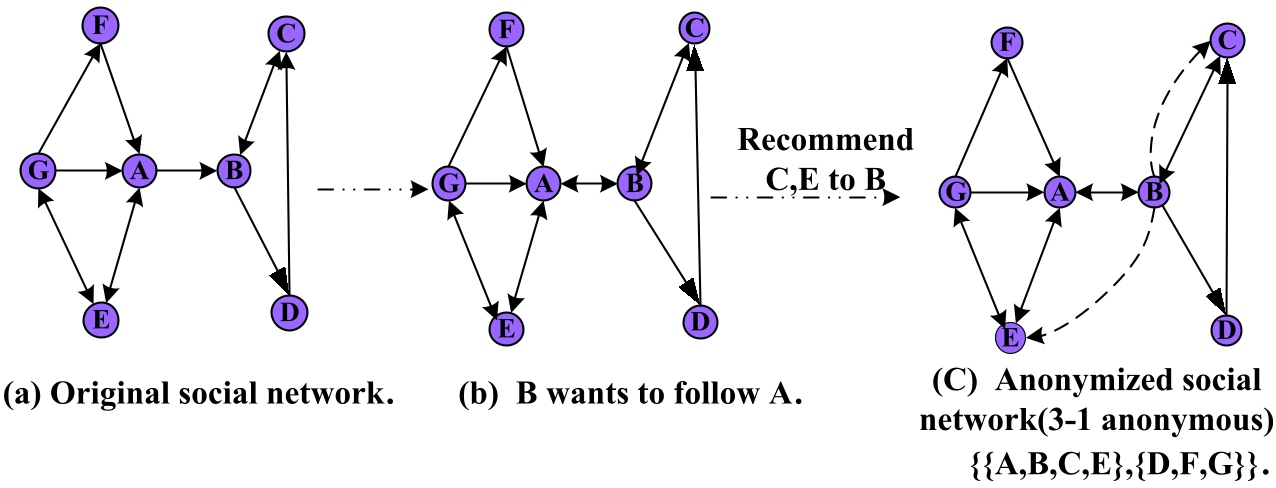 Figure 2: The Hierarchical Authorization and Capability Delegation Model.
Experiments and Performance
Testing on the Epinions dataset, which contains over 500,000 edges, the authors proved that the UPA scheme scales effectively.
- Anonymization Quality: As shown in the graphs below, the percentage of successfully anonymized nodes remains near 100% for various levels of and .
- Speed: Despite the complex math (bilinear pairings), the cost of generating a search trapdoor is only ~85ms, and decrypting a file takes ~109ms.
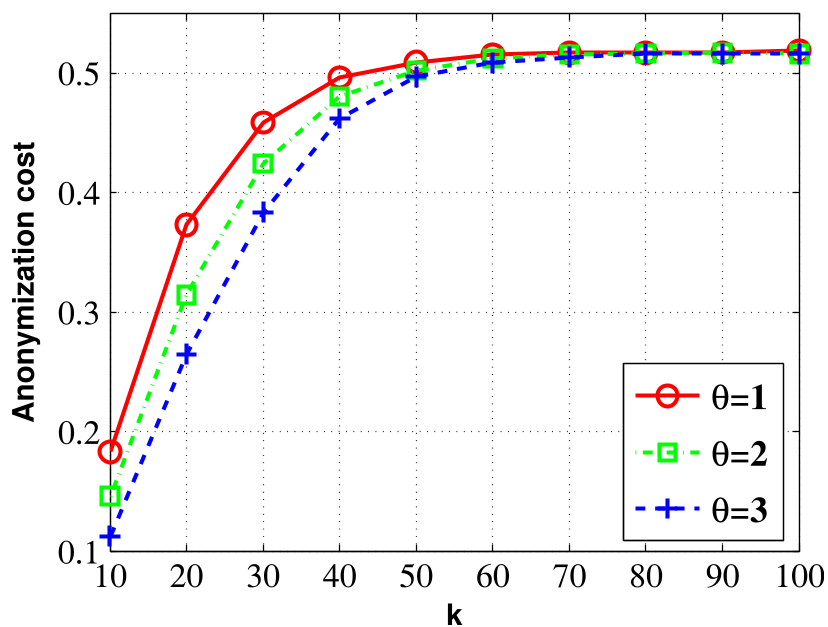 Figure 3: Comparison of anonymization cost across different values of k and θ.
Critical Insight: Why This Matters
Most privacy research assumes the "Database Admin" or the "Cloud" is the enemy. This paper treats the CSP as "Honest-but-Curious"—it will run your code, but it's peeking at your metadata.
By introducing the concept of Authentic Popularity, the authors highlight a specific metadata leak (in-degree) that is often ignored in favor of identity or content privacy. The UPA scheme proves that we can hide the influence of a user without breaking the functionality of the network.
Conclusion
The UPA scheme is a robust milestone for OSN privacy. It moves away from "destructive" anonymization (edge removal) toward "additive" anonymization (fake edges + encryption). While the use of Bilinear Diffie-Hellman (BDH) assumptions suggests a reliance on traditional PKI, the logic of hiding popularity through encrypted indicative variables is a strategy that could easily be adapted to modern Web3 or decentralized social platforms.
Takeaway: Future social networks will likely rely on these types of "decoupling" mechanisms—where the graph the server sees is vastly different from the social reality the user experiences.