
Medicine 4.0: Converging AI, Edge, and Blockchain for the Future of Healthcare IoT
14732_The Future of Healthcare Internet of Things A Survey of Emerging Technologies.
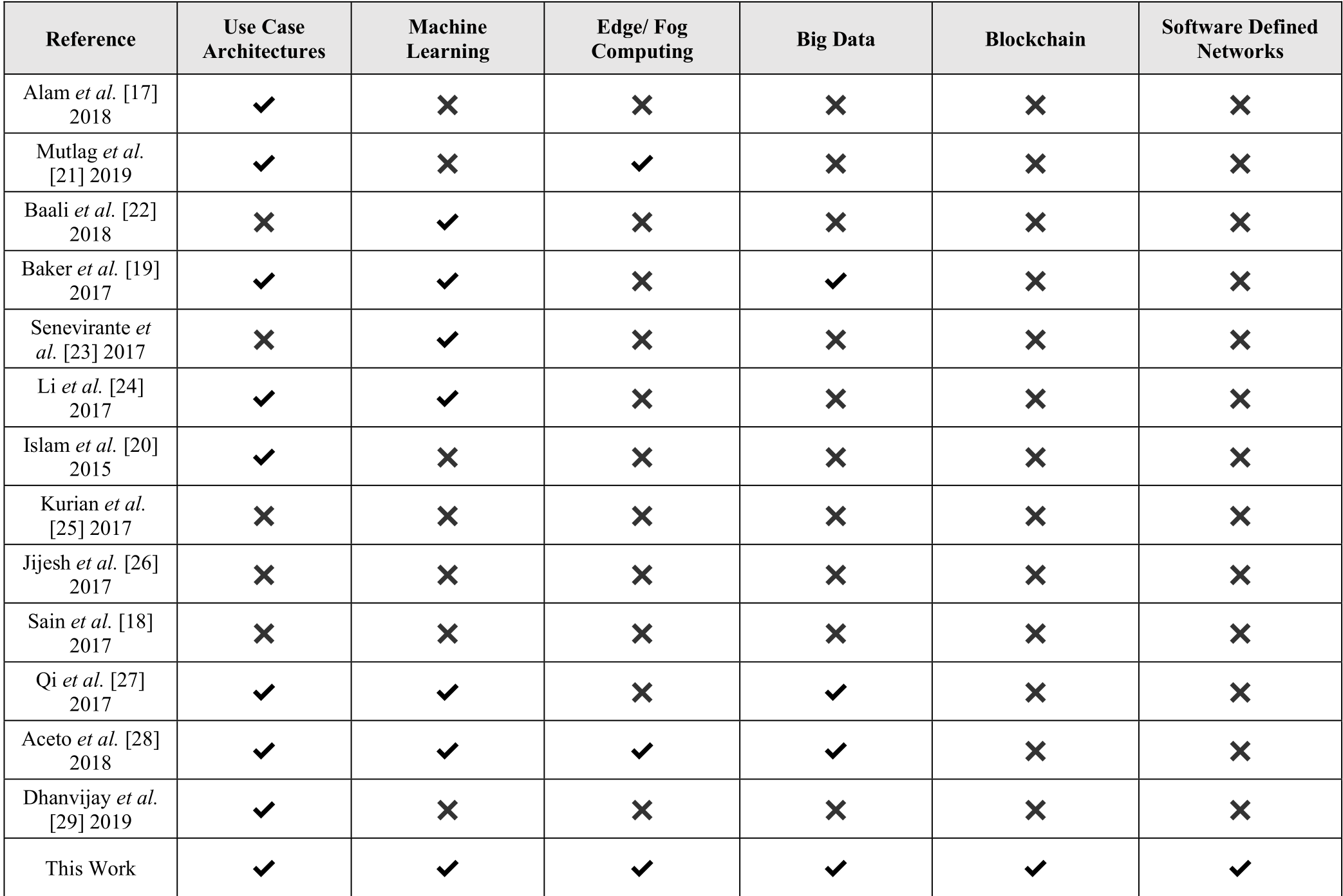
This survey provides a comprehensive review of Healthcare Internet of Things (H-IoT), termed "Medicine 4.0." It explores the integration of emerging technologies—AI, Edge/Fog computing, Big Data, Blockchain, and SDN—into a unified architectural framework to achieve SOTA performance in pervasive patient monitoring and diagnostics.
TL;DR
The healthcare industry is undergoing a "Medicine 4.0" revolution. This survey explores how H-IoT is moving beyond simple fitness trackers to sophisticated systems that integrate Artificial Intelligence, Fog Computing, and Blockchain to provide real-time, secure, and low-latency diagnostic care. By moving computation to the network edge and decentralizing data trust, H-IoT promises a future of proactive rather than reactive medicine.
The Bottleneck: Why "Traditional" IoT Isn't Enough for Health
Standard IoT paradigms focus on massive connectivity, but H-IoT (Healthcare IoT) demands much stricter constraints:
- Latency is Lethal: In stroke or cardiac arrest detection, a delay of seconds can be fatal.
- The Power Paradox: Medical implants (like pacemakers) require batteries that last years, yet complex data processing drains energy rapidly.
- Privacy & Trust: Medical data is the most sensitive asset a human possesses; centralizing it in a single cloud creates a massive "honeypot" for attackers.
Methodology: The Architecture of Distributed Intelligence
The paper promotes a Three-Tier Architecture (Things, Communication, and Processing) but emphasizes the "Fog" layer. Instead of sending raw ECG data to a distant server, a local "Cloudlet" or intelligent gateway processes the signals.
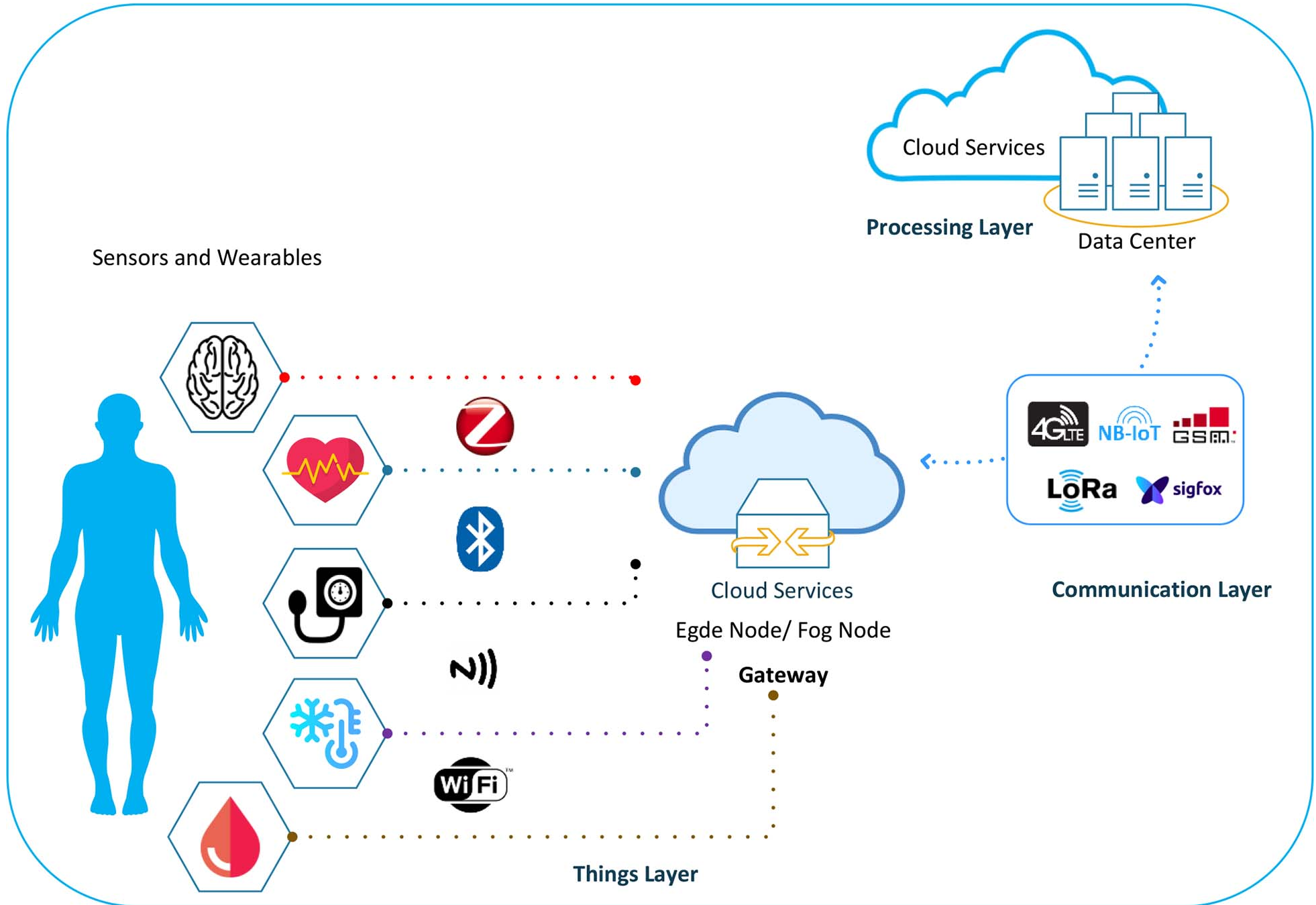
Key Technical Convergences:
- Machine Learning at the Edge: Using SVM and Deep Learning (CNN/LSTM) to classify arrhythmias and epileptic seizures with over 97% accuracy.
- Blockchain for Data Integrity: Creating a transparent, immutable ledger for Electronic Health Records (EHR) where patients control their own access keys.
- Software Defined Networks (SDN): Decoupling the control plane to prioritize "Emergency Traffic" over routine data syncs, ensuring critical alerts skip the queue.
Experimental Insights: Performance Gains
The survey highlights several critical performance benchmarks that demonstrate why these emerging technologies are transformative:
- Energy Efficiency: By utilizing embedded ML to classify data before transmission, the life of a wearable sensor can be extended from 13 days to 997 days. This is achieved by ignoring redundant data and only transmitting "anomalies."
- Latency Reduction: Fog computing nodes (implemented on smartphones or local gateways) reduce response times by ~48%, keeping critical metrics within the required 500ms window for stroke alerts.
The Next Frontier: IoNT and the Tactile Internet
The survey looks beyond 2024 toward two radical concepts:
- Internet of Nano Things (IoNT): Biocompatible sensors deployed in the bloodstream that use "Molecular Communication" (encoded chemical signals) to report on glucose or drug delivery at a cellular level.
- Tactile Internet (TI): 5G-enabled haptic feedback that allows for Remote Surgery. This requires a round-trip time (RTT) of less than 1ms, essentially allowing a surgeon in New York to "feel" a procedure being performed in London via a robotic interface.
Critical Analysis & Future Outlook
While the technical roadmap is clear, several "Open Issues" remain:
- Consensus Algorithms: Current Blockchain consensus (like Proof-of-Work) is too heavy for a wearable. We need "Lightweight Blockchain."
- Reinforcement Learning (RL): Most current AI is supervised. The future lies in RL, where the network "learns" to optimize its own routing and energy usage without human intervention.
- Standardization: Until medical data formats are unified across Apple, Fitbit, and clinical EHR systems, the "Medicine 4.0" vision will remain fragmented.
Conclusion
The convergence of H-IoT with AI and Edge computing is no longer optional—it is the prerequisite for the next generation of healthcare. By shifting from a centralized cloud to a distributed, "intelligent" network edge, we can finally achieve the low-power, high-security requirements that life-critical medical services demand.