
Beyond 0 and 1: A Fuzzy Logic Perspective on Social Influence
A Fuzzy Approach to Centrality and Prestige in Online Social Networks
This paper introduces a fuzzy rule-based inference system to analyze Centrality and Prestige in Online Social Networks (OSNs). By moving beyond binary logic, the authors quantify the inherent vagueness of human relationships and interactions using Mamdani fuzzy models.
TL;DR
Social networks are built on human emotions, yet we often analyze them with cold, binary mathematics. This paper proposes a Fuzzy Inference System (FIS) to calculate Centrality and Prestige, proving that "soft" metrics like Trust and Friendship ratings provide a much more accurate picture of influence than simple link counting.
The Problem: The Vagueness of Human Connection
In traditional Social Network Analysis (SNA), a connection either exists or it doesn't. However, in the real world (and on Facebook or LinkedIn), the "strength" of a connection is a spectrum.
- The Problem: Classical logic (True/False) cannot define terms like "Good Friend" or "Trust Generally."
- The Insight: By treating social metrics as Fuzzy Sets, we can model the inherent uncertainty and vagueness of human computer interaction.
Methodology: Mapping Social Intuition to Logic
The authors utilized a Mamdani Fuzzy Model, which is renowned for being intuitive and well-suited to human-centric inputs. They focused on two pillars of social power:
- Centrality: Determined by In-degree (popularity), Out-degree (expansiveness), and Interaction frequency.
- Prestige: Determined by Friendship ratings (ranging from "Not Met" to "Best Friend") and Trust ratings (from "Don't Trust" to "Trust with Life").
The Rule Engine
The core of the system is a set of "If-Then" rules. For Centrality, 9 rules were used. For Prestige, 18 rules were developed to capture the interaction between social standing and the intensity of communication.
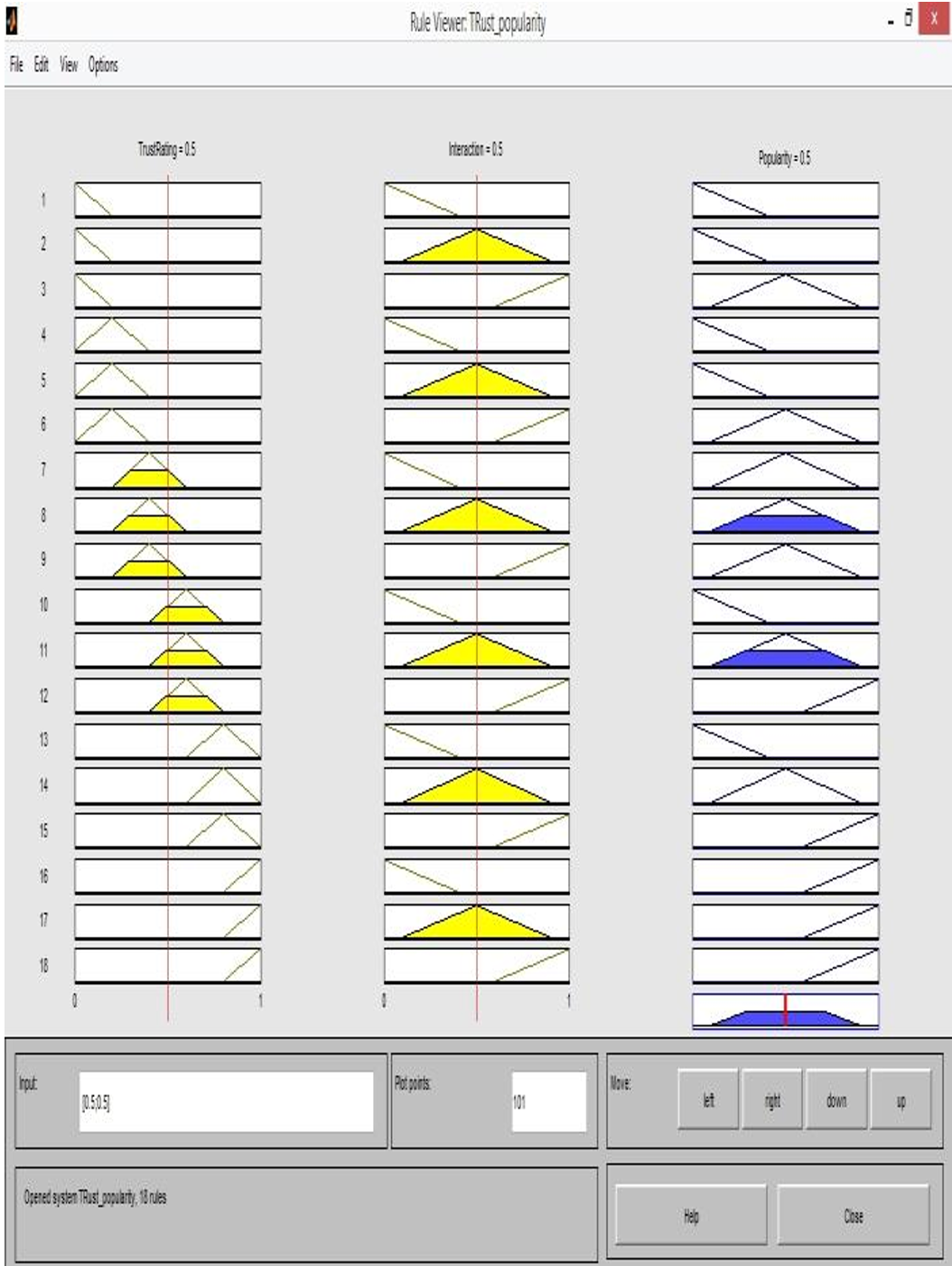 Figure 1: Implementation of Fuzzy Rules for Centrality in MATLAB.
Visualizing Influence: The Surface Plots
The most striking part of the research is the use of 3D Surface Plots to visualize how influence "blooms" as various factors increase.
1. The Prestige Plateau
The analysis shows that Prestige is not just about having many followers. The synergy between Interaction and Trust Rating creates a non-linear spike in prestige.
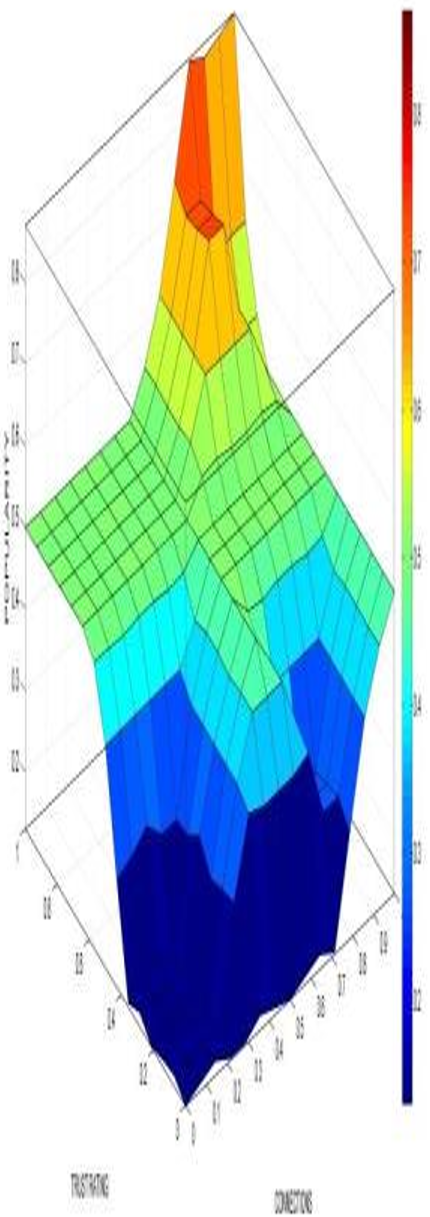 Figure 2: Surface plot showing how higher Trust and Interaction lead to peak Prestige.
2. The Dynamics of Centrality
For Centrality, the model highlights an interesting phenomenon: In-degree (the number of people following you) can compensate for low interaction. Even if a node is relatively quiet, a high volume of incoming ties keeps it "centrally" important in the fuzzy logic framework.
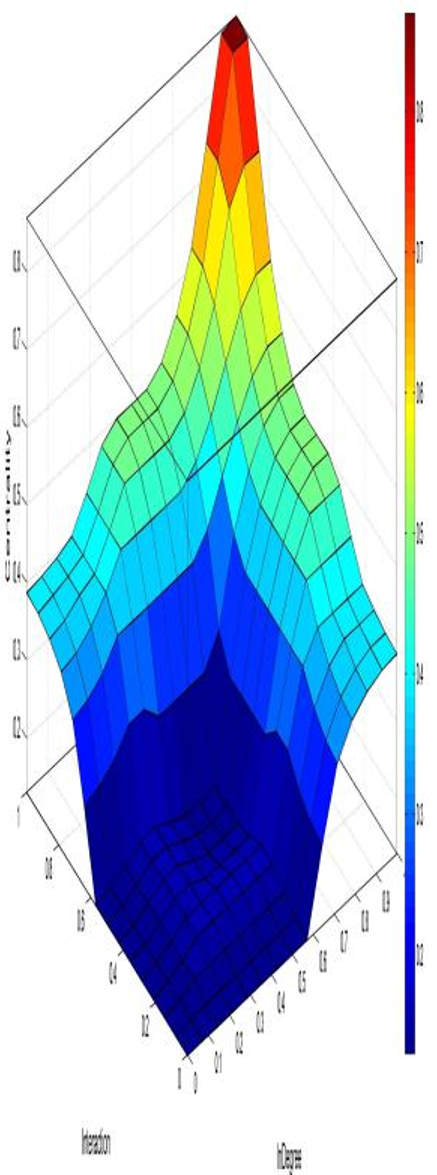 Figure 3: Surface plot of Centrality based on Degree and Interaction.
Critical Insight & Conclusion
While this paper provides a robust preliminary framework, it has limitations. It uses relatively small rule sets and doesn't explicitly test the system on massive datasets (Big Data). However, its importance lies in its methodological shift.
Takeaway for the Future: As we move toward more sophisticated AI-driven social analytics, the "Fuzzy" approach will be essential. Incorporating Trust and Friendship levels into recommendation engines and influence tracking can prevent the "Echo Chamber" effect and provide a more human-centric view of our digital world.
Future Work: Expanding this FIS to include Closeness and Betweenness Centrality will be the next frontier in quantifying the "gray areas" of social influence.