Beyond Chance: Enhancing Social Network Inference with Fuzzy C-Means Filtering
Fuzzy c-means based coincidental link filtering in support of inferring social networks from spatiotemporal data streams
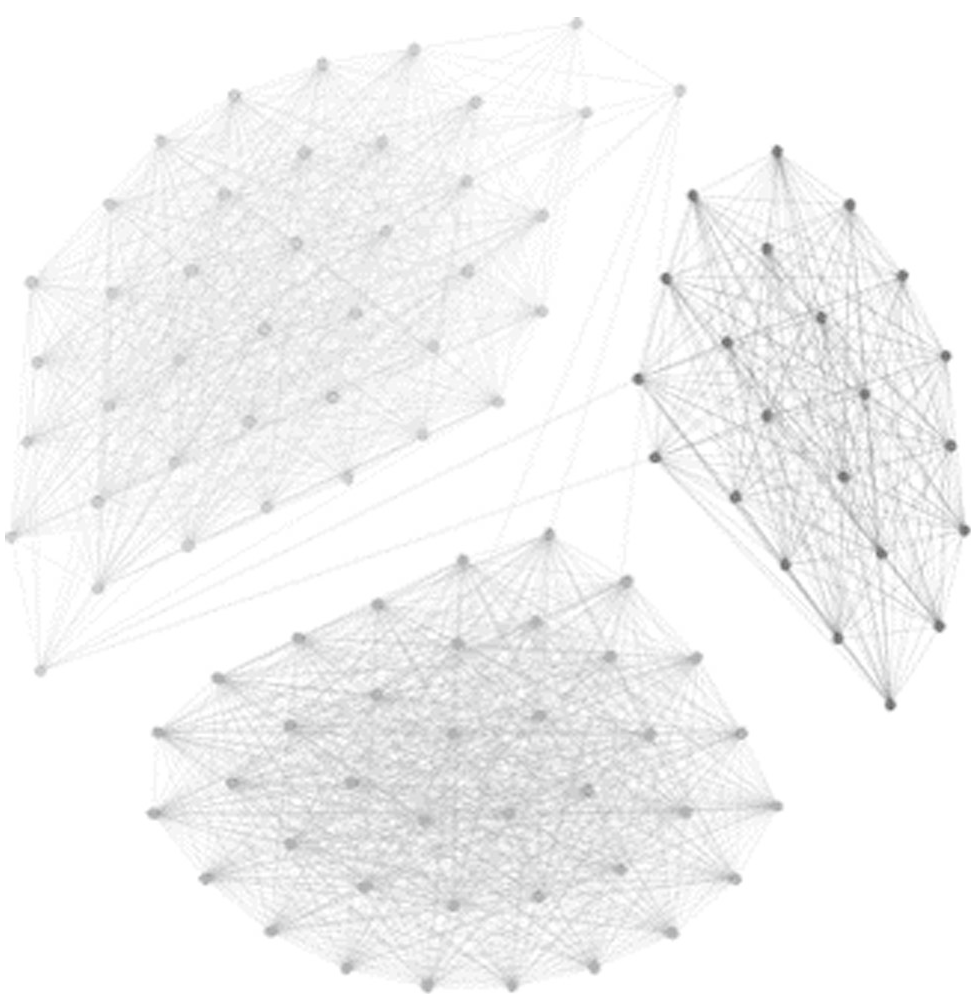
This paper introduces an improved framework for inferring social networks from spatiotemporal data streams using Fuzzy C-Means (FCM) clustering. The core method, called the FCM-based filter, effectively identifies and removes "coincidental links" (spurious associations) by categorizing link strengths into strong and weak groups.
TL;DR
Inferring social structures from raw spatiotemporal data (who was where and when) is prone to "coincidental noise"—links between individuals who happened to be at the same place by sheer luck. This paper proposes a Fuzzy C-Means (FCM) based filtering mechanism that outperforms traditional statistical null models by being faster, more stable, and more accurate in distinguishing true social bonds from accidental proximity.
Background: The Physical Proximity Trap
In behavioral ecology and social computing, we often use the Gambit of the Group (GoG): if two individuals are at the same feeder or GPS coordinate at the same time, we assume they have a social link.
The Problem: This assumption is noisy. Large datasets (like the 1-million-record Parus major dataset used here) result in thousands of "links" that are statistically insignificant. Current state-of-the-art (SOTA) uses a Null Model—shuffling data thousands of times to see if a link is "random." This is computationally expensive () and often requires manual, non-unique threshold setting.
Methodology: The Shift to Fuzzy Logic
The authors propose a three-step pipeline:
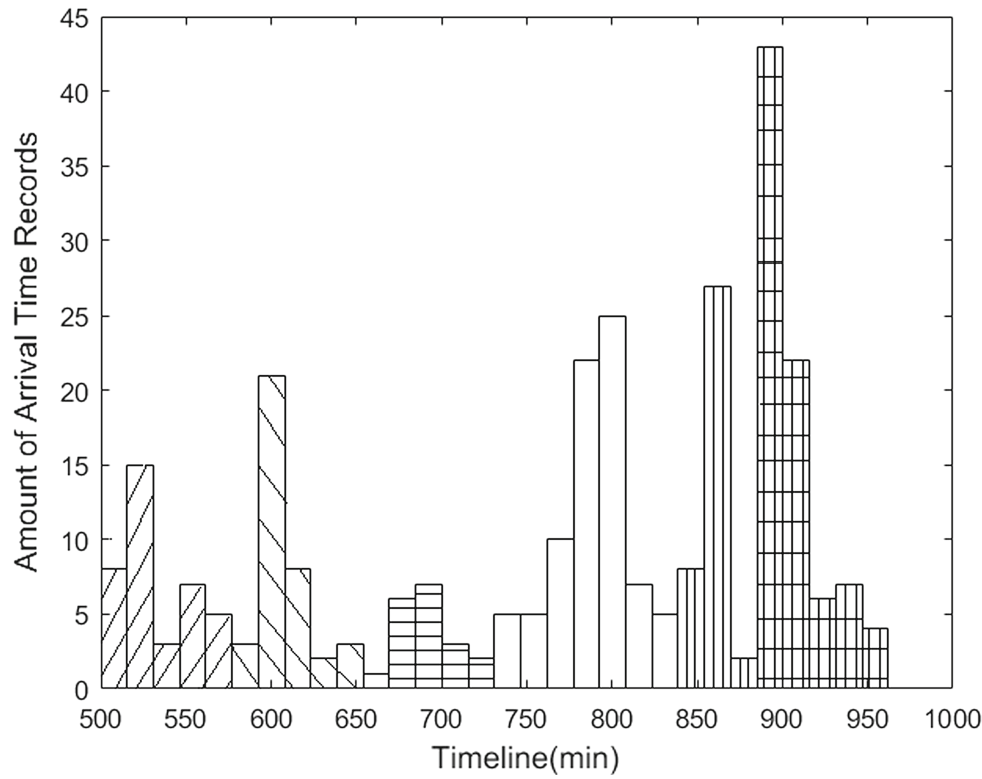
- Gathering Event Clustering: Use GMM or FCM to group arrival times into discrete events.
- Link Generation: Calculate a "Preference Matrix" based on how often individuals share events.
- The FCM Filter (The Core Innovation): Instead of random shuffling, use FCM to cluster all generated links into two groups: Strong and Weak.
Mathematical Intuition
The strength of a link is defined by the overlap of event preferences:
By applying FCM, the algorithm minimizes the objective function to find the optimal boundary between meaningful social interactions and coincidental noise without needing thousands of permutations.
Experimental Proof: Faster and More Accurate
The authors tested the method against the traditional Null Model across various benchmarks:
1. Superior Efficiency
On artificial data streams, the FCM filter was consistently 20x to 30x faster than the Null Model. As the dataset size grows, the Null Model's time complexity explodes, whereas the FCM filter remains relatively flat.
2. Robustness to Hyperparameters
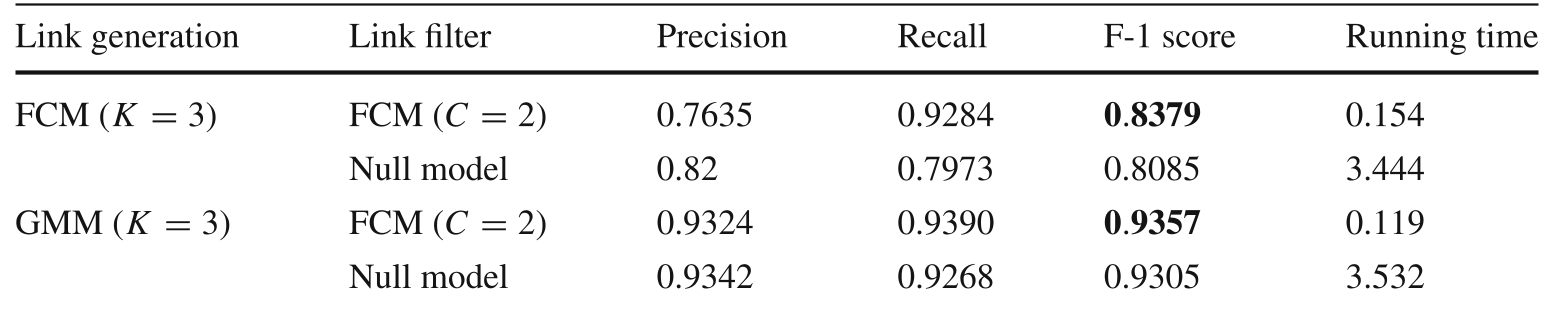
A major contribution is that the FCM filter is less sensitive to the number of clusters () chosen during the event detection phase. Even with a sub-optimal , the FCM filter maintains a high F1-score, whereas the Null Model's performance degrades.
Deep Insight: Why Fuzzy?
The beauty of the Fuzzy C-Means approach lies in its treatment of uncertainty. In social networks, the line between a "weak friend" and a "coincidental stranger" is blurry. Traditional clustering (like K-means) forces a hard choice. FCM allows a link to have a membership degree in both clusters, providing a more nuanced "soft" filtering that better reflects the fluid nature of social interactions.
Conclusion & Future Outlook
This work transforms social network inference from a heavy statistical task into a streamlined clustering problem.
- Takeaway: By categorizing links into strong/weak via FCM, researchers can process millions of spatiotemporal records in seconds rather than hours.
- Limitations: The current model only considers binary associations (links between two nodes).
- Future Work: Expanding this to triadic closures (groups of three) and incorporating more advanced fuzzy variants like Kernel FCM could further refine social structure discovery in increasingly dense urban data.