
Inductive Control: Shaping the Emotional Landscape of Learning Through Fuzzy Logic
Induction of Emotional States in Educational Video Games Through a Fuzzy Control System
This paper introduces Inductive Control (IC), a novel framework for educational games that utilizes a fuzzy control system to adapt both game difficulty and aesthetic content (audio) based on a player's emotional state—recognized via voice analysis—and performance. Tested in a math skills game, IC significantly increases the frequency of "pleasant-high" emotional states (engaged concentration) compared to standard Dynamic Difficulty Adjustment (DDA).
TL;DR
Researchers have moved beyond just making games "harder" or "easier." By using Inductive Control (IC), an educational math game can now sense a student's frustration or boredom through their voice and change the background "aesthetics" (sounds) and difficulty in real-time. This approach doesn't just react to the player; it actively steers them back into a state of "engaged concentration," proving that emotional engineering is a key pillar of effective pedagogy.
Problem & Motivation: The Boredom Trap
In educational psychology, the Zone of Proximal Development (ZPD) and the Flow Model suggest that learning happens best when challenge matches skill. However, most Dynamic Difficulty Adjustment (DDA) systems focus purely on the "skill" axis.
The authors argue that emotions like boredom and math anxiety are persistent "unlearning" states. Boredom, specifically, is often the most common emotion in educational games and is a lead indicator of task abandonment. The missing link? A system that doesn't just balance the game, but actively induces the right emotional state.
Methodology: The Fuzzy Heart of Inductive Control
The researchers developed a system that uses Voice Analysis to map a student's emotion onto Russell’s Circumplex Model (a 2D space of Valence/Pleasure and Arousal).
The Control Loop
- Emotion Recognition: Using Support Vector Machines (SVM) on 81 acoustic features (energy, pitch, etc.), the system estimates the player's current arousal and valence.
- Fuzzy Logic Inference: A controller processes the player’s score and emotional state. Unlike rigid "if-then" code, fuzzy logic allows for soft transitions (e.g., if the user is "slightly bored," apply a "medium stimulus").
- Aesthetic Induction: The game selects specific sounds from the IADS-2 (International Affective Digitized Sounds) database. For example, if a student is bored (low arousal), the game might play a "Siren" or "Sports Crowd" sound to spike arousal.
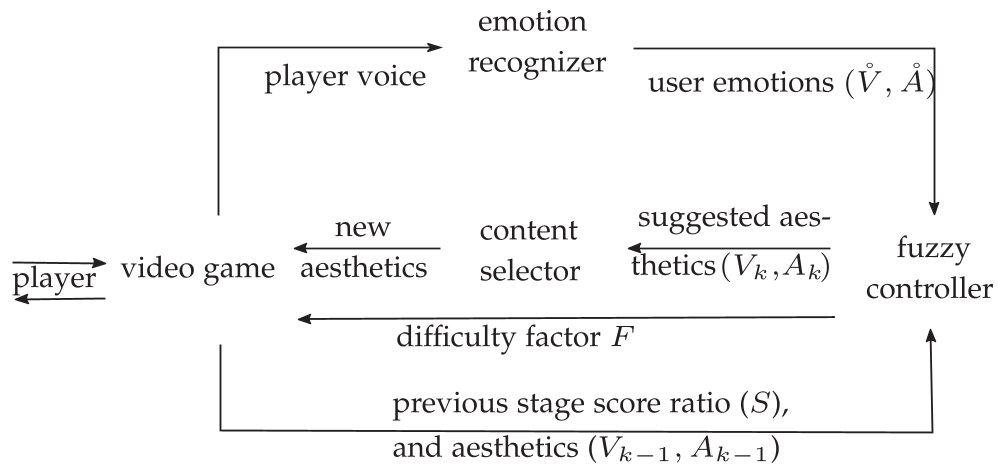 Figure 1: The architecture of the proposed Inductive Control (IC) system.
The Membership Functions
The authors used Gaussian membership functions, which provide smoother transitions in game difficulty compared to traditional triangular models. This avoids the jarring "Difficulty Spikes" that can break a learner's "flow."
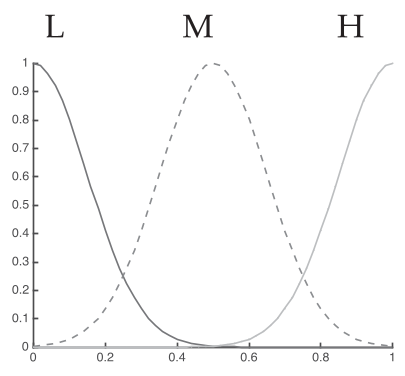 Figure 2: Gaussian membership functions for arousal, allowing for nuanced control of the game environment.
Experiments & Results: Escaping the "Unlearning" Zone
The study compared the IC approach against a standard DDA approach with 40 students.
Key Findings:
- Faster Recovery: In the IC version, students transitioned from "Unpleasant-Low" (boredom) to positive states much faster.
- Reduced Boredom Persistence: Under DDA, boredom lasted an average of 2.4 stages. Under IC, it dropped to 0.76 stages.
- Performance Boost: While the final scores were similar, students in positive emotional states had significantly faster Response Times (Δt), suggesting higher cognitive efficiency and concentration.
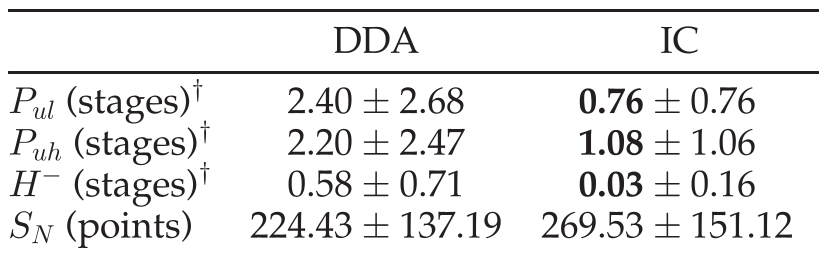 Table 1: Statistical comparison between DDA and IC, highlighting the significant reduction in negative state persistence (Pul, Puh).
Critical Analysis & Conclusion
This research highlights a shift from Affective Monitoring to Affective Regulation. The most profound insight is the "congruence principle": pleasant states facilitate attention. By using something as simple as background audio tailored to a student's current voice profile, the system effectively "rescues" the student from cognitive disequilibrium.
Limitations & Future Work
The study primarily relied on audio aesthetics. While effective, the authors acknowledge that including emotional narrative texts or facial recognition could make the control even more robust. Furthermore, while the system successfully reduced boredom, it did not eliminate "unpleasant-high" states (like confusion). However, as the authors note, confusion is often a necessary precursor to deep learning—provided it doesn't devolve into frustration.
Final Takeaway: For the next generation of AI tutors, it isn't enough to be smart; they must be emotionally intelligent.