
Precise Talent Matching in Crowdsourcing: A Fuzzy DEMATEL-TOPSIS Architecture
A combined fuzzy DEMATEL and TOPSIS approach for estimating participants in knowledge-intensive crowdsourcing
This paper proposes a four-stage Multi-Criteria Decision Making (MCDM) methodology for participant estimation in knowledge-intensive crowdsourcing (KI-C). The approach integrates 2-tuple linguistic modeling with a combined fuzzy DEMATEL and TOPSIS framework to rank qualified participants based on interrelated qualitative and quantitative attributes.
TL;DR
Selecting the right minds for knowledge-intensive crowdsourcing (KI-C)—like logo design or software development—is notoriously difficult due to the volume of participants and the "fuzziness" of human skill. This paper introduces a robust four-stage framework that uses 2-tuple linguistic variables and a hybrid DEMATEL-TOPSIS model to filter, weigh, and rank participants with unprecedented mathematical rigor.
The "Multi-Attribute" Blind Spot
In the world of KI-C, most platforms make a fatal mistake: they rank participants based on a single metric, usually "Reputation" or "Historical Wins." However, a participant with a high reputation who hasn't logged in for six months (low Availability) or who specializes in data entry but bids on a creative design task (low Interest) is a poor choice.
The authors argue that participant estimation is a complex Multi-Criteria Decision Making (MCDM) problem where attributes like Competence and Interests are not independent—they influence one another in a web of cause and effect.
Methodology: The Four-Stage Pipeline
1. The Funnel: Pre-selection via Non-compensatory Rules
With thousands of users, evaluating everyone is computationally impossible. The model first identifies "Potential Participants" by looking at similar historical tasks and applies a non-compensatory rule: if a participant fails to meet a single minimum requirement (e.g., a specific skill threshold), they are immediately discarded regardless of how high their other scores are.
2. Capturing Intuition: 2-Tuple Linguistic Modeling
Quantitative data (like "ratio of accepted proposals") is easy to process. Qualitative data (like "service attitude") is hard. The authors use 2-tuple linguistic variables to transform human labels (e.g., "High Influence") into a continuous numerical model that avoids the information loss found in traditional fuzzy scaling.
3. The Core Engine: Fuzzy DEMATEL & TOPSIS
This is where the mathematical heavy lifting happens:
- Fuzzy DEMATEL: Maps out the Cause-Effect relationship. For instance, it identifies that "Interests" is a cause factor that ultimately influences "Reputation" (the effect). It uses these relationships to assign dynamic weights to each criterion.
- Fuzzy TOPSIS: Once weights are set, this algorithm calculates the "Closeness Coefficient." It looks for the participant who is mathematically closest to the Positive Ideal Solution (PIS) and farthest from the Negative Ideal Solution (NIS).
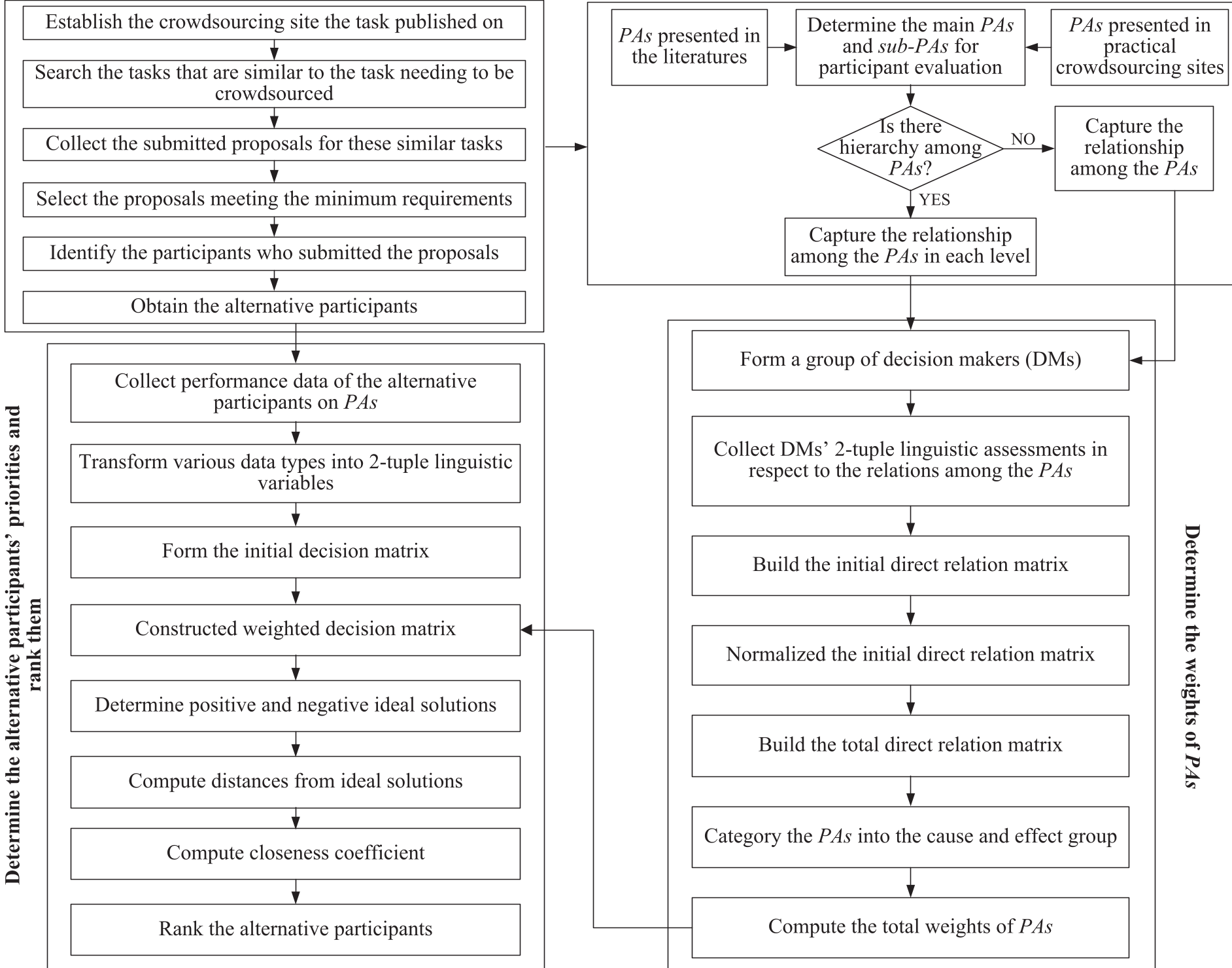 Figure 1: The Four-Stage Process from Pre-selection to Final Ranking.
Key Insights from the Case Study (Taskcn)
The methodology was applied to a logo design task for a bilingual kindergarten. The analysis revealed a crucial hierarchy of Participant Attributes (PAs):
- Competence (Weight: 0.272): The most critical factor for task quality.
- Availability (Weight: 0.265): Often overlooked, yet vital for ensuring the task is actually completed.
- The Cause-Effect Map: The DEMATEL analysis (shown below) proves that Interests (IT) and Competence (CP) are the primary drivers ("Cause Group"), while Reputation (RP) and Availability (AOP) are the outcomes ("Effect Group").
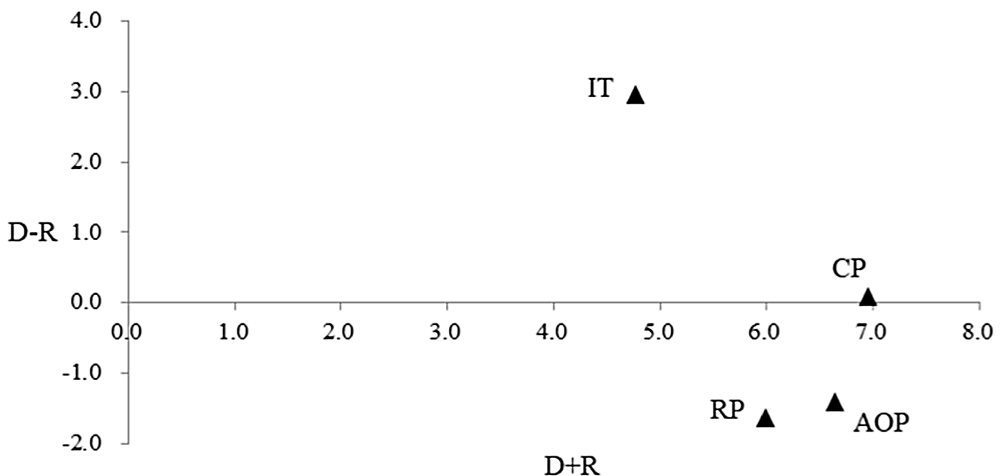 Figure 2: The Causal Diagram showing how Interests and Competence drive the other attributes.
Experimental Validation: Why This Beats SOTA
The authors performed a sensitivity analysis comparing their model against "Single-Attribute" strategies:
- Versus Competence-Only: Ranking only by skill often selects "ghost" experts—highly skilled users who are no longer active on the platform.
- Versus Reputation-Only: This leads to "winner-take-all" bias, where the same few users are selected regardless of their interest in the specific task, leading to generic results.
The TOPSIS ranking provided a balanced winner (Participant P5) who possessed the optimal mix of skill, recent activity, and niche interest.
Critical Perspective
While the model is logically sound, it assumes that decision-makers (the experts providing the linguistic labels) are honest and unified. In real-world crowdsourcing, requesters may have biased or strategically manipulated preferences. Future versions of this model would benefit from a "Consensus Reaching Process" (CRP) to detect and mitigate dishonest expert input.
Final Takeaway
This paper serves as a blueprint for the next generation of crowdsourcing platforms. By moving beyond simple reputation scores and embracing the interconnectedness of human attributes through fuzzy logic, we can significantly increase the success rate of complex, knowledge-intensive projects.