
The Dual-Drive Engine of LGDM: Harmonizing Preferences and Social Networks with Interval Type-2 Fuzzy Logic
The solution for fuzzy large-scale group decision making problems combining internal preference information and external social network structures
This paper introduces a holistic solution for Large-scale Group Decision Making (LGDM) that integrates internal preferences with external social network structures using Interval Type-2 Fuzzy Sets (IT2 FSs). The core method, an extended IT2-FKC clustering algorithm, reduces decision-maker dimensionality to achieve SOTA-level efficiency in complex, uncertain environments.
TL;DR
In the era of hyper-connected social media, decision-making is no longer a vacuum of individual choice. This paper presents a sophisticated framework for Large-scale Group Decision Making (LGDM) that treats internal preferences and external social structures as a unified system. By leveraging Interval Type-2 Fuzzy Sets (IT2 FSs), the authors provide a mathematical way to handle the "fuzziness" of human language, ultimately clustering large groups into manageable partitions and optimizing outcomes.
Problem & Motivation: The "Silo" Trap in Decision Science
Historically, researchers in LGDM have operated in silos:
- Preference-Centric: Assumes decisions are based purely on individual utility.
- Network-Centric: Assumes social influence is the only driver.
The authors argue that in reality, we are influenced by our friends (external) while maintaining our core values (internal). Furthermore, previous models used simple fuzzy logic that couldn't handle the "uncertainty about uncertainty"—for instance, two people might both say they are "Satisfied," but their underlying definitions of satisfaction differ. This is exactly where Interval Type-2 Fuzzy Sets excel.
Methodology: The Core Engine
The solution relies on three technological pillars to reduce high-dimensional group data into actionable insights.
1. Hybrid Information Fusion
Instead of a single similarity metric, the method computes two:
- Internal preference similarity via an extended Jaccard measure.
- External connection strength via the Maximum-Propagation Relationship-based Shortest Path (MPRSP). This method calculates how influence "travels" through a network, even between strangers.
2. IT2-FKC Clustering
The paper extends the standard -means algorithm. By using the degree centrality of social networks to pick initial centers, the IT2-FKC (Interval Type-2 Fuzzy k-means) clusters decision-makers (DMs) into sub-groups. This significantly reduces the computational burden while preserving the integrity of the group’s social skeleton.
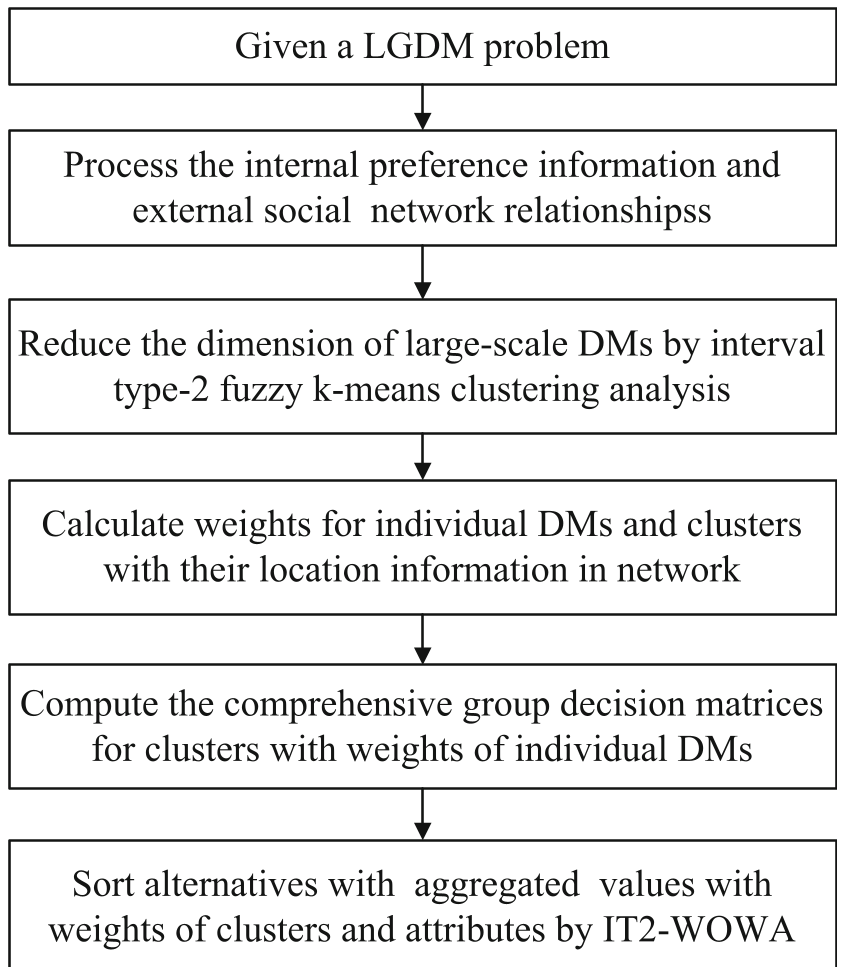 Figure 1: The proposed workflow, from linguistic gathering to final alternative ranking.
3. IT2-WOWA Aggregation
To merge opinions within and between clusters, the authors introduce the Interval Type-2 Fuzzy Weighted Ordered Weighted Averaging (IT2-WOWA) operator. Unlike simple averages, WOWA weights both the source (the person's expertise/network importance) and the value (the intensity of the opinion).
Experiments & Results: Real-World Validity
The paper validates the method using a case study of 25 employees selecting a dinner venue based on price, distance, taste, and environment.
Key Findings:
- Centrality Matters: Leaders in the social network (high degree/eigenvector centrality) are given higher weights, reflecting their real-world influence on the group.
- Ranking Stability: While the top alternative remained consistent (), the ranking of secondary options ( to ) shifted significantly when comparing the "Hybrid" model to "Preference-only" or "Network-only" models. This proves that ignoring either factor leads to a skewed understanding of the group consensus.
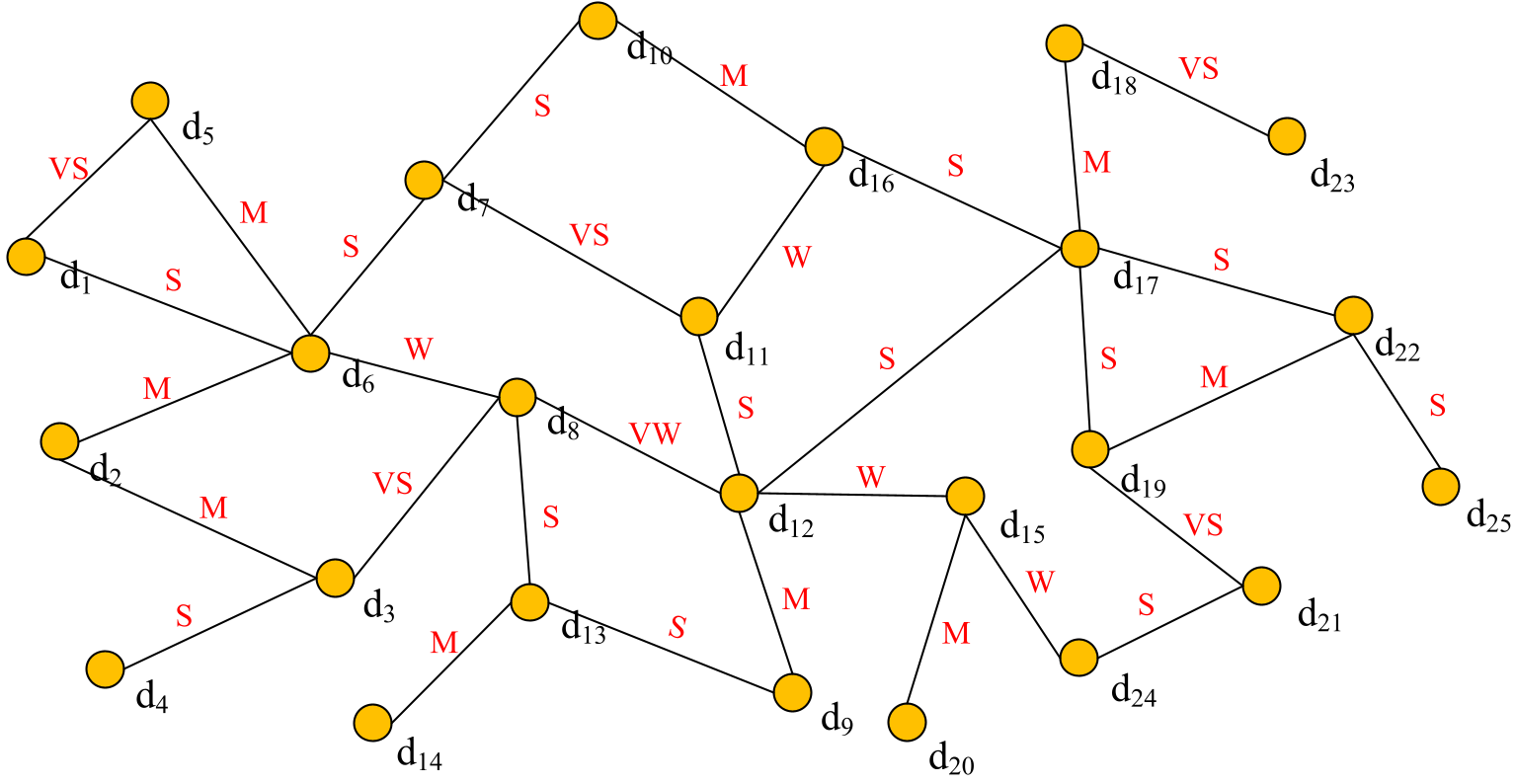 Figure 2: Social network visualization of 25 decision-makers before and after clustering.
Critical Analysis & Conclusion
Takeaway
The integration of social networks into IT2 fuzzy systems represents a major leap toward human-centric AI. It acknowledges that uncertainty is multi-layered and that our social identity is inseparable from our preferences.
Limitations & Future Work
While robust, the model primarily focuses on undirected social networks. In many modern digital environments (like X/Twitter), relationships are directed (followers/following), which creates hierarchies of influence not fully captured here. Future extensions could apply this to dynamic settings—where social connections and preferences evolve during the decision process.
This work serves as a blueprint for advanced recommendation systems and organizational decision-support tools that need to balance speed, scale, and subjective nuance.